
What Annie Dillard Left Off the Page
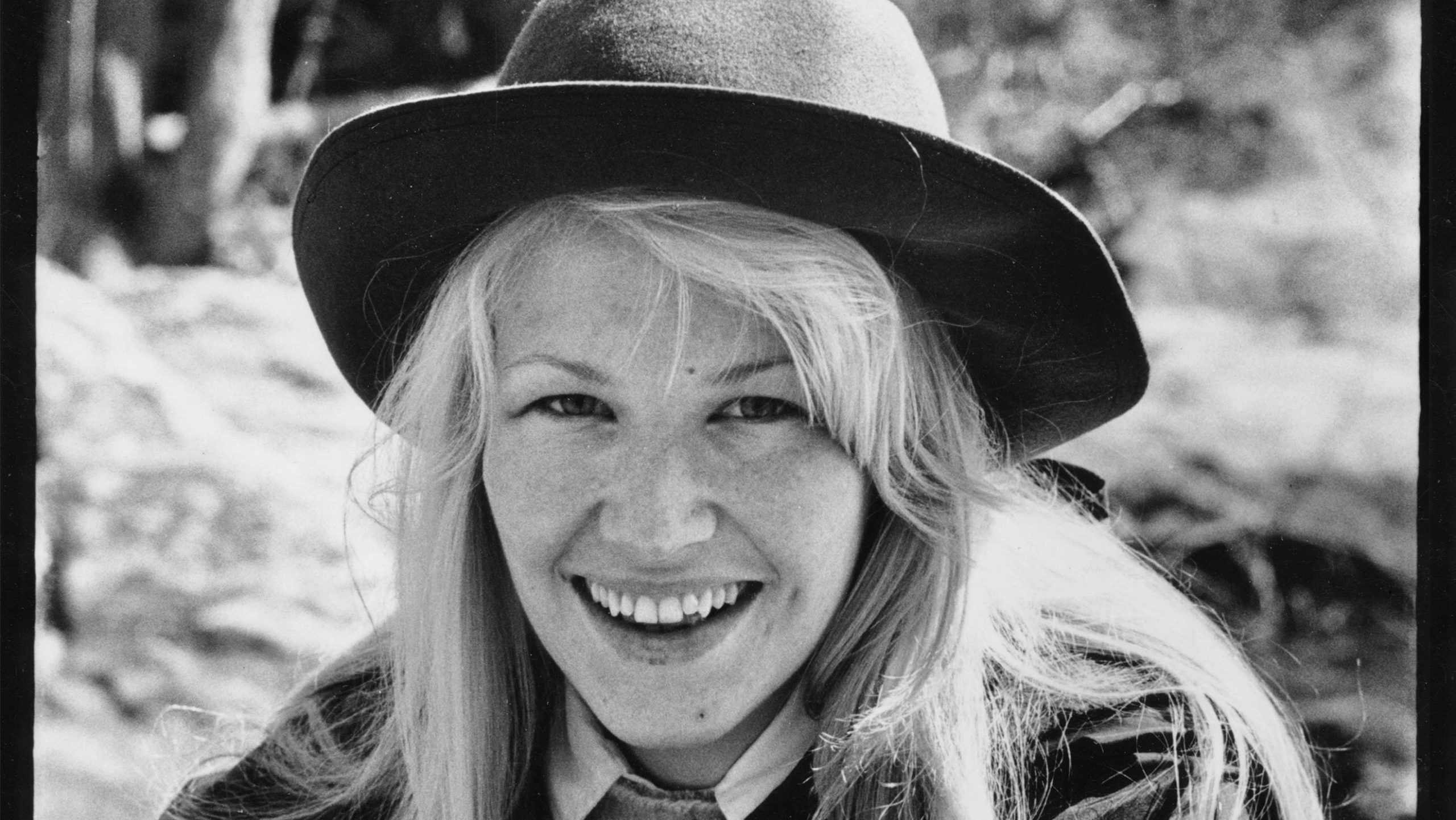
When Annie Dillard decided to write what would become her 1974 nonfiction book, Pilgrim at Tinker Creek, she noted in her journal that she saw in her material the potential for two distinct works: one that was a close observation of the natural world, and another that was more artistic, even spiritual. In Dillard’s chronicle of a year spent exploring the Roanoke Valley, the narrator veers from chasing steers to asking, “What do we think of the created universe, spanning an unthinkable void with an unthinkable profusion of forms?”
I was in college when I tore through the book; I was taken by this female narrator wandering the woods awake to the horror and wonder of the world. When I learned that Dillard had been living with her first husband during the years Pilgrim describes, I felt betrayed: This wild woman of the forest was, as she wrote in her journal, a “Virginia housewife”? During a phone interview for a 2015 Atlantic article that I wrote about Dillard, I asked her about the decision to leave her husband, friends, and suburban milieu out of the book. She told me that she hadn’t meant to deceive anyone. She said she’d “just put in what was interesting.”
At the time, I was 24, and about to move to rural Alaska in search of isolation—inspired, in no small part by Pilgrim, to become a writer unencumbered by relationships. She ended our call by saying, “Give ’em hell out there. I wish I were young and going to a cabin in Alaska.” In a follow-up email, she gave me advice on winter boots and the three weights of long underwear I’d need.
Yet Dillard herself never attempted—or encouraged—the kind of separateness I was seeking. In 1984, she published an article for Esquire describing how, in order to write, she’d located the spot in her brain that allowed her to be “wholly alive while wholly alone.” She continued, “A few hours a day of this is quite enough.” The rest of the time, she wanted company. “I am a social animal,” she wrote. Dillard, who wed three times, told me she’d been continually married since she was 20. In her nonfiction writing, though, we rarely meet her husbands, or learn anything about her experience of motherhood (she had one child and four stepchildren).
[Read: The Thoreau of the suburbs]
The point of writing isn’t to convey everything that has ever happened to the writer. As Dillard put it in her 1989 book, The Writing Life, if a writer “has ever bought a hamburger or taken a commercial airplane flight, he spares his readers a report of his experience.” Her nonfiction clarified much about consciousness, suffering, and what it feels like to be alive, but one of the things I’m mourning after Dillard’s death last week is that her readers will never know what she might have discovered by writing more about the relationships of her adulthood.
In her 1999 afterword to Pilgrim, Dillard writes that the book’s “willingness to say ‘I’ and ‘me’ embarrasses—but at least it used the first person as a point of view only, a hand-held camera directed outwards.” In her 1987 memoir, An American Childhood, she turned that camera on herself, recalling her youth in Pittsburgh. She shares stories about her parents—the jokes they told, the songs they danced to, her memories of their bodies. But mostly, she describes the process of gaining consciousness: “I woke in bits, like all children, piecemeal over the years. I discovered myself and the world, and forgot them, and discovered them again.”
It is among her warmest and most intimate works, but she still kept the reader at a distance. Speaking with The Washington Post in 1987, she recalled that her editor for An American Childhood suggested that she put in more of her adolescent love life. “I didn’t want to kiss and tell,” she told the Post. “It’s not ladylike.” (She did write about a crush she had as a 7-year-old.) Dillard also gave her family the chance to request changes to the memoir, which, in her telling, she largely honored. “You’re trying to live a life in this world,” she told the Post, “you’re not trying to grind a few pages out of somebody’s heart and soul.” In one email during our 2015 exchange, Dillard told me that her first husband had asked to be left out of Pilgrim, and she’d agreed.
[Read: What nature’s silence said to Annie Dillard]
It’s not that Dillard had no literary interest in relationships. Her 2007 novel, The Maytrees, which is dedicated to her child, is all about marriage, parenthood, and friendship. “We cared wildly, then deeply, for one person out of billions,” she wrote, in a sentence that probes human connection in a way that is largely absent from her nonfiction. “We bound ourselves to the fickle, changing, and dying as if they were rock.”
Why that absence? Yes, she was remarkable at finding the place in her mind that was “wholly alive while wholly alone,” but that mind also lived among others. Eudora Welty, reviewing Pilgrim for The New York Times in 1974, wrote that the book “might have taken in more of human life without losing a bit of the wonder she was after. Might it not have gained more?”
That question is pertinent to much of nature writing, not just Dillard’s. Edward Abbey wrote about spending two seasons living in a trailer in Desert Solitaire; his wife and son, who lived with him for much of that time, are curiously absent from the book. The same could be said of John Steinbeck’s wife, who was along for more than half the ride in Travels with Charley. John Haines, a poet with whom Dillard corresponded, wrote about his “solitary” time trapping in the Alaskan wild—except that he often lived with women. (“We hear much more about his sled dogs than his wives,” a Times reviewer noted of Haines’s 1989 memoir.)
It’s possible that these writers believed family life didn’t belong in stories about the natural world. But avoiding the relationships that helped shape their days adds to the myth that ties must be cut to find transcendence. Part of what makes Dillard so remarkable is that she found both a rigorous intellectual life and a sense of transcendence at home, as in a famous passage from Pilgrim about a tree just outside a suburban house. “I saw the backyard cedar where the mourning doves roost charged and transfigured, each cell buzzing with flame,” she writes.
[Read: The force that drives the flower]
When I was researching the article about Dillard in 2015, I had the chance to look through the journals she used to write Pilgrim. I could see that she’d returned to them at some point later in life to categorize and label them. In the margin above an entry full of the audacious ideas she’d had in her 20s, she wrote, “Forgive me, I was so young!” In Dillard’s 1999 afterword to the book, she also reflected on her age at the time of writing: “How boldly committed to ideas we are in our twenties!”
This commitment enlivened her writing, but I can’t help wanting more. In An American Childhood, she writes about a mother from a child’s perspective: “A young child knows Mother as a smelled skin, a halo of light, a strength in the arms, a voice that trembles with feeling.” What might she have written if she had engaged with this subject from the other side, written about what a mother sees? The novel The Maytrees suggests an answer: “She must feel his skin on her, feel his cranium in her arm’s crook, his belly on her belly, and smell his breath, his scalp, etc., etc.,” a character thinks of her son. “He obviously felt the same way. They were pieces of each other foully parted.”
Part of the pain of losing someone, and perhaps especially a favorite writer, involves losing what they didn’t choose to make during the time they had. Since Dillard died last week, I’ve been rereading The Maytrees, and finding its questions about love more alive to me now that I am married and the mother of two children. In a 2015 email, she wrote that in youth, “I, too, sought purity. Now I know we’re all compromised by impurities, by the conditions of time and death.”
Source & Attribution
This One Place News story was acquired from theatlantic.com. OPN retains the source link and provenance for newsroom review.
Filed Under
Culture & Society