
Repudiation
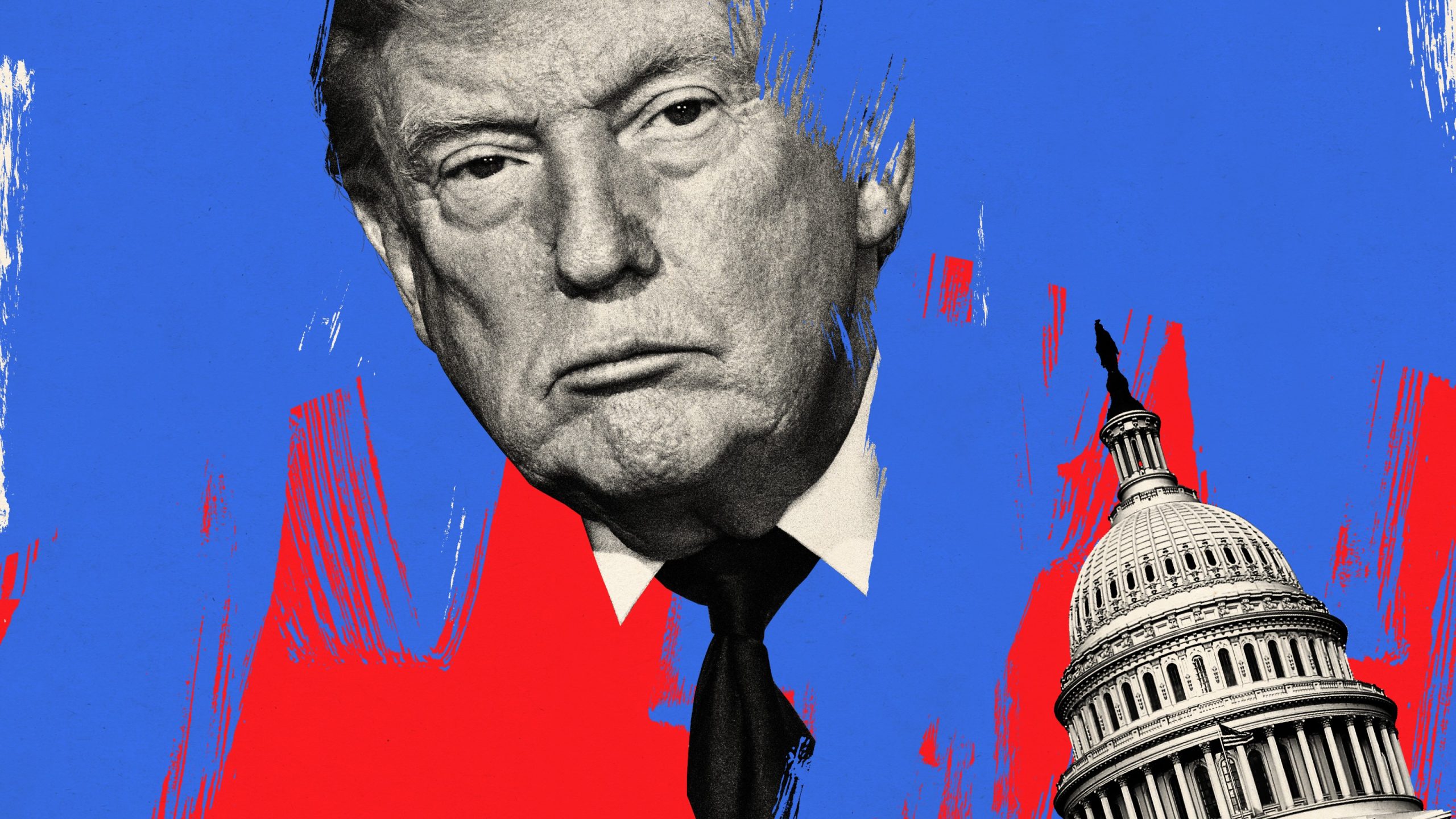
President Trump has been the dominant political figure of this century. He pulled off one of the most unlikely campaign victories in American history, and then staged the greatest political comeback. He has altered the United States’ relationship with the world, rewritten the rules and expectations of the presidency, inflamed the nation’s divisions, and changed how—and how often—Americans think about his office. He is omnipresent, and draws his power from that ubiquity.
But tonight, Trump has been forced to face his political mortality. He asked voters to make these midterm elections a referendum on him, to imagine that his name was on the ballot. They listened—and then rejected him. It is a stunning, widespread rebuke. Democrats appear poised to win the House and, if trends hold, could also capture the Senate after Americans registered their strong disapproval of the direction in which the president has taken the country over the past two years. Trump will now likely have to deal with congressional Democrats who could block his agenda and wield the power of the subpoena. He also must face the possibility that the political party he remade in his image may soon start looking beyond him. Donald J. Trump is now officially, thoroughly a lame duck.
But we haven’t heard the last of him. He remains the commander in chief, dominates global affairs, wields the expansive power of executive orders, and remains unequaled at capturing attention. He has escaped the political graveyard more than once before, and emerged stronger. Yet for all his power, for all his volume, he cannot browbeat the unrelenting calendar: The next national election will be the one to replace him. Trump will before long begin to slip in the headlines, pushed off the front page by the presidential campaign. He’ll face the possibility of being succeeded by a Democratic president who could employ the Department of Justice to plumb the previous four years and look into Trump’s allies, friends, family, and businesses. And he’ll confront arguably his greatest fear: irrelevance.
Trump will not go quietly. It is not clear whether he and fellow Republicans will even accept the midterm results—and he has defied expectations so often that it would be a foolish exercise to set any. Tonight’s expected losses will not humble him. But they mark the beginning of the end.
Trump’s midterm campaign ended in the most ridiculous, yet predictable, way possible. For months, the president had been accused of being out of touch, of losing his once-unmatched feel for what animated his supporters. He has mocked affordability concerns while his own fortune has swelled, started a war that Americans did not want, remodeled the White House, and planned various monuments to himself. And then yesterday, he decided that the best way to push back against the accusation that he’d been consumed with vanity projects and corrupt bargains would be to deliver the final speech of the campaign cycle at the site of his most absurd, failed renovation project.
To the dismay of Republicans everywhere, Trump stood in front of the Reflecting Pool on the eve of Election Day and delivered a defense of a project that was doomed by algae and the shoddy work of a no-bid contractor. The project—which Trump had falsely claimed was derailed by vandalism—ran millions of dollars over budget and surely earned not a single vote in places such as Michigan, Kansas, and Alaska. Worst of all, the detour to revisit the Reflecting Pool distracted from Trump’s true closing message: that Senator Jon Husted of Ohio has a great body.
[Read: Trump is closing from behind]
Trump was a late entrant on the campaign trail, and had to be talked into holding rallies over the past month or so. But once he was, he insisted that the election be about himself and his successes, and make no acknowledgment of any missteps or empathy for those who are struggling. He insisted that many campaign ads feature him. He demanded a first-of-its-kind midterm political convention, though few who attended the festivities in Dallas seemed happy to be there. Trump threw himself into the campaign, holding nearly-two-hour rallies night after night across the country. But these road shows weren’t quite the same as those that became the defining political event of the past decade.
They were smaller than normal, and few were outdoors (in part because of security concerns). One rally in Ohio in the campaign’s final fortnight was held in a small gym, and others featured plenty of empty seats. More striking was where the rallies were held: nearly half in deep-red states where Trump has easily won in the past and has rarely needed to campaign. That led to bigger, more enthusiastic crowds—people in a place like Corinth, Mississippi, were more excited to see Trump for the first time than, say, those in Grand Rapids, Michigan, where he has held more than half a dozen rallies over the years. But the geography also told a story: Trump had to visit Republican strongholds such as South Carolina and Montana because seats in those states were suddenly in play and his faithful had to be summoned. But once there, what did Trump really have to offer?
Voters, per polling, are angry over his string of broken promises, including his vows to bring down prices, not start new wars, release the Epstein files, and deport only the “worst of the worst.” The parties of incumbent presidents traditionally fare poorly in the midterms, but Trump is also underwater on several of what used to be his strongest issues, such as the economy and immigration. He forced out multiple incumbent senators for being disloyal and backed some problematic candidates, all of which put more races into play. He gave Republican candidates very little to run on, as voters furiously reacted to an economy that seemed to benefit only the rich (a category that includes the president’s family and Cabinet). Instead, Trump tried to recycle culture-war issues from campaigns past, including fears about transgender surgeries, Muslim terrorists, and even communism.
[Read: Going hungry in Trump’s economy]
He seemed out of step not just with the public but, in many cases, with his own party. Despite warnings that AI could wipe out humanity (or at least a lot of jobs), Trump backed the nascent technology and its data centers—even as the public turned on them—because tech companies are propping up the stock market. He supported a controversial attack ad in the Ohio governor’s race that the state’s Republican governor denounced. He sided with Russia in its war with Ukraine. He threatened to once more bomb Iran. And there really was a lot of talk about butts, which will surely confuse future historians.
Americans didn’t seem to go for it. As of this writing Democrats were well on track to decisively take the House. But the story is the Senate: Democrats have already flipped North and South Carolina and easily held on to Georgia. Ohio, Texas, and other deep-red strongholds may soon join them.
As those results came in, Trump took to social media to duck blame—and contradict the central message of his campaign, writing, “I wasn’t on the Ballot and if I was, we would have won IN A LANDSLIDE!”
Trump is now in a new place, and one he won’t like.
In his first midterm election, in 2018, Democrats gained control of the House, but that victory was offset by GOP wins in the Senate. House Democrats slowed the president’s agenda, but their 2019 impeachment effort over Ukraine only bolstered Trump’s approval ratings—and he still felt bullish about his reelection chances on the back of a strong economy. (Then, of course, came the pandemic.) Many Democrats say they’ve learned their lesson. Senior members in the party, including Hakeem Jeffries, the likely next House speaker, have been cagey as to their plans for power. The Democratic Party’s approval ratings remain low, and although not being a Republican boosted many Democrats in this year’s campaign, that won’t be the case going forward. Jeffries has signaled that he will focus on measures to try to address affordability and health-care challenges. Democrats are going to say “no” a lot, and now that it appears that they will capture the Senate too, they will likely make it difficult for Trump to confirm any of his nominees, including possible Supreme Court justices.
But the Democratic Party’s base is hungry to hold the Trump administration accountable: for DOGE’s destruction of the government, for war, for foreign business deals masquerading as diplomacy, for profiting off the presidency. Accusations of corruption against Trump and his administration have proliferated compared with in his first term. Democrats have promised to issue subpoenas and parade administration officials through the Capitol’s hearing rooms—if they agree to show up. Some close to Trump have theorized that he doesn’t mind having a foil in Washington, and that he would be comfortable tangling with congressional Democrats again. “He likes to have someone to fight—and someone to blame,” one close outside adviser told me on the condition of anonymity to discuss internal dynamics.
But Trump is leery about some of the possible investigations and does not want to be impeached again. (Democrats might be more inclined to try to oust a Cabinet member anyway.) The probes he likely faces next year could act as a preview of what would happen in 2029 if a Democratic president follows him. Trump enjoys a sort of immunity granted by the Supreme Court, and he has vowed to give preemptive pardons to many people in this administration. Yet advisers say he is unhappy at the prospect of his inner circle facing punishing investigations once he leaves office.
[Read: Here’s who Democrats want to impeach next]
Today’s vote is a clear marker on Trump’s road to irrelevance. Many close to him believe that his driving motivation—more than power or money—is attention. And for a decade now, he has blocked out the sun, dominating the discourse in a way that no other president has in generations. But that will begin to change as Washington begins to look beyond him. Once a colossus, Trump will quickly find himself to be a secondary storyline. It’s not as if he will suddenly vanish; he’ll aim to play GOP kingmaker, and he’ll still surely inspire loyalty from his hard-core believers, even if that group shrinks. He’ll still be commander in chief, and even lame-duck presidents have broad authority when it comes to foreign policy. A return to war with Iran? A move on Cuba? Revisiting Greenland? With Trump fixated on his legacy and desperate to stay in the spotlight, anything feels possible.
Trump also may start to see the complete fealty of the Republican Party erode. This stunning midterms wipeout suggests that Trump’s instincts and influence seem to be waning, and Republicans may be more willing to defy him. As the next round of presidential contenders begins to emerge, Republicans will begin to sort out what their post-MAGA future will look like—and what role, if any, Trump plays in it.
Source & Attribution
This One Place News story was acquired from theatlantic.com. OPN retains the source link and provenance for newsroom review.
Filed Under
Culture & Society • Economy & Finance • Politics & Law