
How VA diabetes programs help Veterans manage blood glucose
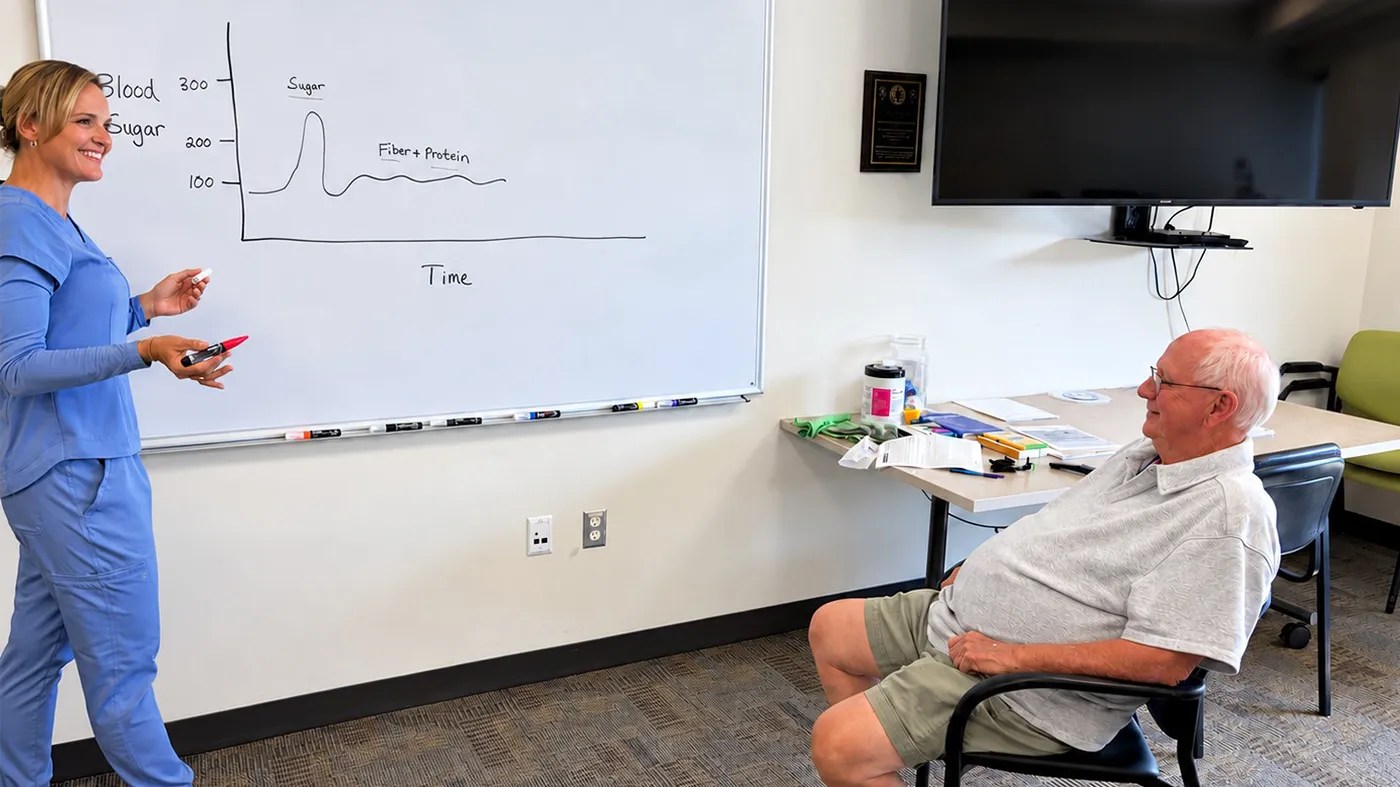
Veterans learn different factors that affect blood glucose
After being diagnosed with diabetes nearly four years ago, Veteran Eric Hendrickson joined a diabetes support group at the Martinsburg, West Virgina, VA. The group is part of the Mental Health Residential Rehabilitation Treatment Program, and it’s there that he learned to check his blood glucose (sugar) to know his level rather than relying on how he feels.
The group also taught him that stress and sleep can affect his blood glucose and that some foods may affect people in different ways.
“Make a journal and pair it up with your [blood glucose] and look for a pattern. It’s different for everybody,” he shared, offering advice to other Veterans.
Lesser-known factors that can affect blood glucose
Many people know that food and drinks impact glucose. Other things can, too:
- Alcohol, cigarettes, caffeine and cannabis: These can make diabetes harder to manage. If you use them, do so in moderation.
- Sleep: Studies have shown that poor sleep and sleep apnea can raise the risk of diabetes. Eating large or fatty meals before bed, too little exercise, and eating at different times can affect sleep and blood glucose.
- Stress and mental health: Stress, anxiety and PTSD can raise blood glucose. Managing PTSD may lower the risk of blood flow problems and may reduce the need for insulin.
- Medicines: Mood stabilizers and other medicines may raise blood glucose or affect appetite.
What you can do to help
- Track your sleep, activity, stress, meals and blood glucose.
- Talk openly with your care team about alcohol, smoking, caffeine and cannabis use.
- Ask if your medicines or supplements affect your glucose.
- Ask your provider what new glucose monitoring technologies may be right to track your patterns.
Holly Barbee is a registered dietitian and certified diabetes care and education specialist (CDCES) at the Martinsburg VA. She creates care plans to meet Veteran’s needs and facilitates another diabetes program, the Diabetes Self-Management Education and Support (DSMES) program. This program educates Veterans on the Association of Diabetes Care and Education Specialists (ADCES) 7 Self-Care Behaviors ®:
- Healthy coping
- Healthy Eating
- Being Active
- Taking Medication
- Monitoring
- Reducing Risks
- Problem Solving
If you have diabetes, contact your local VA to learn about available programs. This Diabetes Month, take steps to manage your health.
Other VA resources
Explore VA’s Home Telehealth Program for personal health support. Contact your local VA to speak with a registered dietitian. You can find other VA News articles for tips on healthy living, including how to manage type 2 diabetes.
Source & Attribution
This One Place News story was acquired from news.va.gov. OPN retains the source link and provenance for newsroom review.
Filed Under
Veterans News