One Place News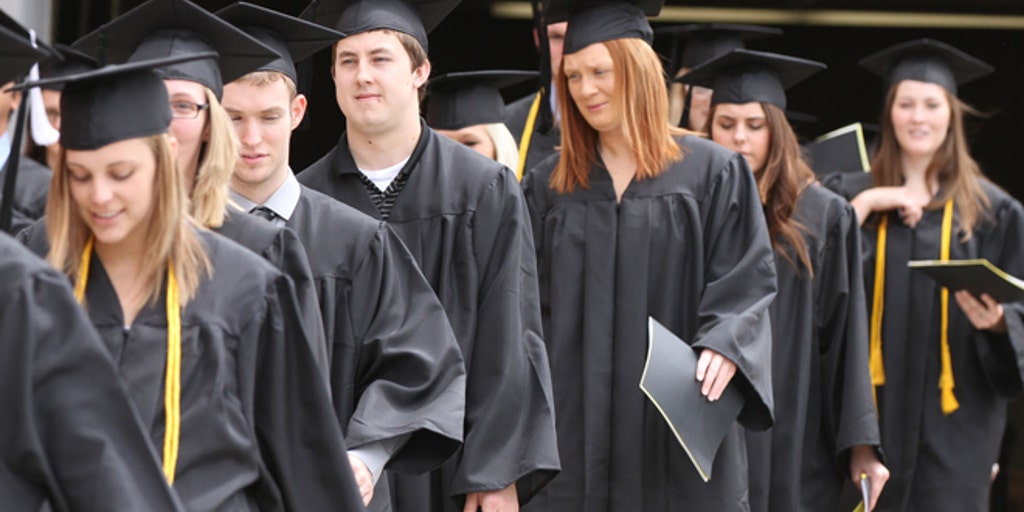
Public confidence in American higher education has taken a fresh hit, erasing a brief period of recovery, as concerns over campus politics and financial value intensify, according to a new Gallup poll obtained by Fox News Digital.
The latest data reveals that just 38% of U.S. adults maintain a “great deal” or “quite a lot” of confidence in higher education. The figure represents a noticeable drop from last year, when trust in the sector experienced a modest uptick to 42%.
“It’s kind of the three things that we see–those are still front and center and why people aren’t as confident in higher ed as they used to be: the cost, there’s the perception that there’s a political agenda being taught, and there’s the reception that they’re not teaching people the right kinds of things they need to succeed in the job once they finish,” an expert from Gallup told Fox News Digital in an interview.
LIBERAL FACULTY STILL HUGELY OUTNUMBER CONSERVATIVES IN HIGHER EDUCATION: REPORT
“U.S. public confidence in higher education remains much lower than it was a decade ago, but Americans’ views are not quite as negative as they were in 2024, when roughly equal shares had a great deal or quite a lot of confidence as had very little or none,” Gallup researchers noted. “After a slight recovery in confidence last year among all political party groups, views of higher education fell back this year, mainly among Democrats.”
The survey probed respondents on what drives their skepticism, revealing three distinct themes among those who lack confidence:
• 31% cite partisan bias or indoctrination on college campuses.
• 30% point to the high cost of a college degree.
• 25% believe colleges fail to prepare students to succeed in the modern job market.
Gallup researchers noted that the criticism over workforce readiness takes on added urgency as artificial intelligence rapidly shifts the employment landscape.
“The latter criticism takes on added significance with AI emerging as a technology that could disrupt the workforce and make it harder for graduates to find work once they finish their education,” the report added. “The challenge for higher education is whether it can adapt its instruction to set students up for success in the future workplace.”
AMERICA’S NEXT 250 YEARS BEGIN IN THE CLASSROOM
The current 38% confidence mark underscores a steep, long-term decline from 2015, when 57% of Americans expressed solid trust in higher education. Significant drops followed in 2018 and 2023.
Currently, 37% of Americans report having “some” confidence in the institution, while 25% hold “very little” or “none.” The portion of the public with little to no faith rose from 10% in 2015 to 32% in 2024, before briefly retreating to 23% last year.
The findings arrive amid a broader push by the Trump administration to dismantle viewpoint discrimination, antisemitism, and diversity, equity, and inclusion (DEI) frameworks across U.S. universities.
The administration previously designated “civil discourse” as one of four critical areas of national need within its competitive federal grants program. In response to that mandate, the Department of Education unveiled seven institutional priorities under the Fund for the Improvement of Postsecondary Education (FIPSE).
As a primary component of that initiative, $60 million in federal grants is being deployed under a directive titled “Promoting Civil Discourse on College and University Campuses.”
CLICK HERE FOR MORE COVERAGE OF MEDIA AND CULTURE
Colleges and universities securing FIPSE funds are required to construct initiatives that “foster respectful deliberation and debate on college and university campuses, where free expression has too long been eroded by censorship, harassment, and even violent unrest.”
Approved projects under the federal grant include seminars, speaker series, academic conferences, structured debates, and alternative learning tracks aimed at protecting a broader spectrum of political ideologies and reviving open dialogue.