One Place News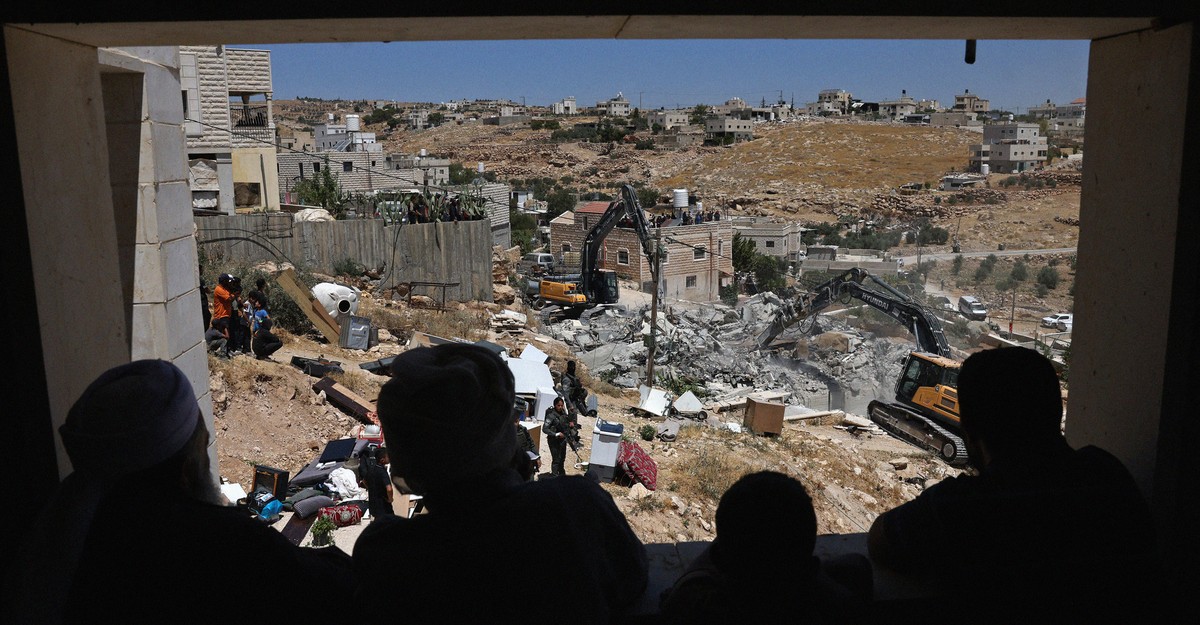
Last week, Rahm Emanuel traveled to Tel Aviv University to deliver an unusually blunt warning: Prime Minister Benjamin Netanyahu is jeopardizing Israel’s long-term alliance with the United States. Emanuel, the former Obama White House chief of staff, urged Israel to pursue what he called a “23-state solution”: an agreement in which movement toward Palestinian sovereignty would be embedded in a larger normalization deal between Israel and the Arab world.
For decades Washington has oscillated between trying to solve the Israeli-Palestinian conflict and trying to sidestep it. The October 7, 2023, Hamas attack on Israel exposed the limits of both approaches. The Palestinian question cannot simply be bypassed, but neither is another round of final-status negotiations likely to succeed. Emanuel is right that the only realistic path now is to embed the Palestinian issue within a broader regional strategy. Such a strategy can give Israel, Saudi Arabia, and the United States a way to reverse the region’s dangerous trajectory amid the wars in Gaza and Iran.
I recently spent a week in Israel and the West Bank—my fourth time there—with a delegation of former policy makers organized by the nonprofit J Street. We met representatives of the Israeli military and political parties, Palestinian leaders, survivors of October 7, humanitarian workers, settler representatives, and activists. We spent time at the Kfar Aza kibbutz, where 62 residents, including children, were murdered by Hamas on October 7. We walked the streets of central Hebron, which resembles a ghost town because of severe restrictions on its Palestinian residents.
A couple of things were clear to me. The future of the U.S.-Israeli alliance may depend on the outcome of Israel’s next election. And the Middle East is in the early stages of a period of great instability and conflict. Many Americans may be tempted to wash our hands of it all and leave the region to its fate. But forthcoming elections in Israel and the territory controlled by the Palestinian Authority provide a glimmer of hope. A new Israeli government may not offer wholesale change or pursue peace on its own, but it could move the country toward accepting a regional bargain.
Israeli politics may be approaching a breaking point. National elections are scheduled for October 27. Polling has consistently shown the parties opposed to Netanyahu ahead of his coalition, though not necessarily with a clear path to the 61 seats required to govern. The leading challenger is Gadi Eisenkot, whose new centrist party has drawn even with or edged ahead of Netanyahu’s Likud party in some recent surveys.
Eisenkot should not be mistaken for a dove. As chief of staff for the Israel Defense Forces, he used force aggressively against Israel’s enemies but opposed all-out war, on the grounds that force should serve an achievable political objective. He was willing to oppose the far right when military professionalism was at stake, including in a 2016 case in which Elor Azaria, an Israeli soldier, was convicted of killing a wounded and incapacitated Palestinian attacker in Hebron.
Eisenkot has suffered personal losses that have given his criticism of the Gaza war unusual moral authority. His son and two nephews were killed in the fighting. Eisenkot served in Netanyahu’s war cabinet, but resigned when he concluded that the prime minister lacked a coherent plan for what would follow military operations and was allowing political considerations to shape the war’s conduct and duration.
Our delegation met with representatives of the opposition for discussions that made clear that, if elected, a new Israeli government would not embrace a two-state solution or fully reverse course on Gaza. Naftali Bennett, Eisenkot’s likely coalition partner, who also harbors hopes of becoming prime minister, has advocated that Israel pursue total victory in Gaza. He opposes Palestinian statehood and has previously championed settlements and other forms of permanent Israeli control.
Progressive critics of Israel argue that Netanyahu is less the source of Israel’s crisis than its most abrasive expression. They may dismiss a new government as a mere continuation of the old one and continue to pressure Washington to impose an arms embargo and disengage from the alliance. But this would be a mistake. A new Israeli government would not solve the conflict, but it might stop actively making the conflict insoluble. It might value relations with Washington and Riyadh enough to accept constraints that Netanyahu rejects. It would take some constructive steps to defuse tensions. That’s a limited opening, but limited openings are where diplomacy usually begins.
The deterioration of the situation in the West Bank makes such diplomacy a matter of particular urgency. Israeli efforts to exert control over the West Bank have reached new extremes under the current coalition, which includes far-right parties led by Itamar Ben-Gvir and Bezalel Smotrich. This government has tolerated and facilitated settler violence against Palestinians. It has also turbocharged the expansion of settlements by accelerating approvals for new settlements, retroactively authorizing existing outposts, directing billions of shekels toward settlement infrastructure, and weakening the Palestinian Authority’s already limited powers and draining its finances.
[Jon Finer: The West Bank is sliding toward a crisis]
Our delegation traveled through the West Bank with the Israeli organization Breaking the Silence, which was founded by former IDF soldiers to raise awareness about the occupation. We moved swiftly along newly built highways, bypasses, and tunnels that connected settlements to Jerusalem and Israel proper. Then we switched roads to drive on a separate and far-inferior network for Palestinians—one that is poorly maintained, interrupted by checkpoints, and vulnerable to closure without warning. Palestinians struggle to get around and in some cities, such as Hebron, are confined to their houses for days on end.
Settler violence has also risen dramatically. The pattern includes shootings and attacks on farmers, as well as arson, property destruction, road obstruction, and the intimidation or expulsion of entire communities. Israeli soldiers and police seldom intervene, and prosecutions are exceptionally rare. A settler representative told our delegation that the incidents were usually acts of vandalism committed by undisciplined teenagers rather than part of a systematic campaign. That description does not withstand scrutiny.
October 7 cast an ominous light on developments in the West Bank. In the years before the attack, Netanyahu came to see Hamas’s continued control of Gaza as strategically useful. As long as Hamas governed Gaza and the Palestinian Authority controlled the West Bank, there could be no credible negotiating partner for a two-state solution. Netanyahu apparently believed that Hamas was boxed in and posed no significant threat to Israel, whereas the Palestinian Authority could potentially create the conditions for a Palestinian state. Successive administrations tolerated his feed-the-beast strategy—not agreeing with it but also not bringing any pressure to bear. But his strategy of deferring problems instead of seeking constructive solutions to them eventually blew up, resulting in the invasion of southern Israel and the deaths of 1,200 Israelis. It also dragged the United States into a regional war that rages to this day.
Over the past four years, Yehuda Shaul, a co-founder of Breaking the Silence, told me, there has been a dramatic increase in isolated settler outposts, established illegally in Palestinian areas. At some point, Shaul warned, the situation could explode. In one scenario, a few young men might enter an outpost and slaughter a family. Settlers might then undertake large-scale reprisals; the Israeli military could get involved, leading to an outpouring of violence and the collapse of the Palestinian Authority, as well as putting enormous pressure on Jordan. The West Bank is a strategic time bomb for Israel.
Multiple opposition representatives told our delegation that if they were to form a new government, they would crack down on settler violence in the West Bank. They also told us that they would remain committed to ensuring that Hamas never again governs Gaza or threatens Israeli civilians. The Gaza goal echoes Netanyahu’s, but more than one approach to it is possible. Rather than insisting that every element of Hamas be dismantled and disarmed before any meaningful political transition can occur, for instance, a new government could accept a phased approach in which the Palestinian Authority, backed by Arab states, gradually assumes governing responsibilities, even while addressing Israeli security requirements in parallel. A new Israeli government could also provide immediate relief, for instance by facilitating humanitarian assistance in health care and education and allowing Gazan fishermen to operate again.
Under a new administration, Israel could find itself faced with a somewhat changed interlocutor, too. President Mahmoud Abbas of the Palestinian Authority has scheduled legislative elections for November, the first since Hamas won the vote in 2006. Presidential elections are supposed to follow in early 2027. Reasons for skepticism abound: Elections have been promised and postponed before, Hamas’s role remains unresolved, voting in East Jerusalem will be contentious, and Abbas presides over an unpopular and ever more authoritarian system. Nevertheless, holding a credible legislative election would be a significant step toward restoring political legitimacy.
The Palestinian Authority has also made some moves toward reform. For decades, it maintained a system that allocated stipends to Palestinian prisoners in Israel based in part on the length of their sentences (ostensibly rewarding those who had committed the most serious crimes). Critics labeled these payments “pay for slay,” and the United States, Europe, and Arab governments pressed Abbas to put an end to them. Last year, Abbas formally abolished the system, replacing it with a needs-based welfare arrangement, though Israel still has concerns about implementation. Saudi Arabia, in particular, has pressed Palestinian leaders to reform, helped stabilize the Palestinian Authority financially, and treated the creation of a more credible Palestinian governing structure as essential to any regional agreement.
But modest progress in the Palestinian Authority can achieve only so much. It does not guarantee that the group could truly negotiate a final status agreement, effectively govern Gaza, or credibly ensure that a Palestinian state would not become a platform for attack. It suggests only that the means to improve Palestinian governance have become available at the same moment that Israeli politics may be changing.
How to leverage all of this into a lasting settlement to the region’s turmoil is a bigger question—one that suggests a bigger, more regional solution. That’s what Rahm Emanuel proposed with his 23-state solution. The notion has a history. Emanuel’s critics point to the failed Arab Peace Initiative of 2002, which offered Israel normalization with the Arab League in return for withdrawal from occupied territory and an agreement on a Palestinian state. But that initiative arrived during the Second Intifada, when Palestinians were launching bloody attacks on Israel. It was presented to Israel largely as a settled Arab position, rather than as a negotiable process. And it appeared to require Israel to withdraw its forces and accept Palestinian statehood before receiving the full benefits of normalization.
A regional approach today could be different. During my time in the Biden administration, we were working on an ambitious deal that would normalize relations between Saudi Arabia and Israel, provide U.S. security guarantees and a civil nuclear-enrichment program to Saudi Arabia, and secure closer U.S.-Saudi cooperation on China. The deal was also to include an Israeli-Palestinian-relations component. I remember talking with my late mentor, Martin Indyk, who had served as Middle East envoy and twice as ambassador to Israel, about this component and whether the overall deal was worthwhile. I still have the memo he sent me a couple of months before October 7.
Indyk wrote that inserting an international peace conference, or a resumption of Israeli-Palestinian final-status negotiations, into the deal was tempting but doomed to fail. The factors that had confounded such efforts remained in force and had worsened. “Simply put,” he wrote, “the game is not worth the candle.” Better, he added, to focus on the more urgent and tangible objective of changing the situation on the ground in the West Bank.
As Indyk saw it, the deal would have to include irrevocable commitments on Israel’s part to tangibly improve the lives of Palestinians, including by transferring control of some land in the Israeli-controlled part of the West Bank. This would be Israel’s bill for normalization. For their part, the Palestinians would have to publicly back the deal and continue making important reforms, such as ending “pay to slay.” Indyk believed that if such a package could be assembled, it could form the basis of a peace deal signed on the White House lawn. Out of that deal, he wrote, “could come a commitment to seek the resumption of Israeli-Palestinian negotiations, not as a precondition for the Israeli-Saudi peace deal, but rather as its natural result.”
Indyk didn’t live to see whether that strategy would ever have another chance. The political conditions that he believed made a comprehensive peace impossible have become only more entrenched. But so has the logic of the alternative he outlined. The measures he described would not create a Palestinian state overnight, but they would halt the process by which such a state is being made physically impossible. And they would give Palestinians tangible evidence, for the first time in decades, that diplomacy can alter their daily lives by freezing and reversing settlement expansion, facilitating their freedom of movement, and empowering Palestinian self-governance.
For Israel, the strategic payoff would extend well beyond the Palestinian issue. After three years of war following October 7 and a war with Iran that most Israelis see as a failure, a regional deal could repair Israel’s fraying relationship with the United States, integrate Israel more fully into the Middle East through normalization with Saudi Arabia, and build a coalition capable of balancing Iran over the long term.
[Read: The Iran problem Trump can’t defer]
This approach will also be difficult for many American critics of Israel, on the left and the right, to accept, because it will require the United States to make commitments of its own. Riyadh has insisted that normalization will require a binding American security guarantee, regardless of how Democrats in Washington feel about Mohammed bin Salman. Indeed, the Saudis may be even harder to get on board with a regional deal after the Iran war than they were before. At the same time, the United States will need to recommit to its alliance with Israel if it embraces the regional pathway to peace.
There has been a clear recent push in both parties in the United States to punish Israel, but many of the proposed steps would be counterproductive. Broad arms embargoes on Israel or a hollowing-out of the alliance would make a regional settlement harder, not easier, to come by. Israel has legitimate security requirements against Iran, Hezbollah, Hamas, and other armed groups. Targeted pressure—on people and organizations involved in settler violence and the seizure of Palestinian land—is another matter, and the U.S. could certainly show less deference to Israel when the two countries’ interests diverge.
Another round of final-status negotiations between Israelis and Palestinians is very unlikely to produce a breakthrough. The more promising path is a regional bargain that changes the strategic calculus of Israelis, Palestinians, Arab states, and the United States. It would not deliver peace overnight. But it could stop and reverse a trajectory that has made peace impossible.