One Place News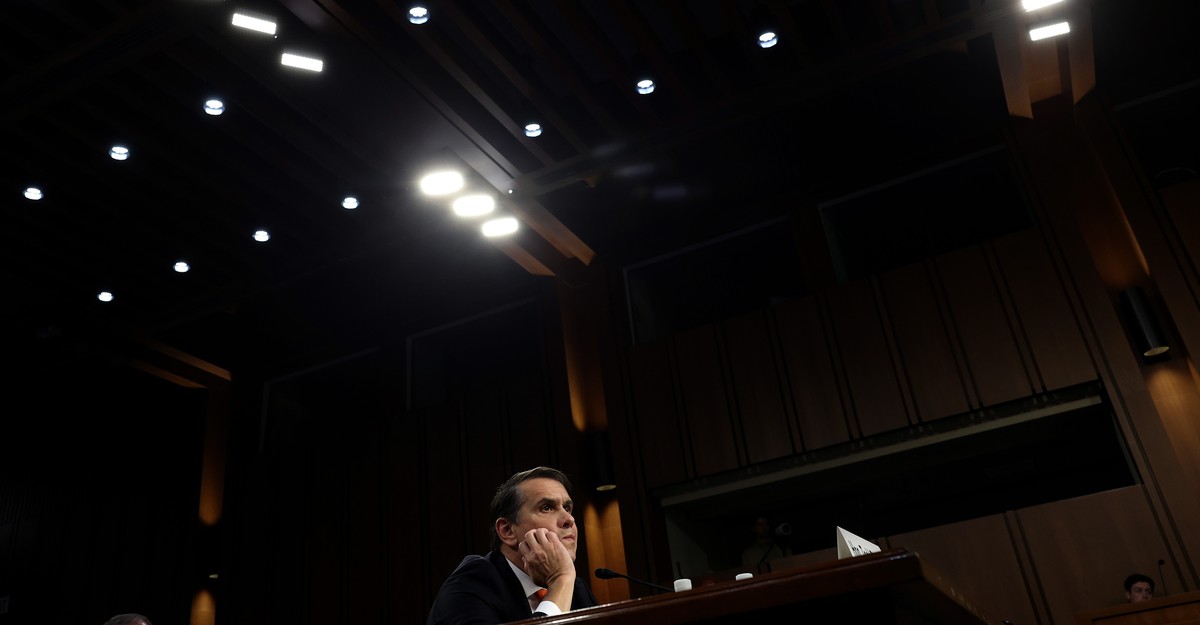
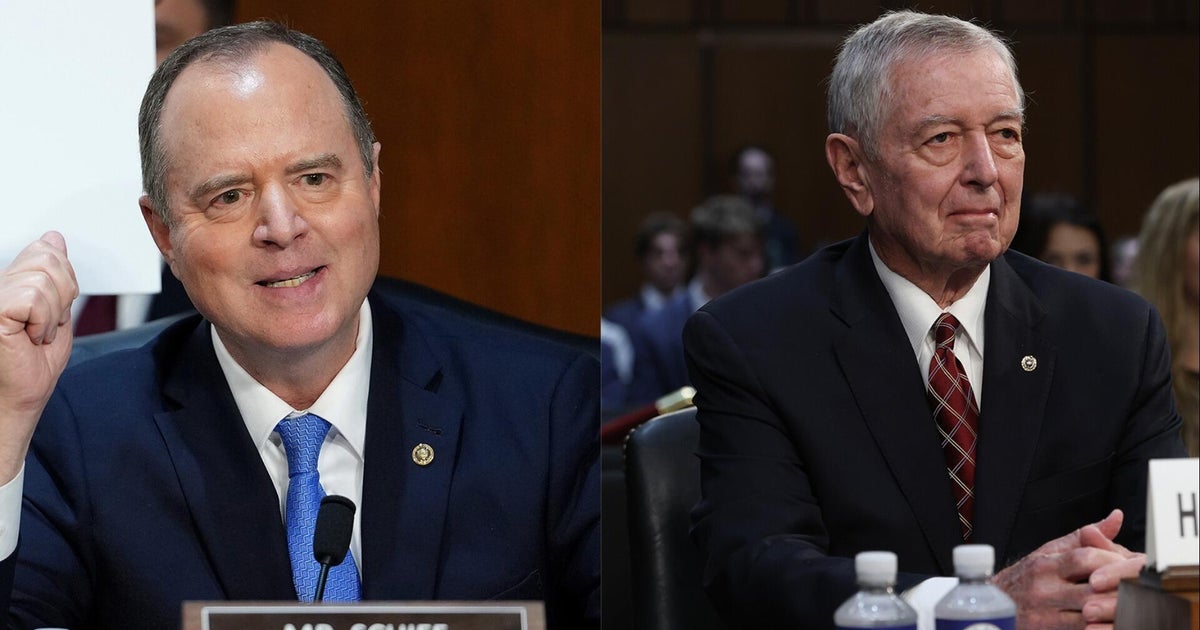
The most stunning exchange of Todd Blanche’s confirmation hearing to serve as attorney general came in response to an amiable question. Senator John Kennedy from Louisiana, a Republican who appears favorably inclined toward Blanche, asked the nominee whether he considered himself to be the president’s friend.
Blanche, who is currently leading the Justice Department in an interim role, responded: “I’m his lawyer.” Then, perhaps, realizing his mistake, he corrected himself. “Was his lawyer,” he said. “And now I’m the deputy attorney general.”
In politics, this is what is known as a Kinsley gaffe, a term coined by the journalist Michael Kinsley: an instance where a political figure says something true that he didn’t intend to admit. Blanche’s day job may no longer involve working as President Trump’s private attorney, but his conduct at the top of the Justice Department has left little doubt that his primary loyalty is not to the United States or the Constitution but to the man in the White House. Blanche’s willingness to twist the law to Trump’s advantage has unnerved even some usually quiescent Senate Republicans, and he may face a tight confirmation vote in the weeks ahead. But whether or not Blanche secures the top job, yesterday’s hearing before the Senate Judiciary Committee made clear that Trump has demolished everything but the occasional pretense of an independent Justice Department.
For Blanche, the confirmation process is essentially a formality. Even if the Senate rejects his nomination, he can likely continue to lead the department as acting attorney general—as he has already done for three months since the departure of Pam Bondi. Trump fired Bondi after becoming frustrated with her inability to adequately implement his plans for revenge, and Blanche, it seems, has made up his mind that he will not be subject to the same fate. He has already applied himself single-mindedly to the project of making Trump happy, wielding the skills he developed while leading Trump’s criminal-defense team prior to the 2024 election.
[Read: Does Todd Blanche have a red line?]
Under Blanche, the Justice Department has launched investigations and brought a series of laughably weak criminal cases against a handful of Trump’s enemies, including felony charges against former FBI Director James Comey for posting an Instagram picture of seashells spelling out “86 47.” Additionally, in May, Blanche unveiled an agreement that ended any IRS audits of the president and seemingly purported to immunize Trump and his family from any other government investigation into their past actions. That was paired with the announcement of a $1.776 billion “Anti-Weaponization Fund,” which would use taxpayer money to pay supposed victims of persecution by the Biden administration. News of the fund was greeted with outrage from both Democrats and Republicans on the Hill, and Blanche quickly backpedaled. But he still managed to secure the coveted marker of status: Trump’s nomination for the permanent role of attorney general.
Until very recently, this sycophancy would have been obviously disqualifying for the role. After the abuses of Watergate, DOJ refashioned itself to resist political interference by the White House in the name of dispensing impartial justice. This tradition, hard-won, has been treated by the second Trump administration as a faintly ridiculous artifact of bygone times, and most Republican senators on the Judiciary Committee appear unconcerned by Trump’s meddling in the Justice Department’s work. To the extent they addressed the issue, it was largely to suggest that Blanche’s relationship with Trump was not out of line with historical practice. After Blanche’s slip, Kennedy went on to point out that previous attorneys general had included the brother of one president and the former law partner of another. (The senator did not mention that John F. Kennedy’s appointment of Robert Kennedy was hugely controversial at the time, nor that the law partner in question—John Mitchell, appointed by Richard Nixon—would go on to be criminally charged and lose his law license for his involvement in Watergate.)
As the saying goes, hypocrisy is the tribute that vice pays to virtue. Blanche did pay at least a few pennies of tribute to the notion of a Justice Department not entirely subsumed to presidential power. DOJ is “part of the executive,” and “Article II of the Constitution gives the power of the executive to President Trump,” he told Democratic Senator Chris Coons, before adding, “We certainly operate with integrity.” Later, he hedged once again when questioned by Coons’s Democratic colleague Alex Padilla, who recalled Blanche telling him in a private meeting that “the independence of the department was a misnomer in the context of the Department of Justice.” Blanche said, “I definitely did not say that, but nice try.” Instead, he clarified, “My obligation is to the American people and the rule of law. That being said, I am a member of the Cabinet of the president of the United States.” In the absence of any significant demonstration of integrity or independence, this is a slender reed on which to rest a distinction.
[Jonathan Chait: William Barr’s dangerous endorsement of Todd Blanche]
Blanche’s feigned outrage at Padilla may have been born of necessity. The GOP cannot afford to lose a single vote on the Judiciary Committee if Blanche’s nomination is to move forward—and the committee includes two lame-duck Republicans, John Cornyn of Texas and Thom Tillis of North Carolina, who could conceivably buck the party line. Tillis, who spent much of his time at the hearing complaining about the Biden administration, seemed positively inclined toward Blanche. Cornyn, though, questioned Blanche closely on the Anti-Weaponization Fund and DOJ’s immunity agreement with Trump. Blanche insisted that the fund was “not moving forward,” but acknowledged that the president had not agreed to forgo the program in writing and could potentially sue DOJ for breach of contract over the failure to put the fund in place. Later, he dodged a question from Padilla about whether, even in the absence of the fund, DOJ could pay January 6 rioters through a preexisting process under the Federal Tort Claims Act.
After the hearing, Cornyn told reporters that he remained undecided on Blanche’s nomination. Tillis said he was “leaning yes” but wants the Justice Department to endorse legislation that would kill the fund once and for all. If the senator sticks to that demand, then Blanche’s chance of getting confirmed will depend on his ability to secure this small marker of autonomy while retaining Trump’s confidence that Blanche can be relied upon to carry out his dirty work.
Traditionally, Senate-confirmed officials are considered more independent from White House interference than temporary appointees, having made commitments to Congress as well as the president. Here, though, there is little reason to believe that a Senate vote will alter Trump’s demands for absolute fealty from the Justice Department. Blanche may have exaggerated his displays of loyalty in order to secure his nomination as attorney general—but Trump rarely accepts less after he is given a taste of what he wants.