One Place News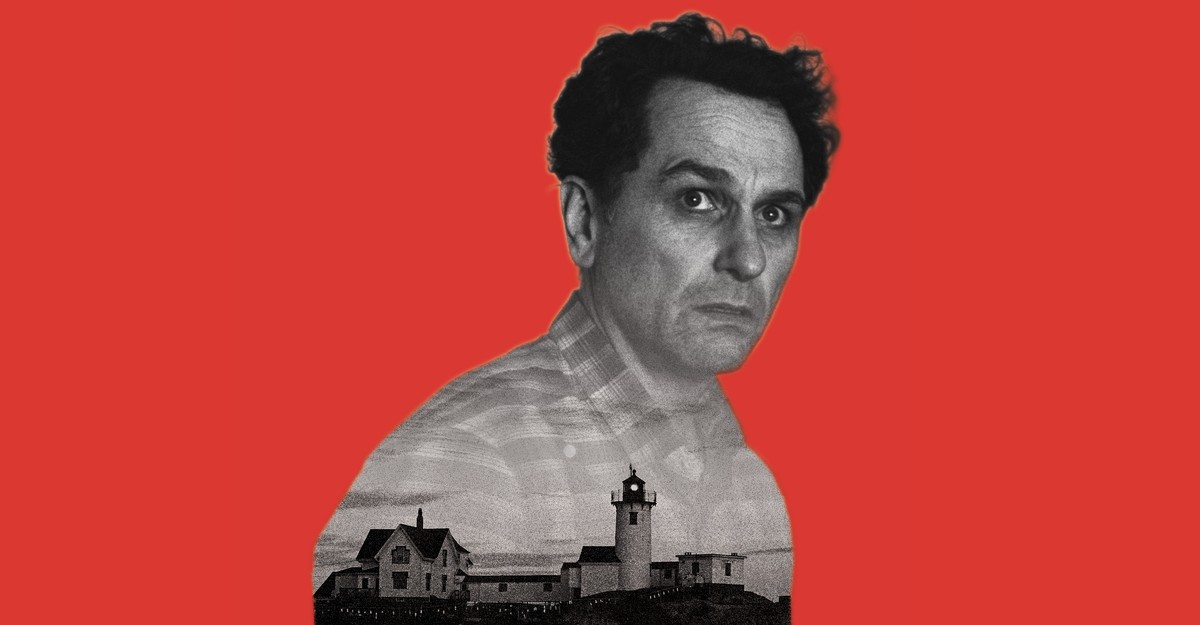
What genre are we living in, living through, today? Epic? No chance. Farce? Sometimes. Porno-pastoral? Holistic satire? Digital picaresque? All of these, sure, but only in spasms. No, the big one, the all-encompassing super-genre of where we are right now (did you read/watch/inhale the news this morning?), is obvious: horror-comedy.
Horror (screams) is over here, and comedy (laughs) is over there. And exactly where we find ourselves on the dial that ticks between the two will vary from moment to moment. But the distance that separates them, in 2026 America, is not great; that’s the point. The ludicrous abuts the terrible. The ghastly now sits down heavily next to the hilarious, and breathes.
Which brings us to Widow’s Bay, currently riding high on Apple TV, by the former Parks and Recreation writer Katie Dippold. Not only does this show successfully blend the genres of horror and comedy; it reminds us that they are kind of the same thing—that horror was always wrapped around comedy, and vice versa, because they share the same brain stem. Sitcom-style no-exit environments; slapstick violence; the alternating rhythm of anxiety and release. The jump scare, the punch line. The existential whiplash. And what greater monster, what deeper bump in the night, than the possibility that all of this is, you know, just one big joke?
Widow’s Bay is an island off the coast of New England. It has a diner called the Driftwood, some nice beaches, some craggy old fishermen, no cellphone service, and no Wi‑Fi. The lack of hooked-upness feels important: It is as if the island’s imagination, absent the usual distractions and numbing agents, has gone into blooming-and-festering psychotic overdrive. Everywhere you look there’s a curse or a mystery or a bottomless backstory, and the whole place creaks and slithers with that special Stephen King–like aura of hexed quaintness, of bed-and-breakfast menace.
Widow’s Bay has a mayor, Tom Loftis, who wants to turn it into the new Martha’s Vineyard. Loftis, played by Matthew Rhys, is a figure of quietly fanatical secularism and non-ghost-ism. Clear out the cobwebs and crank up the cappuccino machine. But it is his one-man campaign of gentrification and municipal enhancement that will activate the demons of the island. He whose blundering-about like Michael Scott will bring in the evil fog. He whose desire for summer visitors—and impatience with any kind of supernatural nonsense—will wake up the killer clown and the lurching slasher and the dripping, lank-haired sea hag, who follows you home and sits horribly and brinily on your face until you’re dead. “You refuse to accept our history, to accept the truth!” rails Wyck the fisherman, the wild-eyed town doomsayer. “Do you know what I think?” says Loftis. “I think there are some people who want to be miserable.”
Rhys as Loftis is expertly cast. Bloodless complexion, inky hair—a great silent-movie face, I’ve always thought, a melodramatic black-and-white face, with something nervously mobile and Chaplin-esque flickering around the mouth, the bared-teeth smile. The tonal coherence of Widow’s Bay depends to a large extent on Rhys, on his ability to ride the current between goofy startlement and raw terror. Loftis lives with, and glumly rinses out the cereal bowls of, his rebellious stoner son, Evan—an extraordinary performance by Kingston Rumi Southwick, full of hazily disruptive rhythms and long, glossy, bullshit-detecting gazes. “I didn’t know we were swearing now,” he says placidly, having provoked his father into a burst of addled profanity.
Then there’s Patricia, played by the English actor Kate O’Flynn. Awkward, traumatized, alarming on the dance floor, doggedly writing her poems and trying to make friends, in horror she’s a victim and in comedy she’s a heroine. So on the horror-comedy island of Widow’s Bay she’s both, embellishing how she almost got murdered during a spree by the aforementioned lurching slasher. Remember all those fake memoirs from the early 2000s, by all those writers pretending to be addicts and gangsters and Holocaust survivors? Patricia could have written one of them. “I still sleep with a dresser in front of my door,” she insists. “But he murdered teenage girls,” Loftis says helpfully. “You’re in your 40s; you’ll be fine.” “Beach Reads,” the episode in which Patricia organizes a cocktail party based on the guidance of a slightly sinister self-help/etiquette manual (“Feeling like you could die tomorrow and no one would notice? Well, that could be. But the right party can change that.”), is a stand-alone classic: When the veil of hallucination lifts, the manual is revealed to be a Blair Witch–style grimoire.
It’s very well-made, Widow’s Bay. The soundtrack—by the frequent Hans Zimmer collaborator David Fleming—is a delight, a polyphonic mood board of ghost-clangs, spooky bassoons, lyrical electro-motifs, and sighing sea themes. And some of the images are indelible: A close-up of Rhys prone and horror-rigid in his bathtub, the watery essence of the sea hag hovering over his face, will not soon be dislodged from my mind.
The risk, though, with horror-comedy—with dinging from chuckles to shrieks and back again—is always an evacuated center. A lack of feeling at the core.
The masterpieces of the genre have the means to overcome this. Edgar Wright’s Shaun of the Dead is more chuckles than shrieks, but it makes a serious metaphysical statement: If you let your life drift, if you sit in the pub all day, if you don’t self-actualize, the zombies are going to get you—the zombie tide will take you down. Jordan Peele’s Get Out is more shrieks than chuckles, but some of its creepiest moments occur within a brilliantly observed comedy of manners, as Chris, a young Black man, is introduced to his girlfriend’s preeningly progressive white parents, and begins to be drawn into the sticky web of their whiteness. (“So how long has this been going on?” leers the dad about his daughter’s relationship. “This—this thang.”) As for Twin Peaks … Well, Twin Peaks is Twin Peaks. Nobody does it like David Lynch, bringing such a pressure of seething strangeness to bear on both the chuckles and the shrieks that a third element was created, a third genre: the Lynchian.
Season 1 of Widow’s Bay does not operate at this level. The final showdown with the island’s dark past gives you not catharsis but that more familiar groggy, post-binge, hunched-over-your-laptop feeling, your brain glutted with narrative and your antennae drooping. But a second season is in the works, with the potential to deepen the action, and the world will reliably continue to keep us in the mood: more horror, more comedy. Nobody’s getting off this island yet.
This article appears in the September 2026 print edition with the headline “Not Quite the Vineyard.”