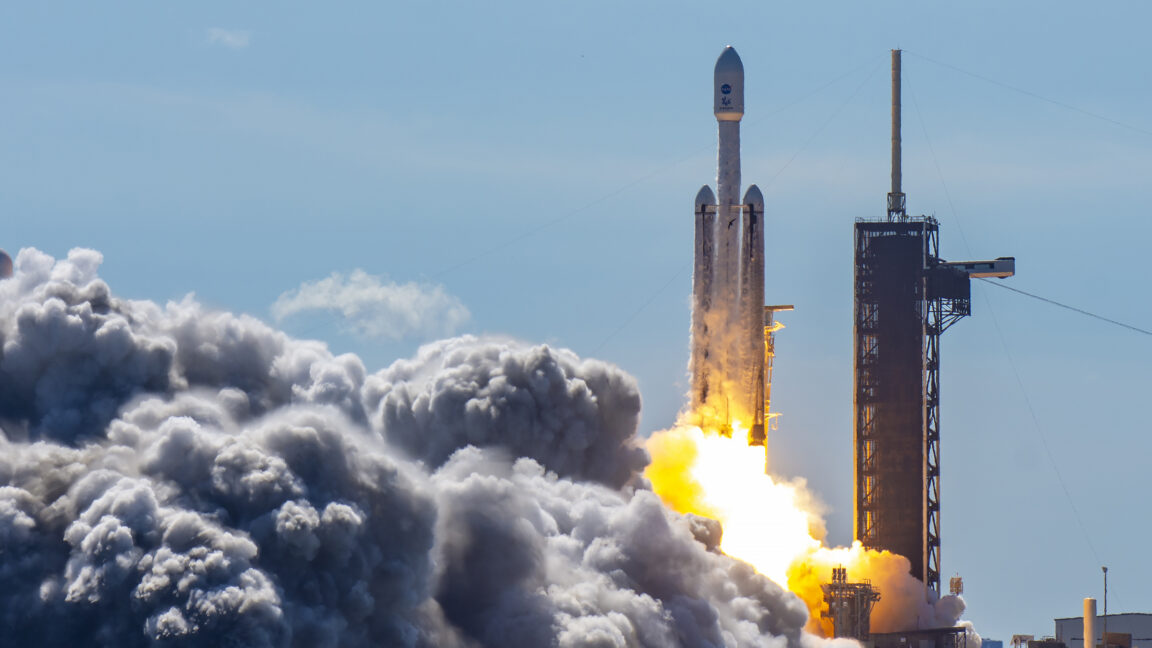
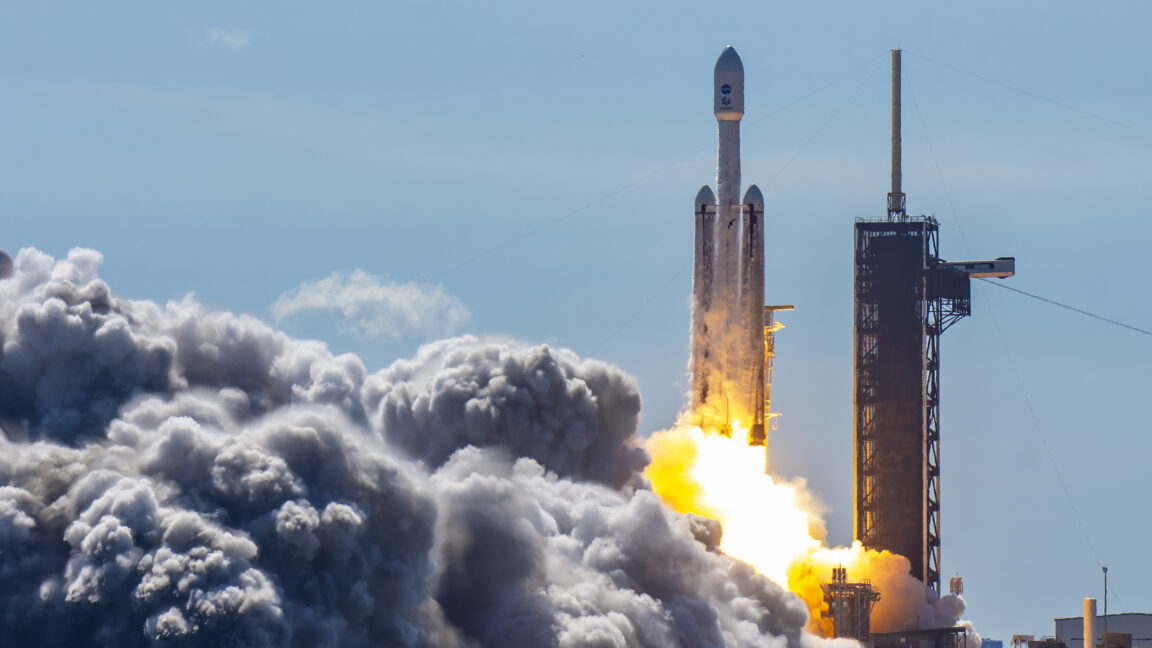
It seems as though $5.6 billion wasn’t enough. That was the news from the US Space Force on Friday, when military officials announced they were tripling the maximum value of one of the service’s National Security Space Launch contracts to $17 billion.
The expansion of the Space Force’s National Security Space Launch (NSSL) Phase 3 contract comes as the Pentagon signals rising demand for military satellite launches. The NSSL program is set up to allow Space Systems Command, which oversees the Space Force’s launch program, to select from a pool of launch providers for individual missions to deliver the military’s satellites to orbit.
The NSSL program has two parts. Lane 1 covers the Space Force’s more risk-tolerant missions, such as medium-lift launches with experimental payloads or rideshare missions carrying satellites for the Pentagon’s surveillance or data relay constellations. Lane 2 includes higher-priority strategic missions, like the government’s largest and most expensive spy satellites, or radiation-hardened communications satellites designed to survive a nuclear war.
Read full article
Comments
It seems as though $5.6 billion wasn’t enough. That was the news from the US Space Force on Friday, when military officials announced they were tripling the maximum value of one of the service’s National Security Space Launch contracts to $17 billion.
The expansion of the Space Force’s National Security Space Launch (NSSL) Phase 3 contract comes as the Pentagon signals rising demand for military satellite launches. The NSSL program is set up to allow Space Systems Command, which oversees the Space Force’s launch program, to select from a pool of launch providers for individual missions to deliver the military’s satellites to orbit.
The NSSL program has two parts. Lane 1 covers the Space Force’s more risk-tolerant missions, such as medium-lift launches with experimental payloads or rideshare missions carrying satellites for the Pentagon’s surveillance or data relay constellations. Lane 2 includes higher-priority strategic missions, like the government’s largest and most expensive spy satellites, or radiation-hardened communications satellites designed to survive a nuclear war.
Read full article
Comments
 One Place News