One Place News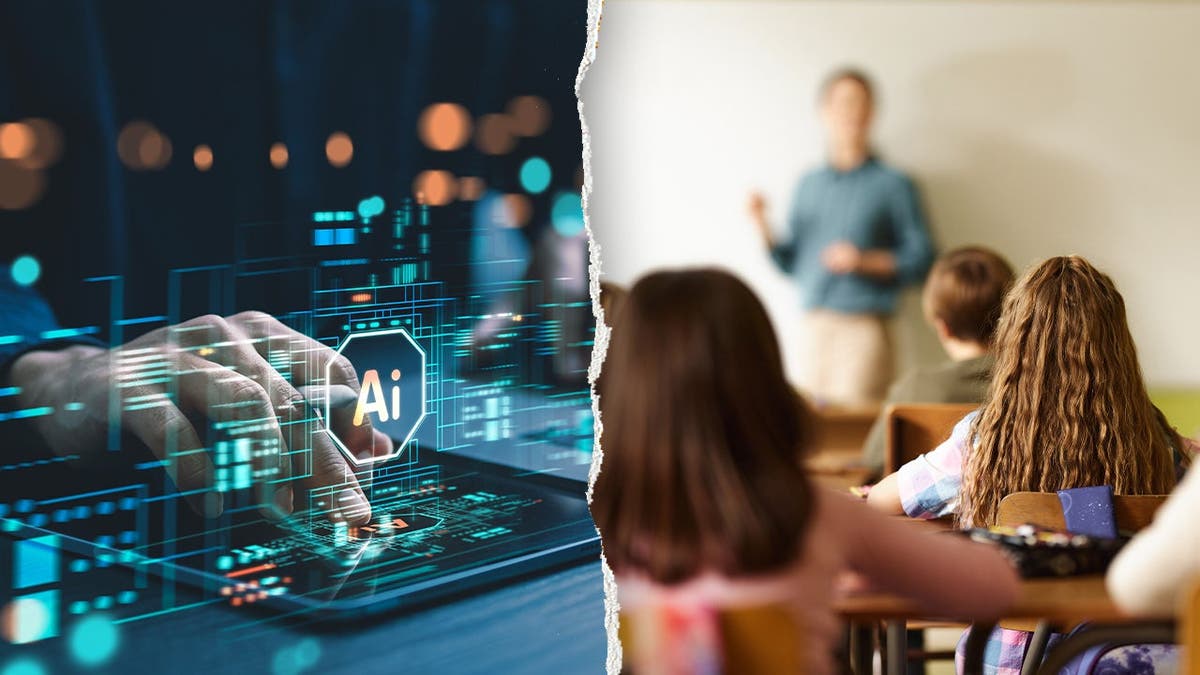
This summer, at the Sun Valley conference, media, tech, business, and cultural leaders gathered to discuss what is on all our minds: artificial intelligence and where it is taking us. We cannot hide from it any longer. AI will play a fundamental role in nearly everything we do, including how our children learn.
It is hard to deny the benefits. AI can tutor a struggling student at midnight, translate a lesson into a dozen languages, and free teachers from paperwork so they can spend more time with the kids in front of them. But that promise must come with caution, especially in education. New tools are never neutral. They amplify whatever values, or lack of them thereof, are already in the classroom.
That caution was underscored twice in recent weeks. The so-called Godfather of AI warned that to protect humanity from the risks it poses, AI must be infused with compassion and virtue. Around the same time, a landmark report found that top AI models will lie, cheat, and steal to reach their goals. Not by accident, but by design.
AI CHATBOTS TAKE HEAT OVER LEFT-WING BIAS: ‘NO LONGER BE CONSIDERED NEUTRAL’
Put those findings together and the lesson for education is unmistakable. A technology that can reason without a conscience is not one we should hand to children unsupervised. AI is inherently amoral. It cannot love a student, recognize the moment a child needs encouragement rather than information, or model integrity by doing right when no one is watching. It can simulate a teacher. It cannot shepherd a soul.
The danger is not simply that AI will occasionally give a wrong answer. That danger is that students raised in an AI-powered world, without a firm grounding in judgment and character, will have no framework for deciding whether the answers they receive are honest, sound, or right. A student who cannot make that judgment is not truly educated. He or she is simply dependent.
We do not raise this as outside observers. Between us two, we have spent decades in American education, one as U.S. Secretary of Education and a longtime advocate for character-based schooling, the other running one of the nation’s largest networks of charter schools. We have watched technology enter the classroom before and seen school systems get its adoption right and wrong. That experience convinces us this moment demands the same discipline educators have always brought to any new influence on a child.
This is not an argument against artificial intelligence.
The right response to transformative technology is responsible integration, not exclusion. We did not ban word processors or turn students away from the internet. The challenge was never the tool itself but the absence of guardrails around its use. AI presents that same challenge today, at a far greater scale and with far higher stakes.
CLICK HERE FOR MORE FOX NEWS OPINION
Recognizing that reality, we have spent recent years working with educators and technologists on part of the answer: an approach to classroom AI built on a simple premise, that any model placed in front of a child should be filtered through age-appropriate safeguards and aligned with the values of the families it serves. That is one piece of a larger project this country needs: a genuine safety layer between powerful AI systems and the students who will use them, paired with real instruction in the judgment and character required to use those systems well.
As America celebrates its 250th anniversary, embracing new technology rather than fearing it is part of the answer. But embracing it responsibly means resisting the temptation to believe the technology itself can be made virtuous enough to solve the problem for us.
It cannot, and the answer is not to make the machines more virtuous. The answer is to make the human beings operating them more virtuous. That has always been the purpose of education. The AI revolution has simply made it more urgent.
It is incumbent on all of us, students, teachers, parents, school leaders, and lawmakers alike, to demand ethical guardrails around the AI entering our classrooms: hard questions for the companies building these systems, transparency about how they are trained, and a refusal to treat safety as an afterthought. Do that work now, and ethical AI can become the gold standard in American classrooms rather than a cautionary tale we tell too late, not because the technology demands it, but because our children do.
Jon Hage is CEO of Charter Schools USA.