One Place News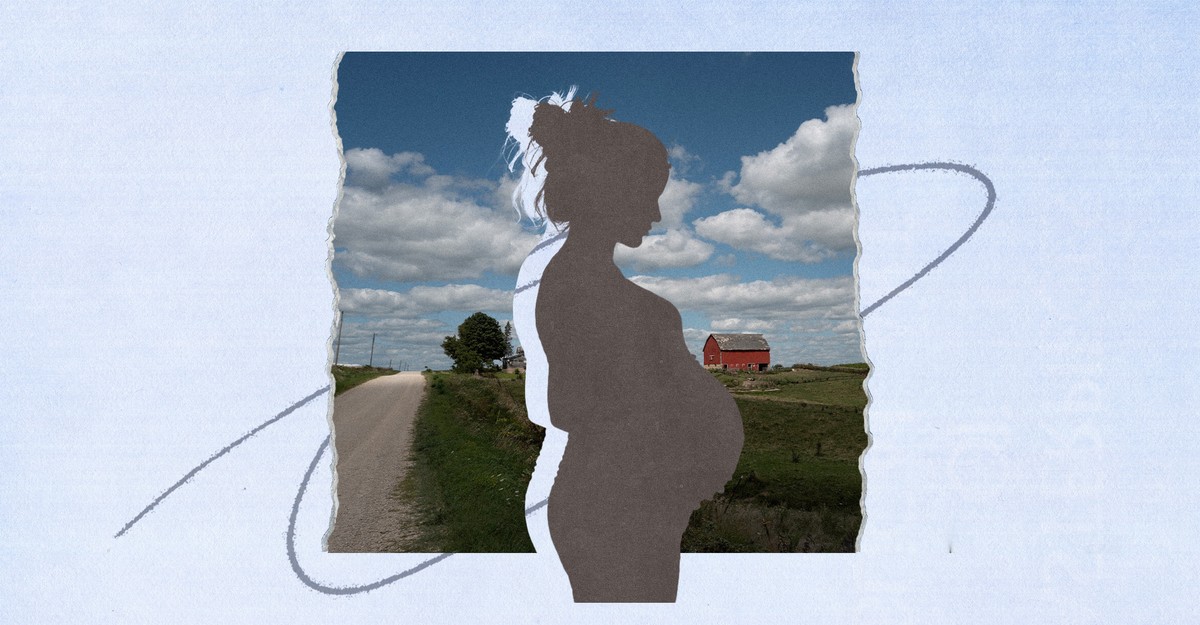
The nation’s crisis in maternity care and newborn health is concentrated in the countryside—and federal policy is about to make that crisis significantly worse. In the months and years ahead, unless something dramatic changes, giving birth in a rural county is going to become an even more dangerous prospect. Care will be in shorter supply, travel distances will stretch further, and high-risk situations will more likely result in mortality.
On nearly every metric, rural mothers already fare worse. Maternal mortality—death during pregnancy, childbirth, and the first six weeks after delivery—averaged 81 percent higher in rural areas than in urban ones from 2016 to 2019. During that same period, rural women had a roughly 14 percent higher risk than urban women of needing treatment in an intensive-care unit during or after delivery; they are almost twice as likely to require transfer during or after birth to another hospital because a needed treatment is not available where they are.
These figures reflect the dismal state of rural-health-care infrastructure, which is particularly acute in maternity care. Since 2005, 109 rural hospitals have closed outright. Of those that remain, many have been closing down their labor-and-delivery units. Most rural hospitals no longer offer labor-and-delivery services, and in the past five years, an average of more than two rural hospitals a month have closed these units. As of 2023, 60 percent of rural counties had no hospital-based obstetric care. With few options available, rural women are less likely than urban women to receive prenatal care; this in turn makes them and their babies more susceptible to preventable complications.
Several related factors have contributed to these closures. Labor-and-delivery units have high fixed costs (physician and nurse salaries, birthing beds, fetal warmers), making them a financial liability if they are not operating at or near capacity. As fertility has declined, more units have gone into the red because they have too many empty beds. But even a steady flow of patients is not always enough: A rural hospital’s labor-and-delivery unit can struggle economically despite full beds because pregnant rural women are less likely than pregnant urban women to be enrolled in the commercial insurance plans that have high reimbursement rates. Instead, rural women are more likely to be enrolled in Medicaid, which has lower reimbursement rates, or to have no insurance at all.
[Read: The largest undocumented disparity in maternal health]
Further, only 4 percent of the country’s ob-gyns practice in rural areas, which is where 10 percent of women ages 15 to 49 live. And that proportion is likely to fall even more because many new entrants to the field are not willing to do a residency or start a practice in states that restrict abortion, many of which are more rural.
Rural family doctors can and do still deliver babies in the absence of ob-gyns. But the proportion of generalist doctors willing and trained to do so has been declining for decades. Many family physicians I met while touring rural areas as part of a Brookings and American Enterprise Institute commission on rural life cited liability risks as the motivator of their retreat from maternity care. Adverse birth outcomes are among the most common claims against physicians in medical-malpractice lawsuits, and awarded judgments can be very high, which inflates the liability-insurance premiums that doctors must pay. In addition, in places with few ob-gyns, a generalist is more likely to have to handle high-risk cases without expert help.
As dire as this situation already is, public policy is about to make it worse. Prior to the second term of President Trump, rural areas were trying to make up for health-care-professional shortages through the H-1B visa program. The proportion of practicing physicians from other countries who are on an H-1B visa is almost twice as high in rural areas than in urban ones. Last September, Trump issued an executive order dramatically increasing the cost of H-1Bs to $100,000, which will surely have an effect on how many people can come to the United States with this status.
An even greater challenge will be the massive cuts to Medicaid within the One Big Beautiful Bill Act, many of which Congress set to go into effect after this fall’s elections. Medicaid covers more than 40 percent of American births overall and an even higher proportion in rural areas. More generally, the program is crucial to the financial viability of many rural hospitals, such that even if the cuts didn’t touch pregnant women at all, they could still deprive women of care by producing more rural-hospital closures. As an inducement to get votes from conservative rural congressional members, the OBBBA included a $50 billion Rural Health Transformation Fund, but this is substantially less money than the Medicaid cuts will total across rural America.
Proposing federal-policy solutions to this crisis may seem quixotic when Washington is so dysfunctional and polarized. But both parties have good reason to be responsive to rural voters. Partisan attachment in urban and suburban areas has been remarkably stable in recent decades, but rural areas have shifted sharply, meaning that Republicans want to hang on to their new advantage and Democrats want to swing things back. Beyond political self-interest, many policy makers genuinely care about maternal and newborn health even if they do so for markedly different reasons—a feminist commitment to women’s health for some, worries about declining fertility for others.
One simple step that the Trump administration could take tomorrow would be to drop its appeal of U.S. District Court Judge Leo T. Sorokin’s recent ruling that the executive branch does not have the authority to jack up the price of H-1B visas. If that is a bridge too far, an alternative would be to exempt rural health professionals from the scope of the order. The stated purpose of the order—to stop immigrants from taking jobs from Americans—is clearly not a concern in rural counties that have no obstetric care at all.
[Read: The states where it’s riskier to have a baby]
Another worthy step would be to expand the availability of telehealth. Some rural states, such as North Dakota, have excellent broadband connectivity, but others, such as Alaska, do not and will need federal assistance to build it in general or for specialty purposes—for instance, a telehealth center for all patients in each county. Of course, many aspects of maternal care cannot be provided at a distance, but even so, having this option more widely available could be useful for fielding routine questions and identifying cases that require in-person care.
More crucially, the Rural Health Transformation Fund should be at least doubled to cushion the blow of Medicaid cuts. Although most Republicans would probably oppose the added spending, perhaps it could be coupled with something that most Democrats would likely oppose but that would also expand rural maternity care: capping liability awards in medical-malpractice cases.
But the most radical and useful policy would be to stop making the prenatal care and birth of Americans dependent on the whims of each state’s Medicaid policy and the national political currents of the day. Instead, the government should define getting a healthy start in life as the entitlement of every American and therefore something that should be federalized like Medicare, with services reimbursed at a rate that keeps labor-and-delivery units and prenatal-care programs viable wherever they are needed. The future of a country quite literally depends on healthy births.