One Place News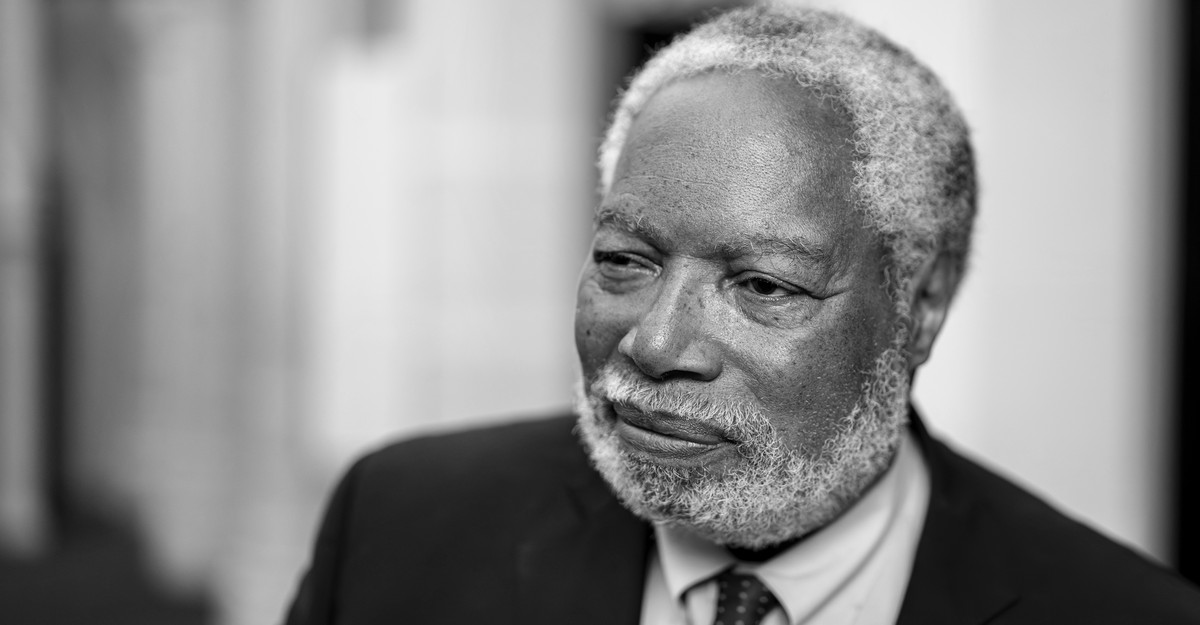
This story was updated at 4:12 p.m. on September 8, 2026.
Smithsonian Secretary Lonnie Bunch plans to retire from the institution at the end of this year, bringing to a close a tenure marked by unprecedented pressure on the museum complex from a White House keen on controlling how to tell the nation’s history. After a person with knowledge of the situation confirmed the departure to The Atlantic, Bunch addressed Smithsonian employees at a town hall this afternoon, telling them, “I may be going away, but I’m still going to be a pain in the ass to some people.”
The crowd of staffers, who spilled out of an auditorium and into an overflow room at the Hirshhorn Museum, clapped and cheered, even as some likely wondered: Why now? In conversations with intimates, Bunch has been floating his retirement since at least the beginning of this year. But the increased attention from the White House surely made stepping down an even more delicate decision. Bunch, who is 73, tried to deflect any notion that his departure was Trump-related, telling staffers, “I now realize that I’m old as dirt, and it’s time for the next chapter in my life.” He also suggested that the timing may have been influenced by his wife, Maria Marable-Bunch, who recently retired from the National Museum of the American Indian. “The Smithsonian represents more than a career to me; it’s been an integral part of who I am,” he said. “I think about during the many years here, I met the love of my life, who’s retired and told me I better retire soon.”
Bunch’s exit will leave the Smithsonian, which is largely federally funded, with a vacancy at the top as it faces escalating efforts from the Trump administration to influence its work. Bunch, known to be diplomatic and evenhanded, had largely staved off the White House’s encroachment over a tumultuous 18 months in which the administration issued executive orders and letters criticizing the museums and threatened to withhold funding. In July, President Trump signed an executive order calling for signage to be added to the exterior of the National Museum of American History warning about what the administration claims is an inaccurate and partisan telling of history. Smithsonian leaders have countered that telling the American story fairly and accurately means discussing its complexities too.
In a news release, Bunch said: “There is no place like the Smithsonian—it has been one of the great loves of my life, and I am extraordinarily proud of what we have accomplished together. I leave with pride and sadness, gratitude and joy, and with enormous confidence in the people who will carry this remarkable institution forward.” The chair of the Smithsonian Board of Regents, Franklin D. Raines, thanked Bunch for his service and said the institution’s governing body will be “focused on ensuring stability during this time of transition.” He said that the Smithsonian would soon announce an acting secretary and begin a search for Bunch’s successor. “There are some very strong internal candidates,” Kim Sajet, the former director of the National Portrait Gallery, told us today.
Before becoming secretary of the entire Smithsonian, Bunch was the founding director of the National Museum of African American History and Culture, which has been widely praised for its powerful handling of the darkest chapters of America’s past. In Bunch, the Smithsonian had at its helm an advocate for its continued independence. The first historian and the first Black leader of the 21-museum complex, he spent nearly 38 years in roles across the institution. His departure has increased anxieties about the institution’s future.
[Read: First the Kennedy Center, now the Smithsonian]
“As the only Secretary of the Smithsonian to come from a background in history, he was well positioned to understand—and to defend—the discipline when history itself is under attack,” a former colleague of Bunch’s, who worked with him for years, texted us after the news. “His eloquent defense of history, grounded in a deeply rooted cultural understanding of the American story, will leave a leadership vacuum and the Smithsonian will be ever more vulnerable,” the colleague, who requested anonymity out of fear of reprisal from the administration, went on.
In a way, Trump and Bunch exemplified a primary tension facing not only the Smithsonian in this moment but the field of American history more generally. Trump’s call for a feel-good, Founding Fathers–forward telling of American history is somewhat at odds with Bunch’s biggest achievements: the dramatic reevaluation of whose story has a place on the National Mall and how the country faces the harder parts of its past. Bunch will leave the institution just as it seeks to hold off a threat against the very work that defines his legacy.
One of the most dramatic illustrations of that tension occurred in May 2025, when Trump announced that he was firing Sajet, even though he had no authority to do so. The Board of Regents affirmed Bunch’s authority over hiring and firing, though Sajet ultimately resigned from the National Portrait Gallery in June, saying that the dispute had become a distraction for the institution. Sajet, who now leads the Milwaukee Art Museum, told us she still misses the Smithsonian and has watched with dismay as the pressure that came for her first continues to bear down on her former colleagues.
Through the changes, Sajet said that she and Bunch have remained in close touch. “I think it’s one of the loneliest jobs in the world to be in the head of a large institution like that,” she said.
Sajet said Bunch’s background as both a historian and a museum director made him well suited to steer the Smithsonian through periods of turmoil—including the racial-justice reckoning after George Floyd’s murder and the pandemic. “I know that you believe that your legacy is building the National Museum of African American History and Culture,” Sajet recalled telling him. “But I’d like to suggest to you that you being the secretary at this particular moment in time is really important.” She said she believes those same qualities carried him through the Smithsonian’s showdowns with the White House, adding that he’s labored to maintain the institution’s unusual relationship with the federal government (all three branches are represented on the Board of Regents). “He’s tried very hard to maintain the respect for our elected officials, and I admire him for it,” Sajet said.
Trump’s attacks at times seemed to directly target Bunch’s work. Last summer, the president came after the Smithsonian on social media, writing that it focused too much on “how bad Slavery was.” The two later met over lunch at the White House, a conversation that Bunch described as “the most stressful lunch I’ve ever had in my life.”
In a December letter that the administration sent to the Smithsonian, the White House threatened to withhold funding if the museum complex did not comply with an order to send over a trove of documents about its work and comply with its demands to tell an adequately patriotic version of American history. Americans “will have no patience for any museum that is diffident about America’s founding or otherwise uncomfortable conveying a positive view of American history,” the letter said. This summer, the administration ordered the National Park Service to put up signs that would attempt to discredit the National Museum of American History. Throughout the pressure campaign, many have praised Bunch for sheltering the museums from the worst of it.
Shanita Brackett, the current acting director of the National Museum of African American History and Culture, told our colleague Clint Smith earlier this year that Bunch has set an example in tough times. “What he’s taught us over the last 14 months is not to be afraid, not to run,” Brackett said.
Bunch had become more direct in standing up for the institution in recent months, telling CNN’s Christiane Amanpour this summer that he believes “it’s our job to tell an accurate, complex, and truthful history,” and that “it scares me when people aren’t brave enough to face their history.”
Still, Bunch’s legacy goes beyond holding the line between a beloved American institution and an overbearing president. Bunch first joined the institution in 1978, starting at the Air and Space Museum, and he later took on a number of roles at the American History Museum from 1989 to 2000, including associate director of curatorial affairs. After serving as the president of the Chicago Historical Society, he returned in 2005 to the Smithsonian to build the National Museum of African American History and Culture, which opened in 2016. Under his watch, two more museums were authorized by Congress: the American Women’s History Museum and the National Museum of the American Latino. Both have faced political roadblocks; the regents recently voted to open the Latino museum in a prominent building on the National Mall that the Smithsonian already controls in order for it to move forward without having to rely on Congress or the Trump administration to grant it a new site.
At the town hall today, Bunch cited the plans for the new museums, the return of pandas to the National Zoo, and the celebrations for the country’s 250th birthday as among his proudest accomplishments. A show he co-curated, likely his final for the Smithsonian, was mounted at the Smithsonian Castle this summer, offering a subtle rejoinder to those who think history is a finished story, meant only for finding glory. The framing of this show for the country’s birthday, according to its introductory text, was Thomas Jefferson’s urging that the newly formed United States be a nation “in pursuit.”
This is a developing story and will be updated.