
Under congressional pressure, a major Muslim charity cuts ties and changes its name
Get RNS’ thoughtful, essential religion reporting every morning. Sign up for free!
(RNS) — One of the nation’s largest Muslim charities has changed its name and cut ties with a network of international partners after calls from members of Congress to revoke its tax-exempt status.
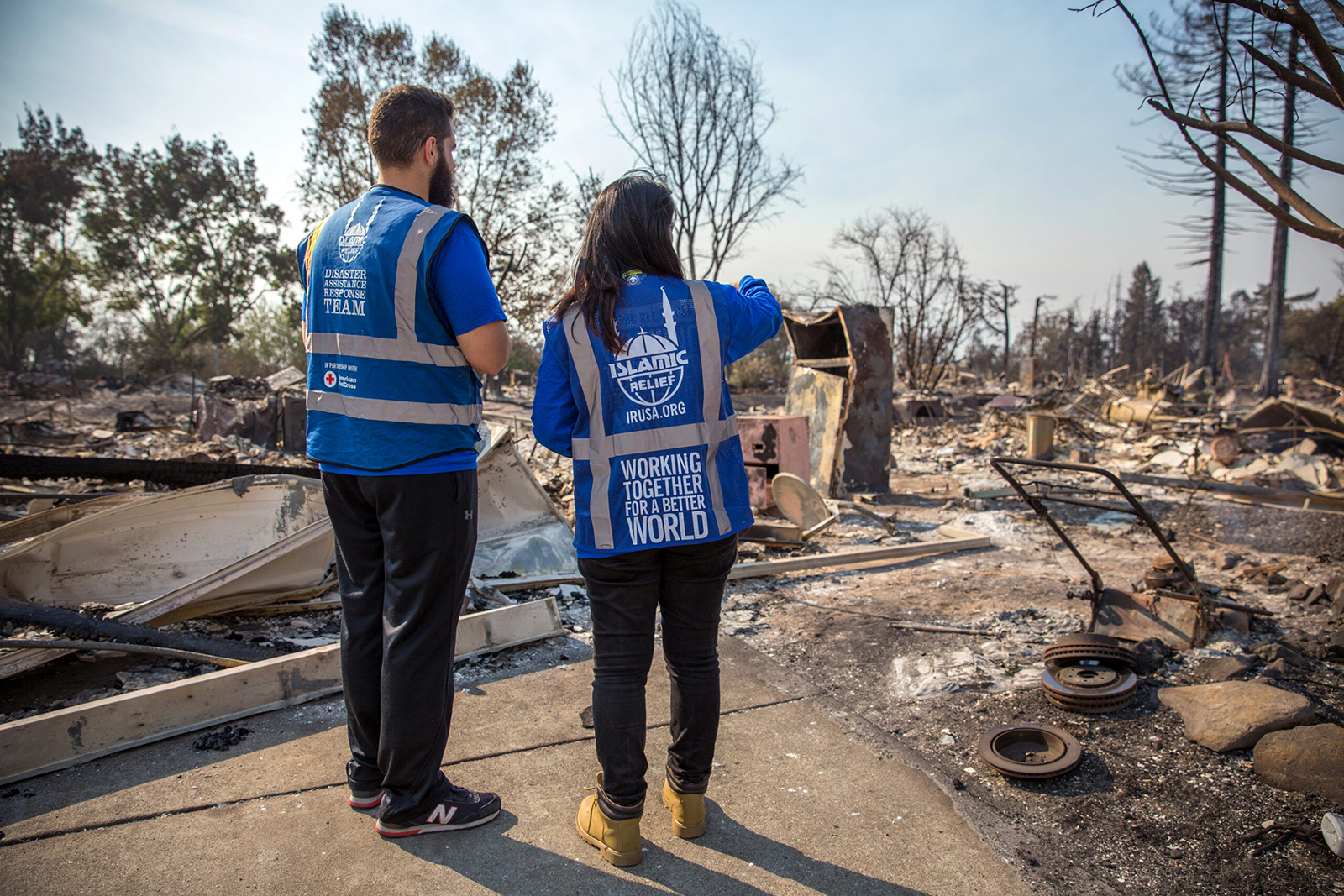
In early September, Islamic Relief USA, a humanitarian organization with a $150 million annual budget, rebranded itself as the Islamic Development and Empowerment in America.
An official from IDEA told RNS the name change reflects a commitment to addressing charitable needs in the United States, in addition to the 60 countries where it operates.
The change follows a messy break with Islamic Relief Worldwide involving a lawsuit filed by Islamic Relief USA and countercharges by IRW. It culminated this month with IRW announcing it had expelled its former American partner, claiming that the affiliate “damaged the work of the entire federation.”
The dispute between these major Islamic charities — both of which had been independent partners under the Islamic Relief umbrella — came after members of the House Ways and Means Committee called on the IRS to revoke the tax-exempt status of Islamic Relief USA, Jewish Voice for Peace, American Muslims for Palestine and the Tides Foundation. They alleged that the groups have links to designated foreign terrorist groups and were “sowing chaos” in their support for pro-Palestinian protests.
Committee Chairman Jason Smith, a Missouri Republican, alleged in a September 2025 letter that because of its ties to IRW, Islamic Relief USA had “engaged in conduct that appears to provide support for a designated terrorist organization and other conduct designed to incite chaos in a way that is contrary to the public good.”
IRW denied wrongdoing. But in October 2025, IRUSA suspended its association with IRW, and the group also met with the congressional committee multiple times to provide information that would clear its reputation, said Mohamed Elibiary, chief external affairs officer of IDEA, formerly IRUSA.
Then, in March 2026, IRUSA filed a federal lawsuit against IRW, seeking a court order to formally sever ties, citing the Ways and Means letter and saying the international group’s “conduct has harmed IRUSA.”
IRUSA also made several allegations in the lawsuit against the UK-based charity, including that IRW illegally targeted American donors for fundraising. In July, a federal judge ordered the two groups to resolve their dispute through mediation.
Smith, the committee’s chairman, took credit for the IRUSA lawsuit against IRW, saying in March that it was a “significant response that would never come about but for our Committee’s oversight.” Smith did not respond to requests for comment about IRUSA’s rebranding.
Muslim charities in the U.S. have long faced federal scrutiny, especially in the years following the Sept. 11 attacks, said Sumayyah Waheed, senior policy counsel at Muslim Advocates, a D.C-based national civil rights group that uses litigation and policy to counter anti-Muslim discrimination. In 2001, the federal government seized the assets of the Holy Land Foundation, then one of the nation’s largest Muslim charities, alleging that funds from the group had been channeled to Hamas. Several leaders were convicted in 2008.
“That was devastating for the Muslim charitable community, which is pretty much our whole community, because charity is part of our faith,” she said. Because of the crackdown on other groups, Muslim Advocates partnered with the Better Business Bureau in 2008 to train Muslim nonprofits on federal compliance and overcoming perceptions of wrongdoing.
Waheed said there are renewed fears that nonprofits, including Muslim ones, are being unfairly targeted.
She pointed to an initiative from the FBI and IRS focused on investigating nonprofit groups over suspected links to domestic terrorism. It grew out of a September 2025 national security memorandum from President Trump called NSPM-7, which directs agencies to investigate groups engaging in political violence. “Common threads animating this violent conduct include anti-Americanism, anti-capitalism, and anti-Christianity,” the order reads. NSPM-7 was the basis for the government’s investigation and spying on anti-ICE activists and churches in Minnesota, according to court documents.
“What I’m hearing from other charities and groups that are identified as Muslim is a lot of concern around the scrutiny that they face, feeling like they’re in a fishbowl,” said Waheed.
But even if investigations or congressional inquiries lead nowhere, Waheed said those lead to costly legal fees and bad publicity.
“Those inquiries are part of a cycle of attack on movement organizations and individuals, both Muslim and non, but the unifying thread is that they are perceived, at least, to espouse views that the administration disagrees with,” Waheed said.
IDEA is not the only Muslim charity facing congressional scrutiny. Representative Keith Self (R-Texas), founder of “Sharia Free Caucus,” asked the IRS to investigate the Islamic Society of North America and review its tax-exempt status on Sept. 16. Self alleged that ISNA, one of the largest Muslim nonprofits in the U.S., engaged in unlawful “political campaign intervention” by inviting and endorsing Democratic Senate nominee Abdul El-Sayed at its convention in Detroit this month.
ISNA CEO Azhar Azeez said the organization did not endorse El-Sayed. Azeez called Self “one of the top Islamophobes in the country” and dismissed the letter as a baseless attempt to target a prominent Muslim institution.
“He is taking anything and everything that has to do with the Muslim community and trying to mislead by scaring and by lying,” Azeez told RNS.
Smith, the Ways and Means chairman, has also asked the IRS to revoke the tax-exempt status of the California branch of the Council on American-Islamic Relations, primarily because of its support of pro-Palestinian protests during the Gaza War.
CAIR previously lost its exemption in 2011 after failing to file IRS Form 990 tax disclosures for three years in a row, then regained it in 2012 after filing.
Members of Congress have not been shy in investigating the finances of faith-based nonprofits. In 2007, Republican Senator Chuck Grassley of Iowa, then a ranking member of the Senate Finance Committee, launched what became a three-year investigation into the finances of six prominent televangelists.
Among those targeted by Grassley were Paula White, the co-pastor of Church Without Walls, a Tampa, Florida, megachurch, along with televangelists Benny Hinn, Joyce Meyer, Kenneth Copeland and Georgia pastors Creflo Dollar and Eddie Long. All had been featured in news stories that were raising questions about how donations had been spent.
Grassley wrote to White and her then-husband, Randy, and to the other Christian nonprofit leaders, asking for detailed financial reports.
White, now a Trump faith adviser, and three other leaders refused to cooperate. Meyer and Hinn made changes to their organizations in response to Grassley’s inquiry, according to a 2011 report.
Grassley initially pushed for more government oversight of religious nonprofits and churches, including requiring them to fill out an annual IRS Form 990 financial disclosure. He eventually settled for asking the Evangelical Council for Financial Accountability to draft voluntary guidelines after Christian leaders and religious liberty legal groups objected.
Source & Attribution
This One Place News story was acquired from religionnews.com. OPN retains the source link and provenance for newsroom review.
Filed Under
Faith & Religion