
Russia’s ‘shadow war’ offensive has NATO on defense, report warns
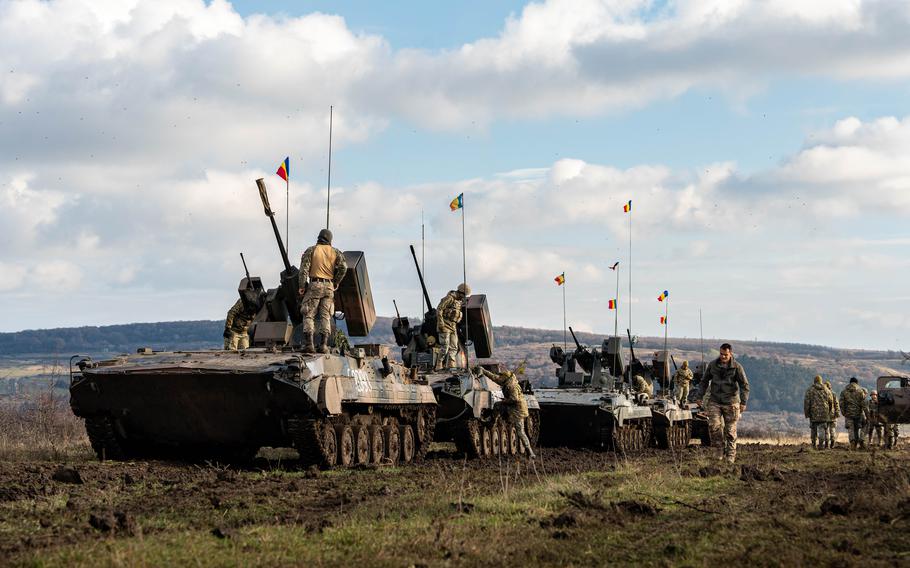
A new report urges NATO to take a more confrontational approach to Russia’s sabotage, cyberattacks and drone incursions, which have been on the rise. Romanian infantry fighting vehicles pause as their crews carry out inspections during a NATO training exercise near the alliance’s eastern flank in late 2025. A new Atlantic Council report says NATO needs to become more adept at responding to Russia’s campaign of gray-zone warfare, which falls short of actions typically considered an attack. (NATO) NATO’s military buildup hasn’t stopped Moscow from attacking the alliance in the shadows, exposing a deterrence gap that won’t close until the Kremlin begins paying a price for its provocations, a new analysis argues.
Despite years of strengthening the eastern flank, the 32-country bloc has seen scant success in discouraging Russian sabotage, cyberattacks and drone incursions, according to an Atlantic Council report released this week. Allies “must persuade the Kremlin that hostile action will carry predictable, material costs and leave no doubt that NATO will respond to military provocations,” analyst Agnia Grigas wrote. The report, titled “The Deterrence Gap: How can NATO Protect its Front Line from Russia?” urges allies to take a more confrontational approach to Russia’s “gray zone” activities, which have been on the rise as tensions ratchet up. Besides being focused on the traditional mission of defending against a
Source & Attribution
This One Place News story was acquired from stripes.com. OPN retains the source link and provenance for newsroom review.
Filed Under
Veterans News