
Surveillance, tick testing help combat rise of Alpha-Gal syndrome
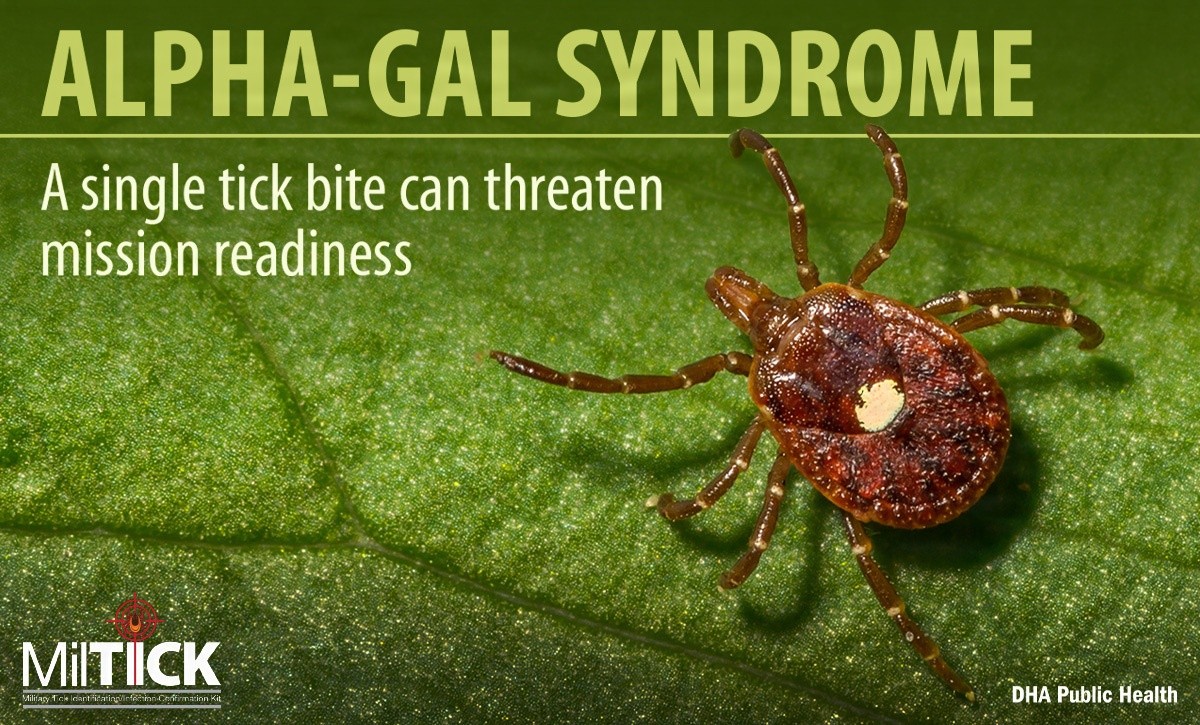
A tick-borne medical condition that rewires the human immune system is becoming an increasing focus of force health protection for the Department of War A tick-borne medical condition that rewires the human immune system to reject red meat and dairy is becoming an increasing focus of force health protection across the Department of War. Alpha-Gal Syndrome, or AGS, is an unusual, sugar-triggered allergy initiated by the bite of the Lone Star tick and poses a unique threat to military readiness. To combat this threat, the Defense Health Agency-Public Health at Aberdeen Proving Ground, Maryland, is leveraging advanced vector surveillance, cutting-edge tick testing, and targeted nutritional strategies to protect service members and their families.
Unlike standard food allergies, which are triggered by proteins and cause near-immediate reactions, AGS is an allergic reaction to a sugar molecule called alpha-galactose, or AG, found in all nonprimate mammalian meats and byproducts. "Most people live their lives eating meats such as beef, pork, venison, and lamb without issue," said Jessica Jones, a biologist with the DHA-PH Vector-Borne Disease Branch at APG. "When eaten, these meats are processed through the digestive system, which does not trigger allergy antibodies." However, when a Lone Star tick bites a human, it injects saliva containing the AG sugar directly into the skin, initiating a completely different immunological pathway. "The types
Source & Attribution
This One Place News story was acquired from army.mil. OPN retains the source link and provenance for newsroom review.
Filed Under
Military News