
‘Ground is hard’: Autonomous ground vehicles overcome challenges to provide new capabilities
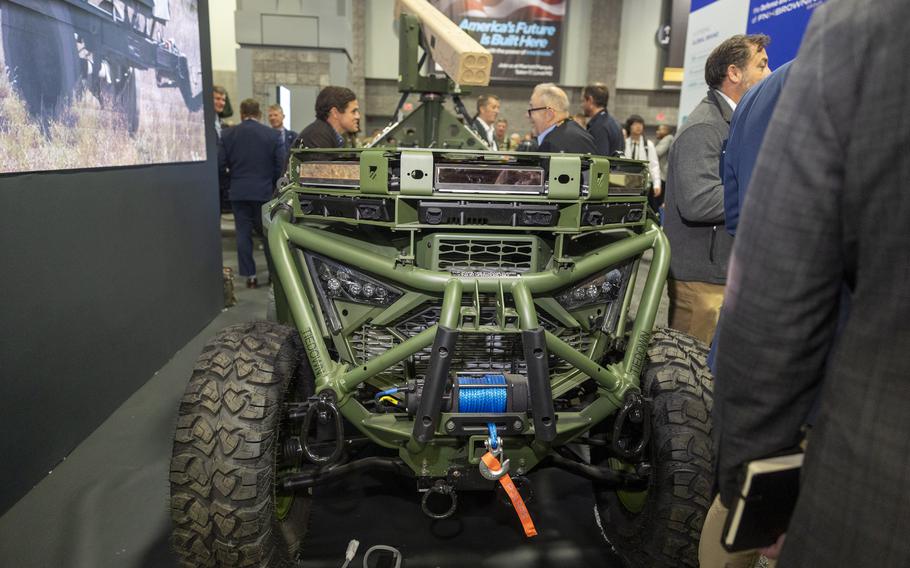
Ground vehicles could make first contact with enemy forces, breach tricky obstacles, provide electronic jamming or haul gear for soldiers or Marines. An Overland AI IBEX, an autonomous unmanned ground vehicle on display on Tuesday, Oct. 13, 2026, at the AUSA conference in Washington. (Eric Kayne/Stars and Stripes) WASHINGTON — Byron Boots envisions a future where U.S. Army commanders provide teams of autonomous ground robots with basic instructions to operate ahead of or alongside ground units and then conduct their missions with little to no human interaction. The ground vehicles could make first contact with enemy forces, breach tricky obstacles, provide electronic jamming or haul gear for soldiers or Marines — leaving the troops free to more safely execute their leaders’ combat objectives, said Boots, the co-founder and CEO of autonomous ground vehicle-maker Overland AI.
That day is getting closer, he said in an interview this month at the Association of the U.S. Army’s annual convention, where Overland unveiled its latest autonomous ground vehicle for the military, the IBEX. Overland AI has garnered some $90 million in Pentagon contracts to produce autonomous ground vehicles for the Army and Marine Corps, which want multimission ground vehicles incorporated at all levels of the services much as they have integrated airborne drones into their operations. “The ground is the most important domain. It’s
Source & Attribution
This One Place News story was acquired from stripes.com. OPN retains the source link and provenance for newsroom review.
Filed Under
Veterans News