
Did Republican efforts to redistrict the House turn into a dummymander?
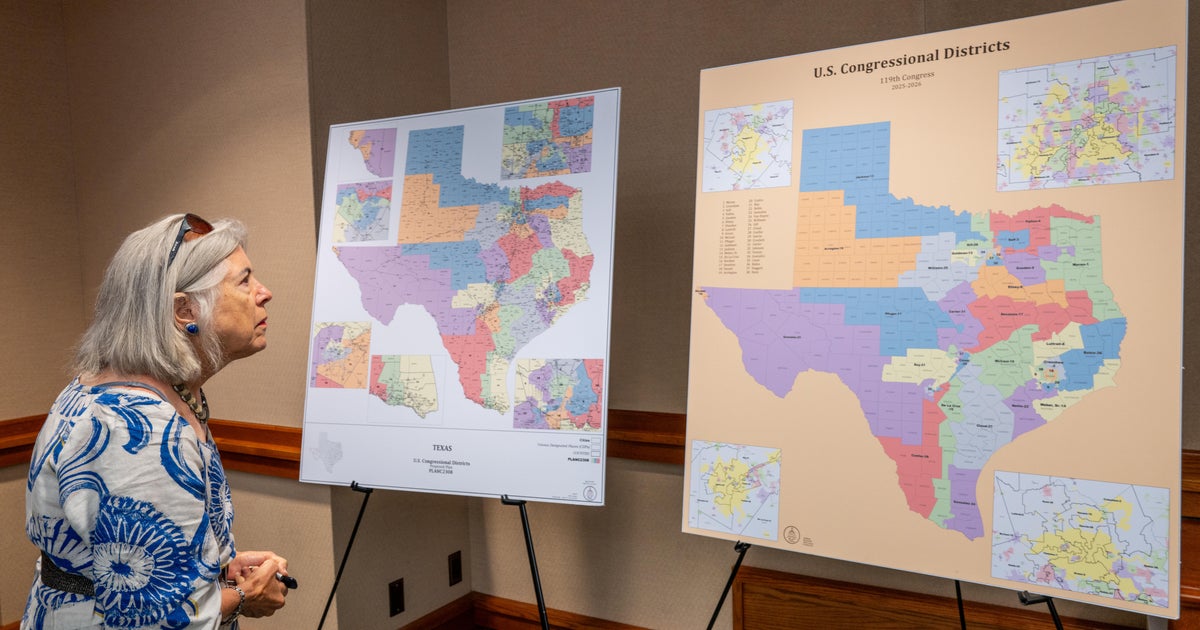
Republicans undertook a historic effort to redraw several states' Congressional districts mid-decade in an attempt to maintain control of the House. That effort was rebuffed on Tuesday night as the GOP was on track to lose all of the districts it tried to gerrymander. There were several reasons that states undertook what had previously been a rare practice of mid-decade redistricting. Republican efforts started when President Trump ordered Texas lawmakers to redraw their map to net up to five seats for the GOP. But despite the all-out effort, Democrats won control of the House on Tuesday, with CBS News estimating Democrats could end up with 251 to 268 House seats.
With the House decisively swinging toward Democrats and Democrats undertaking measures in a few states to counter the GOP's efforts, Republicans are faced with the possibility of having created a so-called "dummymander," a situation in which a party tries to gerrymander, but ends up benefiting the other party. Here's a state-by-state breakdown of how the redistricting efforts panned out:TexasTexas Republicans went into Election Day controlling 24 seats, while Democrats controlled 13 seats and there was one seat in a GOP-leaning district that was vacant. In redrawing the map, Republicans sought to emphasize Mr. Trump's gains in South Texas to win five more seats. As of Wednesday, Republicans had won 24
Source & Attribution
This One Place News story was acquired from cbsnews.com. OPN retains the source link and provenance for newsroom review.
Filed Under
Breaking News