
Another Battle Between the Catholic Church and the Trump Administration
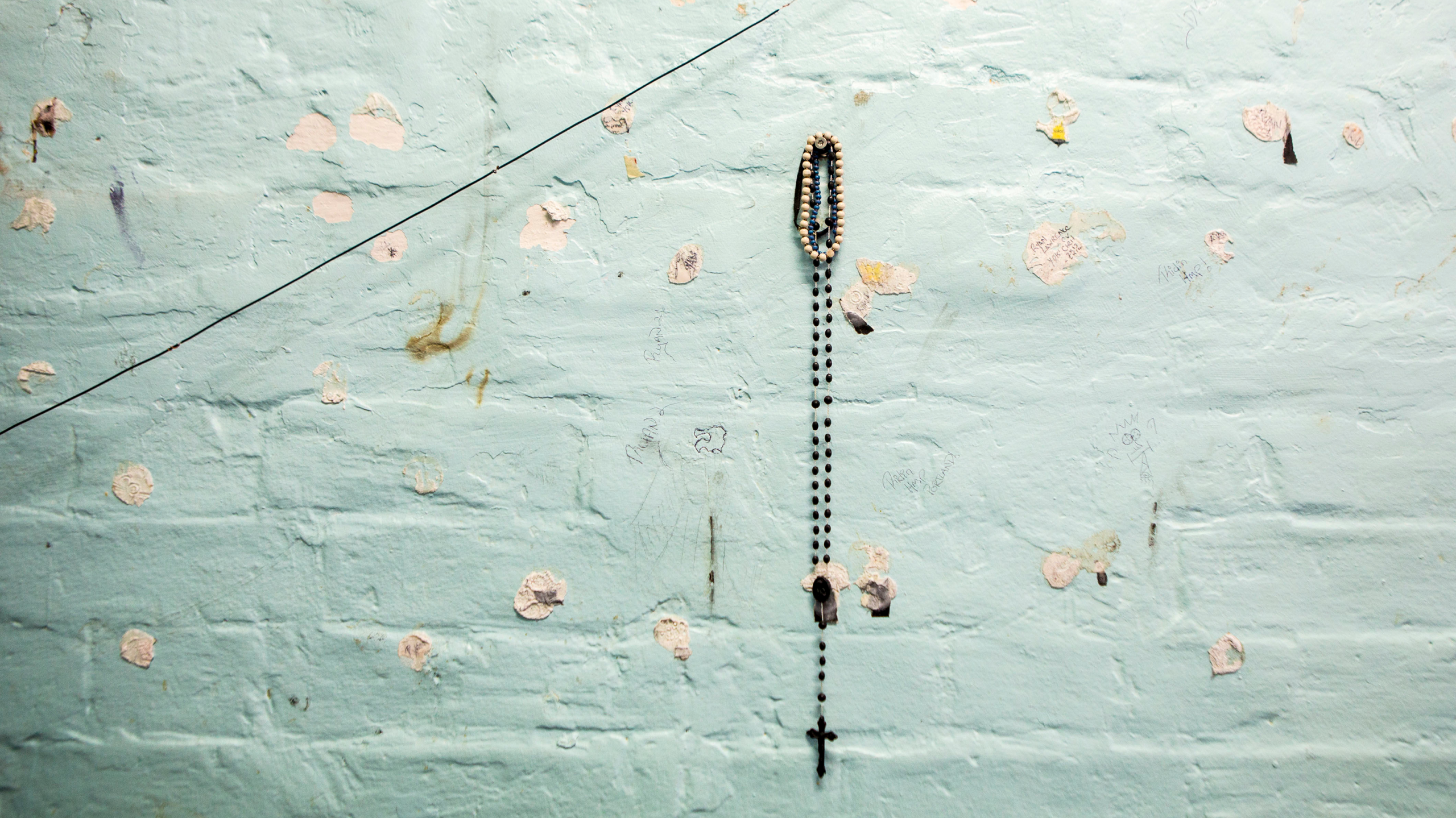
Several winters ago, a few weeks before Christmas, I went to confession. The parish close to work was hosting a reconciliation service, meant to prepare the faithful to celebrate the birth of Christ. A dozen or so priests were scattered across the cathedral. Penitents lined the aisles. Whispers of contrition and pardon filled the air.
The Catholic Church counsels believers to seek confession regularly—at the very least, once a year. I hadn’t been back in a few. So in addition to feeling spiritually unmoored, I was worried about how the priest would react to hearing about my hiatus. But when I told him, he simply smiled and said, “Welcome back.” His response put me at ease then, and it helped change how I approach the sacrament now: less as a nerve-racking ordeal, more as a moment of mercy.
Sacraments such as confession are central to Catholicism. Through them, the Church teaches that simple actions—having a conversation with a priest, eating bread and drinking wine—are, with grace, tangible encounters with God. For the past year, the Trump administration has been making it harder for Catholics at migrant-detention centers to have those encounters.
The most recent example came to light this month, when the Archdiocese of St. Louis filed a federal lawsuit over the visitation policy at Saint Genevieve County Jail in eastern Missouri. According to the claim, the 10 priests who minister at the jail aren’t allowed to celebrate Mass. The suit also alleges that priests are permitted to visit migrant detainees just once a week, during a four-hour period, and that the jail’s “no contact” security policy lets the clergy speak with detainees only over the phone, through a glass partition. As a result, the approximately 150 migrants at the jail at a given time—most of whom are Catholic, according to the archdiocese—have been going without their religious needs for weeks. Since the middle of 2025, according to the lawsuit, Saint Genevieve has housed approximately 3,000 people.
[Read: The Catholic Church’s new schism]
This isn’t the first time that Catholic clergy have complained that the government is preventing them from ministering to detained migrants. Last year, the Florida detention facility known as “Alligator Alcatraz” kept priests from visiting or offering Mass to detainees for a month, until an agreement was reached between the Archdiocese of Miami and state authorities. In May, after a six-month legal fight, a Catholic nonprofit won a preliminary injunction to let Catholic priests celebrate Mass and administer sacraments at the Broadview ICE processing center outside Chicago. And the administration’s immigration crackdowns seem to be hurting the Church more broadly. Dioceses across the country have reported decreased Mass attendance among Spanish-speaking parishioners who fear detention. ICE has reportedly conducted raids near Catholic churches during Mass hours.
The Department of Homeland Security has denied allegations of wrongdoing at Saint Genevieve. In a statement to multiple outlets, the agency said that the jail is not an ICE facility—although Saint Genevieve is listed as a detention facility on ICE’s website—and that it “ensures detainees are accommodated with religious services.” As described in the lawsuit, however, those accommodations disregard the religious significance of the Catholic sacraments.
Consider confession. The suit claims that at Saint Genevieve, conversations between detainees and priests are not private, and the phone lines that they use to talk may be monitored. These policies may be in place for security reasons, but confession is meant to be a private exchange between penitent and priest, who acts in persona Christi—in the person of Christ. Confession is “one of the most intimate, profound acts that someone can do,” David Inczauskis, a Jesuit priest who ministers at the Broadview ICE facility, told me. He added, “To state very specifically the sins that they have committed and to ask humbly for pardon and for peace” requires a “level of vulnerability” that is “very high.”
An even bigger problem comes up with the sacrament of the Eucharist, or Communion. The complaint includes an email from a deputy at the local sheriff’s office suggesting that priests “provide an unopened, individually wrapped Communion wafer” to a member of the detention center staff, who could then hand it to a detainee. This way of distributing the Eucharist would be “sacrilegious,” as Archbishop Mitchell Rozanski of St. Louis recently told Reuters. The Church teaches that the Eucharist is the “Body, Blood, Soul, and Divinity” of Christ—not a symbol, but God’s real presence. For that reason, Inczauskis said, the Church distributes the Eucharist through either ordained ministers or specially trained laypeople.
[Read: The Catholic Church and the Trump administration are not getting along]
For much of the past quarter century, many conservative figures have taken up religious liberty as an essential cause. The Trump administration purported to continue these efforts when it established a commission last year meant to identify “emerging threats” to the exercise of faith. In June, the commission released a draft report claiming that “in recent years, Americans from all religious backgrounds have faced increasing persecution for their religious beliefs.” Some of the issues discussed in the report include rising anti-Semitism, how gender and sexuality is taught in schools, and conscience protections for health-care workers who object to participating in abortions or assisted suicides. The report said nothing about the administration’s migrant-detention practices.
When the commission was announced, my colleague Elizabeth Bruenig wrote that “Christians shouldn’t conclude” that it would “necessarily defend their interests.” That warning seems prescient a year and a half later. At Alligator Alcatraz, Broadview, and Saint Genevieve, the Catholic Church has shown that it believes that detainee access to the sacraments matters deeply. Given the choice between restricting immigration and protecting the religious liberty of migrants, the administration, too, has demonstrated where its values lie.
Source & Attribution
This One Place News story was acquired from theatlantic.com. OPN retains the source link and provenance for newsroom review.
Filed Under
Culture & Society • Politics & Law