
Ed Sheeran’s tour offers a lesson in the strength of noncooperation
Get RNS’ thoughtful, essential religion reporting every morning. Sign up for free!
(RNS) — Pop megastar Ed Sheeran had a good thing going. For eight months, he mounted a small B stage in the center of some of the world’s largest stadiums, stomped on his loop pedal, and began picking out a motif on his guitar that only early fans would recognize — the melody to his defiant debut “You Need Me, I Don’t Need You.”
As he layered in beatboxing to stand in for drums, fans were transported into the intimacy of his pre-fame days, when he used loops to back himself to busk on London’s busy but lonely street corners. From there, his “Loop Tour” set would begin its two-and-a-half-hour crescendo through 15 years of hits, ending on a proper arena stage with a full band at his back. He did this again and again — from Auckland to Santiago to Los Angeles — enrapturing audiences in a perfect atmosphere of “unity, joy, escapism and love,” in his words.
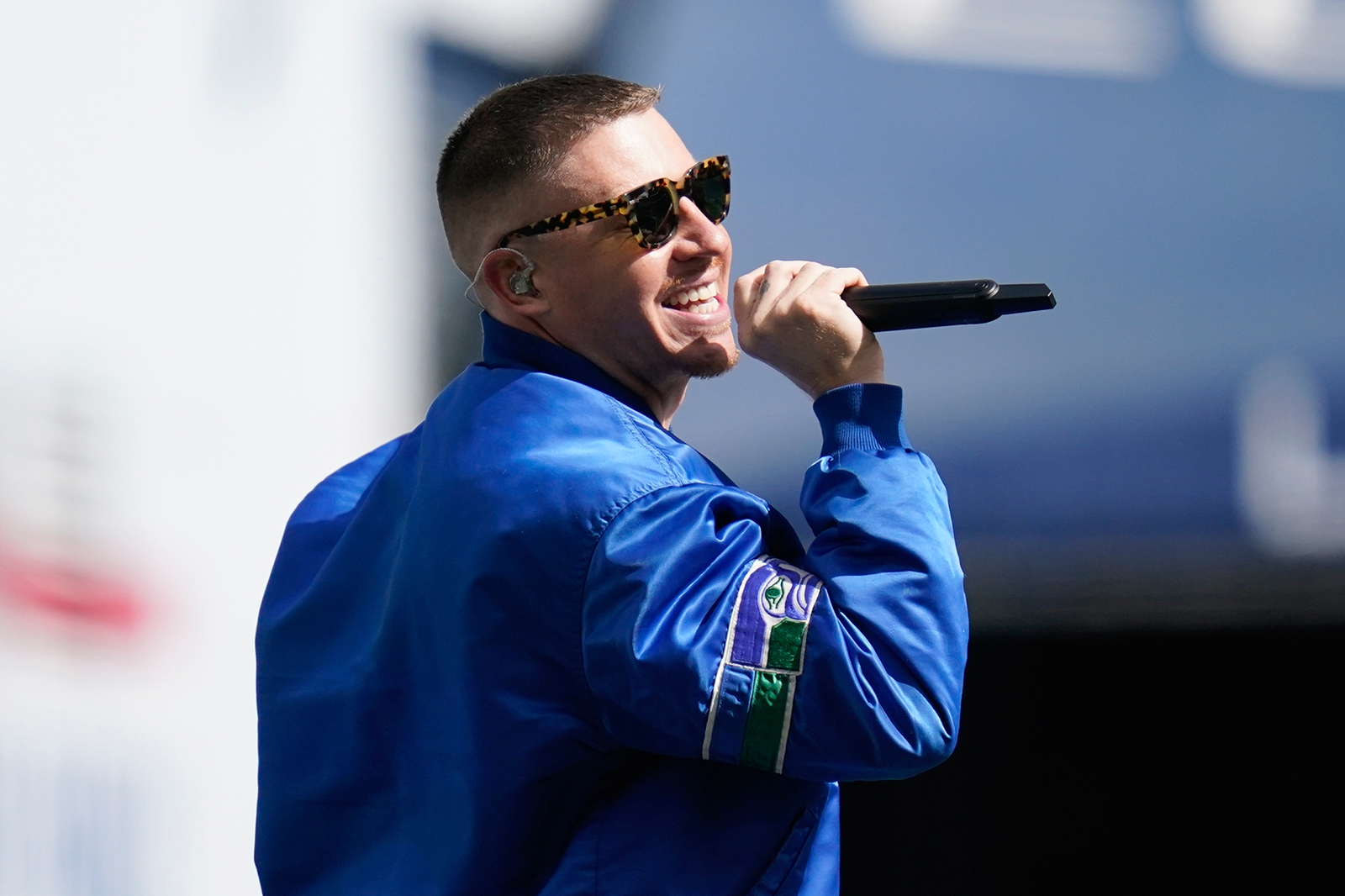
All that changed when he landed in East Rutherford, New Jersey. Macklemore — who’s been rapping about social issues since his hit pro-LGBTQ+ anthem “Same Love” hit the radio in 2012, and more recently released “Hind’s Hall” in salute of student protests against Israel’s war on Gaza — joined the tour as Sheeran’s opening act. He had an agenda.
“One of the reasons why I wanted to come on this tour,” Macklemore confessed before thousands at MetLife Stadium, “was because I wanted to stand up here on stages in stadiums across America and say two words that are very near and dear to my heart: Free Palestine.”
It only took two nights of Macklemore uttering those forbidden words before pro-Israel billionaire and stadium owner Robert Kraft felt compelled to intervene. Kraft invoked the popular lie that “Free Palestine” is antisemitic hate speech. He conspired with other venue owners to deliver the tour’s promoters an ultimatum: drop Macklemore or lose access to their stages.
Sheeran and his promoters capitulated, arguing the stage isn’t the best place to be a prophet. Macklemore pulled out, and (I imagine) the billionaires high-fived and lit cigars over their censorious victory. But the saga was far from over.
In solidarity, Sheeran’s supporting acts quit, citing the free-speech issue of punishing an artist for thinking out loud. His backing band packed up, too. Sheeran was left to build that crescendo from street-corner loop pedal to arena spectacle all alone.
Most of the writing on this fallout has focused on themes of free speech, the role of the artist to entertain or advocate, or who’s the victim. As a civil resistance strategist, I see something else: a case study in how power in society actually works — one that displays the strategies we desperately need to defend democracy today.
The most important of those concepts is that the essence of civil resistance is identifying what your opponent needs from your community, social group or industry to accomplish their goals, then withholding it. That’s what Kraft and his fellow stadium owners did. They knew Sheeran needed their stages to complete his tour and that Macklemore needed those same stages to reach his audience, so they threatened to withhold access unless Sheeran cut Macklemore.
In doing so, they executed the strategy that is the holy grail of outgunned movements: a dilemma. Put your target in a position where every available choice costs them something. Sheeran was faced with that dilemma: Drop your friend and offend your pro-Palestinian fanbase; or keep him, lose the stages and aggrieve your Zionist fanbase.
Civil rights organizers often sought to put their opponents in a similar position — take, for example, the kneel they performed in segregated white churches. White church leaders and congregants had to decide between forcefully removing these Black worshippers or allowing them to integrate their worship services against their will.
The Freedom Rides of the 1960s are another great example. Transportation had already been desegregated by law but not in fact. So when Southern white racists attacked members of the Student Nonviolent Coordinating Committee for riding across the American South in integrated buses, it put the federal government in a dilemma. Unlike Sheeran, Washington understood that there was no such thing as neutrality: either they uphold the law and intervene, or passively facilitate mob violence through inaction.
When Sheeran blames the billionaires and promotion companies for Macklemore’s exit, he’s upholding fascism by repeating the old lie that power is fixed — that it can be held, like an object, and only people like Kraft hold it by virtue of title or status.
But power is more like water: fluid, dynamic. Sheeran had leverage of his own. He just refused to use it. He could have threatened to cancel the tour if Macklemore was cut. Instead he abdicated his power, at least as it appears. Then, he came back offering a series of fence-riding statements that obscure the cause of the “catastrophic and unjustifiable” humanitarian crisis in Gaza.
Kraft may have wiped his brow in relief when Macklemore accepted defeat, but he’d forgotten that he and his rich friends weren’t the only ones with something to withhold. When the band and opening acts quit, they removed a resource the whole touring apparatus depends on. This is what resistance strategists call a backfire: when efforts to repress resistance end up triggering more of it. It’s the same principle Serbia’s Otpor movement engineered to help topple then-President Slobodan Milošević — deliberately creating conditions where oppressors’ worst instincts blow up in their own faces.
Those resisting fascism today must identify how fascist power depends on us, use that as leverage to create dilemmas and then set conditions for repression to backfire.
To be sure, this isn’t the premier form of resistance that toppled the traditional fascists of the 1930s and 40s, but it isn’t a strain altogether absent from traditional resistance to fascism. Black Alabamans used these principles to fight the American fascists of Montgomery when they refused to ride their buses. The Dutch implemented a campaign of total noncooperation against their Nazi occupiers in the 1940s, making takeover near-impossible.
These stories show us that noncooperation has long been a way to thwart fascists. We need to master that strategy today.
In a world full of Robert Krafts, Ed Sheerans and Macklemores, we need to remember that we are the band.
Source & Attribution
This One Place News story was acquired from religionnews.com. OPN retains the source link and provenance for newsroom review.
Filed Under
Faith & Religion