
Harmeet Dhillon’s Tenure of Destruction
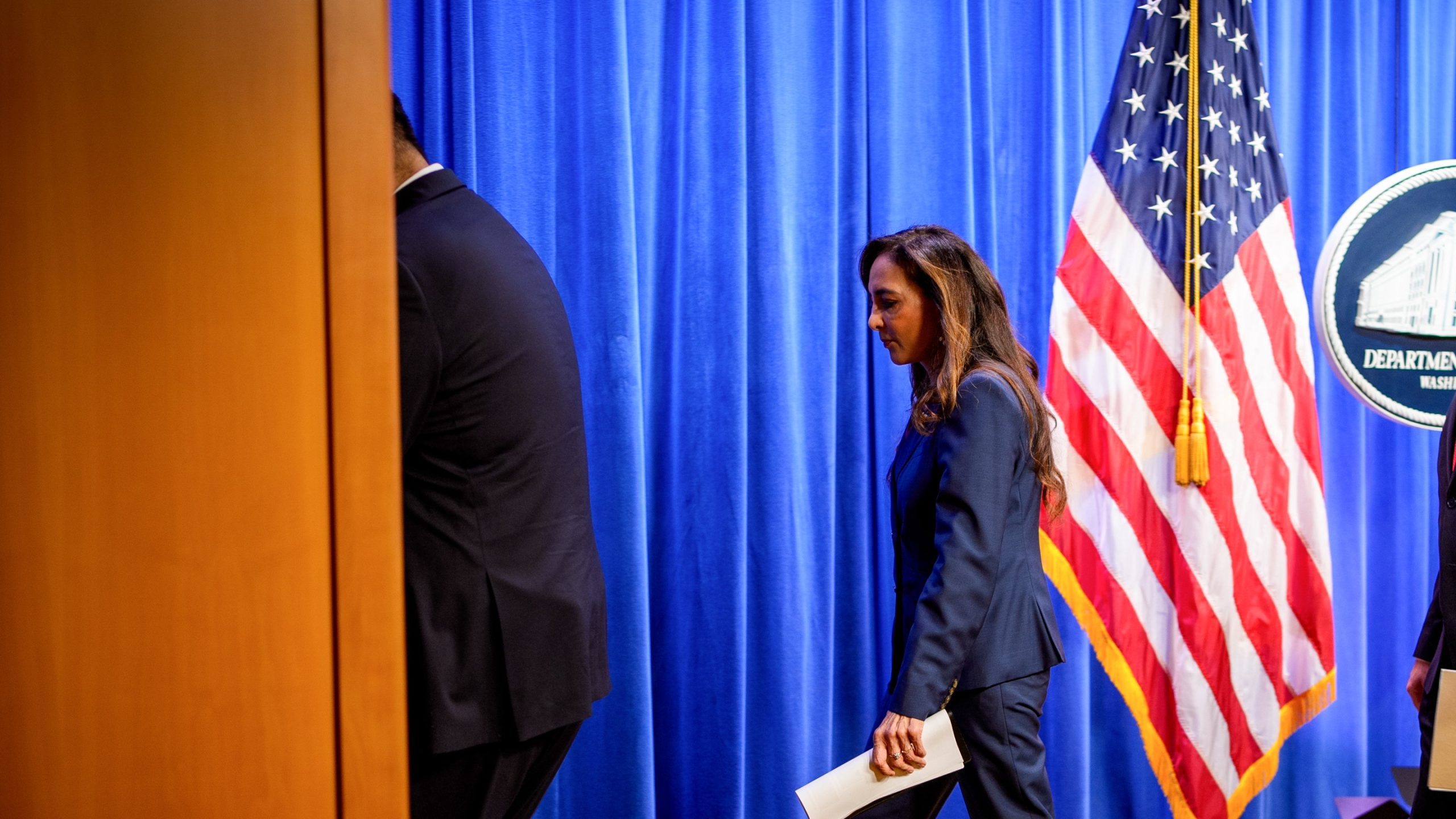
Harmeet Dhillon is not the most notable administration official to depart after Democrats’ enormous midterm victory—that title goes to White House Chief of Staff Susie Wiles, who President Trump announced today would be replaced by Stephen Miller. But Dhillon’s short tenure shows the immense influence that Trump has had on the federal government in less than two years in power.
Her departure comes as Democrats prepare a long list of investigations they hope to pursue once they take control of the House and Senate in January. As results streamed in on Tuesday night, Robert Garcia, the incoming head of the House Oversight Committee, issued a two-word statement to Trump appointees: “Lawyer up.” Jamie Raskin, the presumptive head of the Judiciary Committee, has promised intense scrutiny of the Justice Department. Having stepped down, Dhillon will have more time to spend with her lawyers ahead of the inevitable hearings.
Dhillon had reportedly been campaigning for a promotion to a higher position at DOJ, which was apparently not forthcoming. CBS News reports that Trump wanted her fired for remarks about the supposed crisis of voting by noncitizens in a recent 60 Minutes interview that he found insufficiently bellicose. But she can depart with the satisfaction of completing the task she set out to achieve: doing immense damage to the Civil Rights Division, long known as the “crown jewel” of the department. “We changed it, and that’s what we came here to do,” she told Fox News. “And it’s done.” She’s right.
Dhillon’s goal, my colleague Quinta Jurecic wrote in a definitive April profile, was to reshape the division in Trump’s name and turn its historic focus on protecting civil rights upside down. “She has used the branch’s resources to investigate school districts and colleges over DEI, back the White House’s push to gain Republican congressional seats through redistricting, and prosecute journalists covering an anti-ICE protest in Minnesota,” Quina wrote. The division also gave up on holding police departments accountable for civil-rights abuses, abandoning proposed agreements with departments in Minneapolis and Louisville, Kentucky, that resulted from investigations after the murders of George Floyd and Breonna Taylor.
But as the midterms drew closer, a major focus was elections. Under Dhillon, the division pursued debunked and baseless claims of election fraud in Fulton County, Georgia, during the 2020 election. After the Supreme Court effectively threw out Section 2 of the Voting Rights Act this spring, Dhillon leaped to push states to redraw maps in order to reduce minority voting power. She twisted states’ arms to hand over voter rolls, part of a futile attempt by the administration to find evidence of widespread voting by noncitizens.
This pressure continued right up to Election Day. In the closing weeks of the campaign, the Justice Department tried to intimidate local and state election officials in states including California, Washington, and Alaska—aiming to put a thumb on the scales in service of Republican candidates. As the Cato Institute’s Walter Olson writes, the Trump administration failed to subvert the election, but not because it didn’t try.
When a president of a different party takes over the Justice Department, priorities naturally change. But some changes go beyond those normal shifts of emphasis. During the George W. Bush administration, an inspector general’s report described sweeping and improper politicization. In that instance, some 70 percent of attorneys left the division between 2003 and 2007. By comparison, as much as 80 percent of the division’s staff have left in the less than two years of the Trump presidency.
Dhillon’s Civil Right Division did have some notable failures. For example, the attempt to acquire voter rolls was a flop. The administration suffered an astonishing string of 27 losses in federal district courts in related cases, and drew harsh criticism even from Republican state officials. As one last indignity, lawyers from the Civil Rights Division failed to obtain an indictment from a grand jury for Cassidy Hutchinson, a former Trump aide who testified to the House January 6 Committee. Outside observers noted that bringing civil-rights charges against Hutchinson, rather than simply charging her with false statements, was a peculiar choice.
In sum, Dhillon leaves the Civil Rights Division in terrible shape: Its ranks are depleted, its work is interrupted, and its credibility with juries and judges is in tatters. Justice Connection, an advocacy group for former DOJ employees, issued a statement decrying her tenure. “After she upended the division’s mission-critical work, the civil servants who dedicated their careers to protecting vulnerable communities were instead told to target them—and more than three-quarters of the division’s lawyers left,” Stacey Young, its executive director, said. “For almost 70 years, the Civil Rights Division brought to fruition the civil rights laws that Americans demanded. Dhillon decimated it.”
Dhillon might have been able to boil the same sentiment down to just two words: Mission accomplished.
Source & Attribution
This One Place News story was acquired from theatlantic.com. OPN retains the source link and provenance for newsroom review.
Filed Under
Culture & Society • Politics & Law