
Iran’s ‘Anti-Imperialism’ Is a Dead End
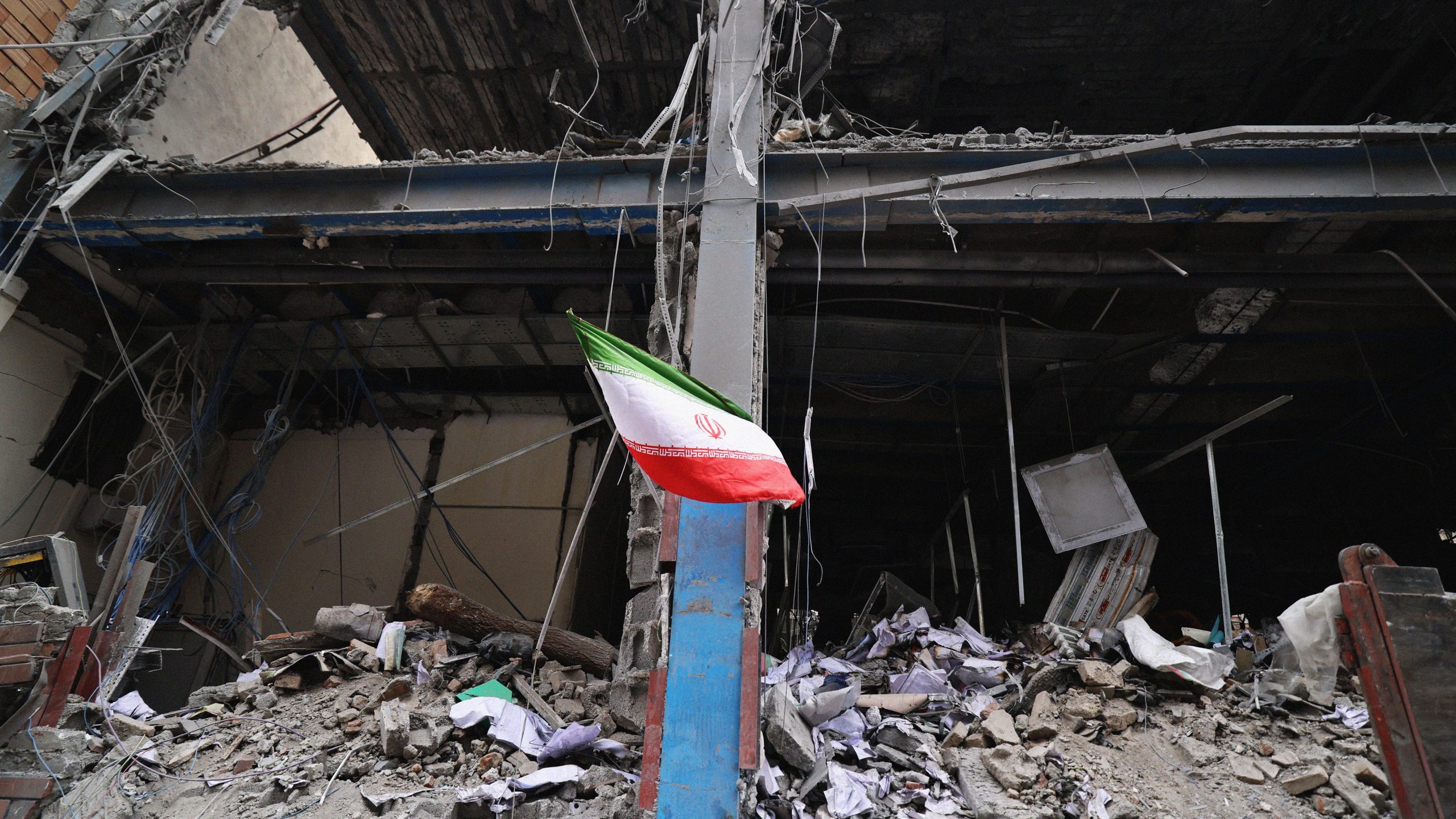
What has the Islamic Republic done for Iranians? Under its rule, citizens have suffered decades of economic decline, sociopolitical repression, and international isolation. Now the country is engaged in an open-ended war. In almost every way, Iranians are doing much worse than they were 20 years ago.
Not even the regime’s propagandists can deny these realities. Many of them therefore insist that the Islamic Republic’s failures are justified by its unbending resistance to American imperialism. Nearly all of Iran’s economic suffering, defenders say, can be explained as the price of this heroic stance, to which the West has responded with sanctions that have crushed Iran’s standard of living.
But the story of the Islamic Republic’s relationship to American power, and of how that relationship has and has not served the cause of Iranian sovereignty, is more complicated.
Iran’s prerevolutionary ruler, Shah Mohammad Reza Pahlavi, was an anti-communist autocrat who prized ties with the United States. His successors condemned him as an American stooge and claimed to have freed Iran from its slavish dependence on the “Great Satan.” In its early days, the Islamic Republic signaled independence from both the Soviet Union and the United States with the slogan “Neither East nor West,” which still adorns the facade of the Ministry of Foreign Affairs headquarters in Tehran. The foundational anti-imperialism of the new regime was also a promise that Iran would fight for the “oppressed of the world,” as well as a call to resist cultural absorption by the West—a fate one revolutionary intellectual decried as “Westoxification.”
[Read: The battle for Hormuz is not the war]
The Islamic Republic has failed in its anti-imperialism by all of these measures, especially as compared with the monarchy. Pahlavi was an American ally who owed his throne in part to a CIA-abetted coup that elevated him over a popular prime minister in 1953. But he sustained Iran’s independence by skillfully playing the United States and its rivals, the Soviet Union and the Eastern Bloc, off of each other when doing so suited Iranian interests. The Soviets helped build Iran’s ironworks and welcomed the shah as a rare royal to pay a state visit to Communist Moscow. Pahlavi’s slogan could well have been “Both East and West.”
The shah backed the United States in some Cold War battles, but he also threatened to sign security deals with Moscow when he wanted better terms from Washington, and he offered to mediate the conflicts in the Middle East and in Vietnam. In most ways, Pahlavi’s foreign policy was closer to that of the Non-Aligned Movement countries than to that of either Cold War bloc. In the ’70s, scholars of Iranian foreign policy described Tehran as following “defacto non-alignment.” By the end of the shah’s rule, Iran had considerable international influence and was respected by both superpowers, not only as a sovereign country, but also as a regional power. You might even say that Pahlavi was a successful anti-imperialist—not in the sense of having stuck a finger in the eye of the great powers, but in the sense of having effectively secured Iran’s sovereign interests rather than being forced to capitulate to those he cooperated with.
The revolutionaries who toppled the shah accused him of servility to Washington. They pointed to the coup that had cemented his power in 1953 and halted the nationalization of Iran’s oil resources. But in fact the monarchy had restored Iran’s sovereignty over its oil industry in 1973. They pointed to a 1964 agreement with the United States, ratified by the Iranian Parliament, that gave U.S. military personnel immunity from local prosecution. But such agreements were common around the world and hardly represented Iran’s “capitulation,” as its critics claimed. The shah was in any case far from passive in his relationship with Washington and worked to improve his position.
The monarchy’s foreign policy belonged to a long tradition of efforts to extend Iran’s independence. Well before 1979, Iran had spent centuries fending off the designs of the British and Russian empires. Standing up for the country’s sovereignty was the work of generations of Iranian statesmen, just as it was for their counterparts in other countries of the global South. But not every Iranian government has been equally successful at it. The one that came to power in 1979—the Islamic Republic—has been manifestly terrible.
The Islamic Republic has not prioritized classic anti-imperialist goals. Among these is improving the economic position of postcolonial states, as set forth in the New International Economic Order that the United Nations General Assembly adopted in 1974 (and that Iran voted for). The Iranian government since 1979 has rarely prioritized such goals. The former supreme leader, Ayatollah Ali Khamenei, reportedly boasted that he didn’t care about his people’s welfare, just about how religious they were. (His office has denied this.) He thus preferred to fight the West rather than attend to his people’s needs—even basic ones, as, for example, in 2021, when he refused to import COVID-19 vaccines from the United States, a decision that likely cost thousands of Iranian lives.
The Islamic Republic has pursued an ideological campaign against the United States and other Western countries, not just for being imperialist, but also for being, according to Iran’s Islamist standards, licentious and morally depraved. Iran’s rulers frame these objections as opposition to cultural imperialism, but in practice they have become a pretext for domestic repression. The regime’s austere, draconian version of Islam is less a celebration of Iran’s endogenous culture than a suppression of its traditional creativity.
In the name of anti-imperialism, Iran has quixotically attacked the international order without making it any fairer for itself or others. In fact, Iran’s actions have put the country at the mercy of foreign powers. The Islamic Republic committed itself to the pursuit of a nuclear program, on the grounds that this would buttress its sovereignty and demonstrate its independence from imperial diktats. Instead, its nuclear intransigence incurred sanctions from the United States and Europe as well as the UN Security Council, with support from Russia and China. Iran’s involvement in terrorism and international crime (including drug running and counterfeiting) has made it one of only three countries, alongside Myanmar and North Korea, on the blacklist of the Paris-based anti-money-laundering outfit Financial Action Task Force. These measures have interfered with Iran’s ability to collect payments for its energy exports, even from friendly countries, such as neighboring Iraq. Sanctions have so weakened Iran’s position in trade that it is selling its oil at a discount to China.
The regime’s proponents will argue that the country is a victim of foreign-imposed sanctions. But the sanctions are the result of Tehran’s choices, which have prized refusal and defiance over actually improving Iran’s stake in the international order vis-à-vis the great powers that might seek to dominate it. The world abounds in examples of better strategies. Many of those involve sustaining ties with competing superpowers as a hedge against domination by any one of them. Nonaligned countries such as India, heir to a proud tradition of opposing colonial dominance, have pursued this course. Turkey remains a key NATO ally, but it has managed to play an independent role in Ukraine while maintaining relations with Russia and the United States. Saudi Arabia and the United Arab Emirates have aligned with the West on many issues while nurturing significant trade ties with China. Even Argentina’s right-wing president has toned down his anti-China rhetoric for economic reasons.
[Read: Fighting Israel to the last Palestinian]
In contrast, Iran’s foreign policy remains ideologically defined, and the country suffers from what the political scientist Mohiaddin Mesbahi has called “strategic loneliness.” At the outset, the revolutionary regime rejected both East and West. But in recent years, it has tried to draw closer to Beijing, only to discover that China sees Western allies, such as Saudi Arabia, the United Arab Emirates, and even Israel, as better investment prospects. Until this year, Iran’s closest partner was the socialist government of Venezuela—but that was an alliance of desperation, born of both regimes’ isolation. Then the Venezuelan strongman Nicolás Maduro was overthrown by the United States.
Iran has failed to secure effective sovereignty for itself and to deliver on its promise of reducing imperial dominance globally. Instead of helping the “oppressed,” it has become a scourge to the sovereignty of other countries. Throwing away Iran’s traditional policy of neutrality in foreign conflicts, Khamenei robustly backed Russia’s invasion of Ukraine and equipped Moscow with Iranian drones. Iran has also played an imperialist role in its own region by funding and arming militias in Iraq, Lebanon, Yemen, Gaza, and Syria, and by intervening in several Arab civil wars.
The Islamic Republic still claims to stand in principled opposition to imperialism, now on the grounds that it has withstood an American and Israeli assault without capitulating. But the claim rings hollow for Iranians, who have reaped no dividends from this great resistance and now must endure a devastating war with no end in sight. That’s hardly a win for Iranian sovereignty.
Source & Attribution
This One Place News story was acquired from theatlantic.com. OPN retains the source link and provenance for newsroom review.
Filed Under
Culture & Society • Economy & Finance