
Japan launches ambitious robotic mission to Martian moon Phobos
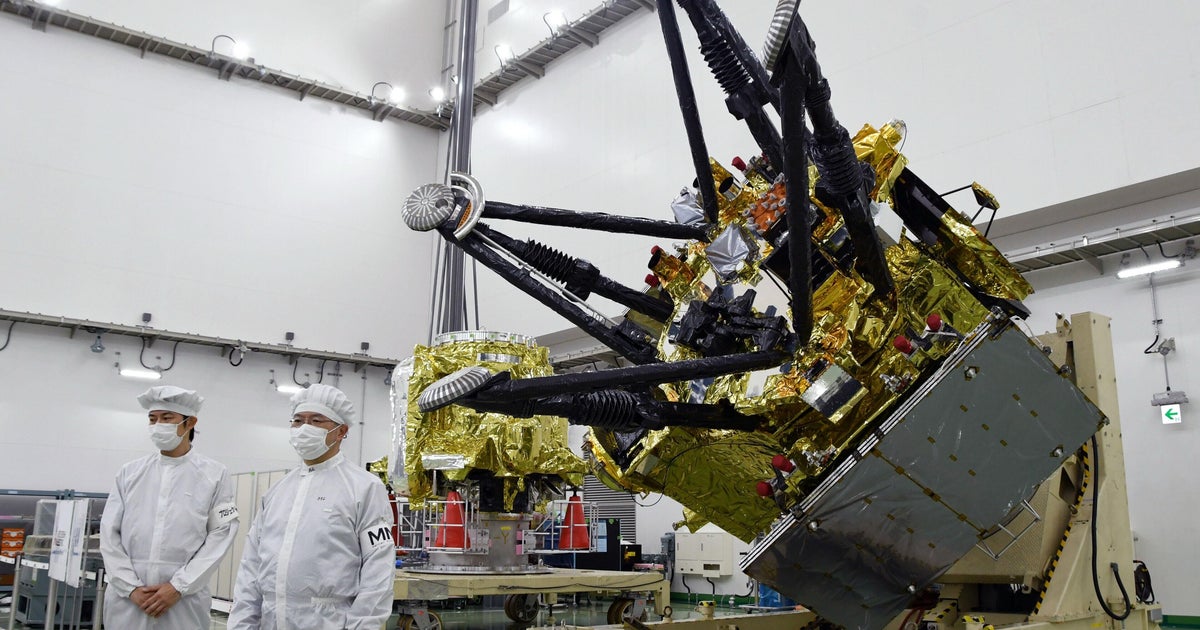
Soil samples collected by the MMX probe will shed light on the mysterious origin of the red planet Japan launched an ambitious $350 million mission to Mars on Monday to study the red planet's two moons in unprecedented detail, dropping a small rover on the largest — Phobos — before the mothership touches down to robotically collect soil samples for return to Earth. The primary goal of the Martian Moons Exploration mission, or MMX, is to determine whether Phobos and the smaller moon Deimos were created by the impact of a large body early in the solar system's history or whether the two are asteroids that once passed close enough to Mars to be captured by the red planet's gravity.
The Martian moons are much smaller than Earth's, with Phobos measuring just 17 miles across at its widest while Deimos is less than half that size. Both are irregularly shaped and similar in appearance to asteroids. But size and shape alone are not enough to answer the question of their origin. "One of the most intriguing questions about Phobos and Deimos is simply why these two little moons are there in the first place," said Thomas Statler, who helped oversee development of two NASA instruments aboard the MMX spacecraft. "In some ways, they resemble asteroids from the outer part of
Source & Attribution
This One Place News story was acquired from cbsnews.com. OPN retains the source link and provenance for newsroom review.
Filed Under
U.S. News