
Oscar Cantú, chair of US bishops’ AI task force, urges Trump to look beyond ‘ego’ in AI race
Get RNS’ thoughtful, essential religion reporting every morning. Sign up for free!
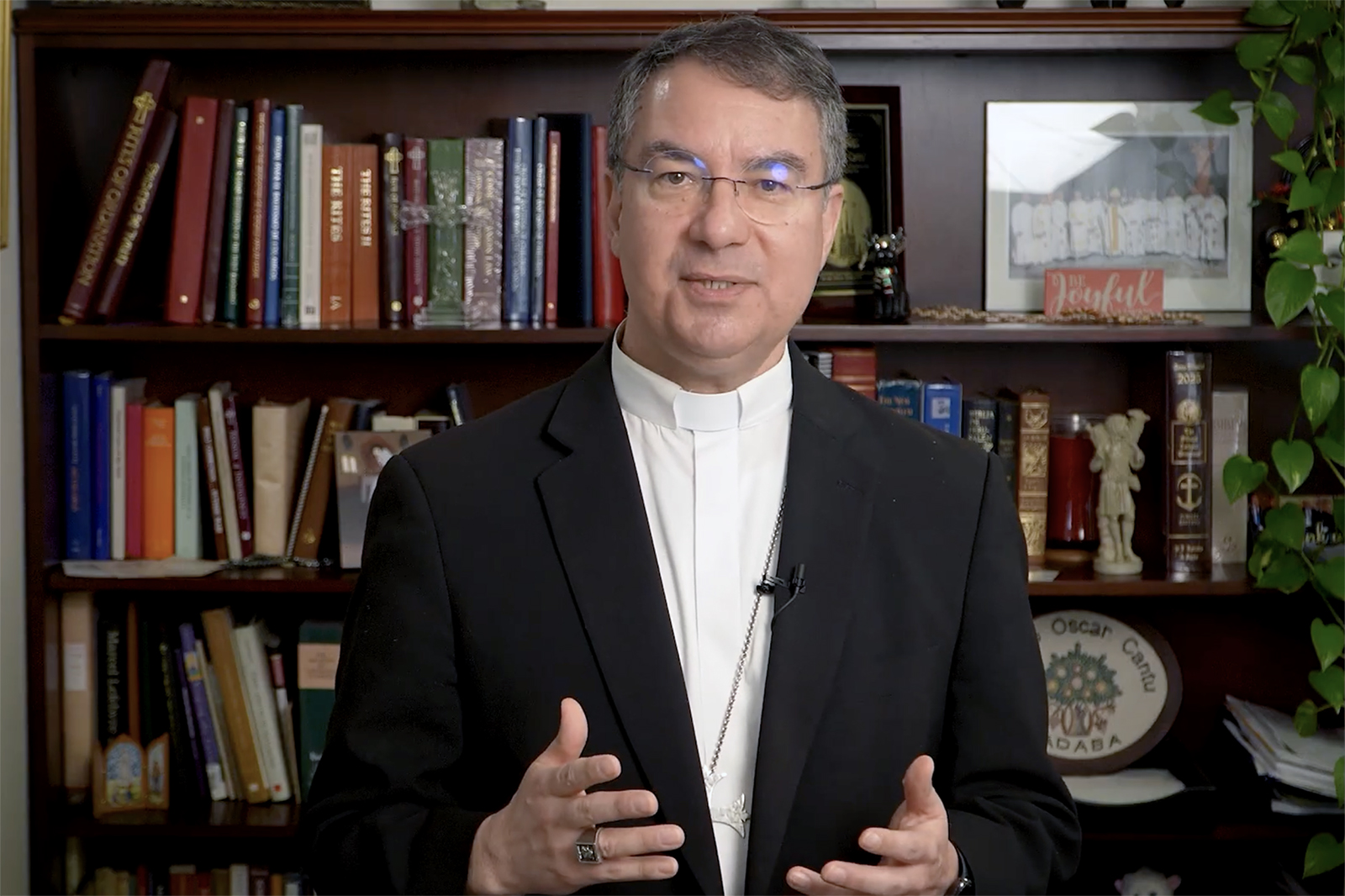
VATICAN CITY (RNS) — On Sept. 16, the U.S. Conference of Catholic Bishops announced Bishop of San Jose, California, would chair a new task force on preserving human dignity in the age of artificial intelligence. The initiative aims to engage AI developers, advocate for government safeguards and educate bishops and dioceses about the emerging technology.
The task force follows Pope Leo XIV’s call for transparency, accountability and broad public participation in shaping AI, as outlined in his May encyclical, “Magnifica Humanitas.”
Religion News Service spoke with Cantú via Zoom on Sept. 17 about Silicon Valley’s growing interest in the Catholic Church’s input, tensions with the Trump administration and the possibility of the Vatican mediating talks over shared AI safeguards between the U.S. and China.
The following interview has been edited for length and clarity.
What are the objectives of USCCB’s task force on artificial intelligence?
It’s not like we’re going to solve the issue in three months. I’m not the AI czar. I’m a bishop, and I will be representing the voice of the church in the U.S. and the efforts of the bishops in the U.S., given the marching orders Pope Leo has given us from the encyclical.
We will be working in basically three or four areas. First, to maintain dialogue with the frontier labs. I think they are respectful to the voice of the church, particularly the Catholic Church, because we’re global. We are not tied to American politics, so we don’t have those pressures, whether it’s of partisan politics or financial pressures. Also because we bring a storehouse of moral and ethical teachings and principles. So they appreciate the leverage the Catholic Church can bring to the table, particularly with regard to establishing some regulation. That’s not going to be easy.
That brings us to the second working area of this task force: advocacy. That is advocating for appropriate regulation and/or legislation. We will continue to work with legislators and with Congress. (Regulation) is something AI labs are calling for themselves. The public pushback is: What about China? China just does whatever it wants. That’s a bad argument — not that it’s untrue, but we need to do what’s right because it’s the right thing to do. I think the U.S. companies need to lead in this ethical and moral question — in slowing down to make sure these very powerful agents don’t harm humanity.
The third element the task force will work on is formation and education, bringing some education on what AI is — how it works, what are the benefits, what are the concerns — to our bishops and also our dioceses across the United States.
We will also interface with and give some reporting to the Vatican Commission on Artificial Intelligence.
Silicon Valley is in your diocese, and tech leaders seem to be increasingly seeking out the Church. Have you noticed a change?
I have. It was the encyclical that really prompted us to delve into the deep. I organized a diocesan conference two weeks after the publication of “Magnifica Humanitas,” and we invited the public. I was just tremendously impressed at the public session and how many people from the tech industry came. They were curious to hear about the encyclical — they had all read it — and they had questions about it. They were impressed about how much the Pope knew about artificial intelligence and the fact the Pope was pointing to questions they had raised as well. They have come square in the face with questions they did not have answers to: What is the meaning of human life? What does it mean if machines become smarter than humans? If they do things better than humans, what does that mean for society?
One of my priests was involved and was invited by Anthropic over the past year and a half to delve into these conversations. They admit it — they don’t understand why the machines are doing certain things, and it’s frightened them. They’re turning to theologians and philosophers for guidance.
On September 16, the USCCB administrative committee met with representatives of tech companies. What can you share about the meeting?
Forgive me for not getting into all the details, but we were under Chatham House rules, so we could have a more open conversation. I think it was seven technology experts that were invited guests to speak to the administrative committee of the bishops’ conference of the United States — about 30 bishops. They represented four different companies. We sat for about two and a half hours listening to their hopes, their concerns about the technology they are building — they were quite forthright about some of their concerns.
It was an opportunity for the bishops to understand a little bit better how powerful these machines are, and the fact that we need to act. We need to bring our voice, the Church’s voice, to the public square. But we also need to bring the conversation to our parishioners. This is something Pope Leo has encouraged us to do: this sort of a democratization of this conversation. We can’t leave it only to the technology companies, and not only to the actions or inactions of Congress. We must raise our consciousness, raise a voice of conscience to the companies, to government and we hope eventually an international voice.
A dozen bishops then met with lawmakers on Capitol Hill. Did you discuss AI regulations?
Several of my brother bishops were heading to the hill to discuss some legislation that is being proposed. I was not there, but I do think it’s important legislators feel the support of the Catholic Church and the Vatican for some regulation and legislation that makes sense and keeps children safe. That keeps a sense of privacy where it’s called for. That upholds truth amid the rise of deep fakes. Very basic things people can agree upon. And we hope that legislation can get passed. They’re dealing with the White House, which has very different thoughts about AI and policy, and so we’re being judicious and being realistic about what we can accomplish and what we can’t. One step at a time.
The Trump administration is proving to be a difficult interlocutor when it comes to promoting AI regulation. Where do the bishops agree with this administration and where do you see major differences?
Certainly the value system of the church and of the White House are not in sync, particularly in this regard. AI leaders are coming to the Church to ask for some leverage in trying to do the right thing and slowing down this process, because they see there are some extremely deep concerns. There are bigger questions than who wins the AI race. They’re realizing that.
We would encourage the White House to think about, not just the bottom line or our ego as Americans, but to think about the good of society. We’re always going to speak the truth, we’re always going to speak for the dignity of humanity and for the common good. That will always be our message and our marching orders.
Do you think the Vatican could serve as a credible intermediary between the United States and China on shared AI safeguards?
That’s not going to be easy. But if anyone can, I think, the Vatican is well poised to do that, and I think the Vatican would be willing to do that if they see a pathway forward.
You’ve been a vocal advocate for immigrants and other vulnerable communities through your pastoral work and leadership of the diocese. Does this in any way influence this role you have as chair of the AI task force?
Yes. In one of the conversations I had with one of the founders of one of the top AI labs, I expressed to him my concern about how there will be an AI lag with the Global South and how this may affect the Global South. Those are issues we’ve not put a whole lot of thought into.
I shared with him one of my visits to a very remote area, in Peru, up in the mountains, (with) a bishop who was working there. He only had 12 priests. Two of them died of COVID. It took forever for the vaccine to get up to the mountains, and people were suffering.
I said, what about the people in these remote mountains? And his response was telling. He said, “Oh, all they need is a cell phone. They have cell coverage, and they could dial in, in any language they want, and they could get AI medical assistance.” He had this technological answer to these problems that are multi leveled, and it sounded so easy to him. I’m not sure he’s been to the mountains in Peru or walked through them, or spoken to that bishop, but it dawned on me how they seem to have a simple fix for all of the problems of humanity. They’re not thinking about some of the unintended effects. My concern for the least of these will be at the center of these conversations, just as Pope Leo has asked us.
Source & Attribution
This One Place News story was acquired from religionnews.com. OPN retains the source link and provenance for newsroom review.
Filed Under
Faith & Religion