
US Army’s overseas combat muscle less formidable than it appears, study says
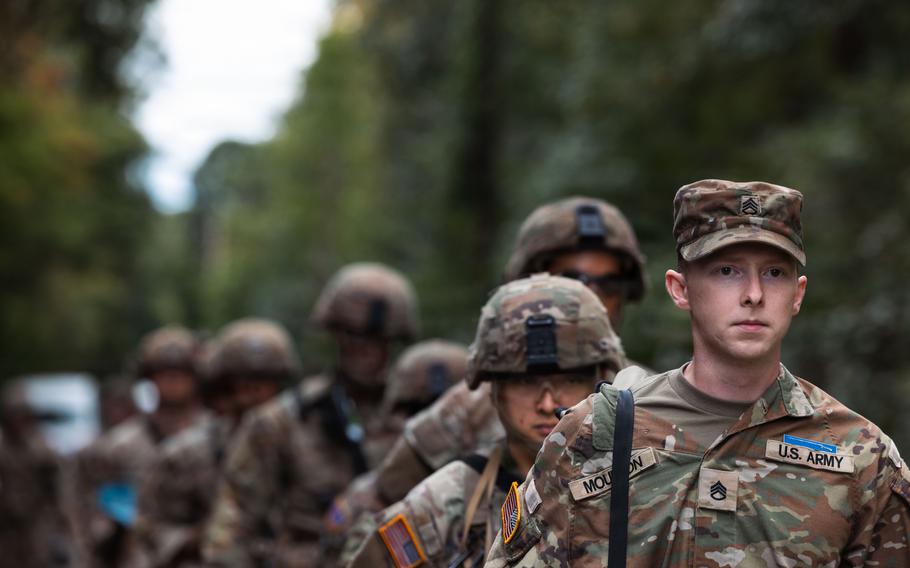
A new report says Army readiness in Europe and the Pacific is weakened by distance, staffing shortages and logistics gaps, despite a push for forward-based forces.
A report says Army readiness in Europe and the Pacific is weakened by distance, staffing shortages and logistics gaps, despite push for forward-based forces. Soldiers move in a staggered formation during a training exercise at Fort Belvoir, Va., on Sept. 28, 2026. The Army’s ability to wage war in Europe and the Pacific is undermined by forces stationed too far from potential battlefields and manpower shortages at key overseas headquarters, according to a new report. (Jesus Menchaca/U.S. Army) American soldiers’ ability to wage war in Europe and the Pacific is undermined by extreme distance from potential battlefields and shortages at key overseas headquarters, according to a new report. The assessment, released Wednesday, comes just two weeks after the Army unveiled a new fighting strategy that emphasizes positioning combat power forward to blunt enemy attacks.
But the findings by the Washington-based Center for Strategic and International Studies contend that the Army’s overseas combat posture is stronger on paper than in practice. Forward-based logistics and command capabilities depend on having necessary troops positioned overseas, according to the report. “In reality, the forces are based in the United States,” it said, referring to capabilities assigned to the European and Pacific theaters. A CH-47 Chinook helicopter lands to pick up soldiers during a training exercise on Calayan Island, Philippines, on June 15, 2026. A
Source & Attribution
This One Place News story was acquired from stripes.com. OPN retains the source link and provenance for newsroom review.
Filed Under
Veterans News