One Place News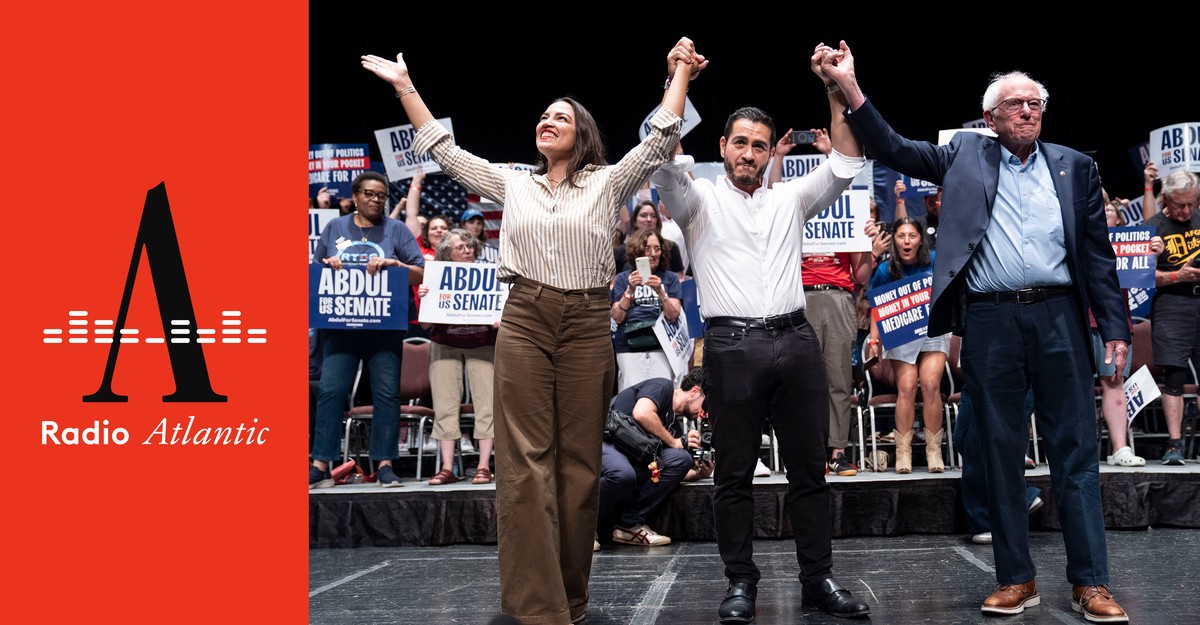
Subscribe here: Apple Podcasts | Spotify | YouTube | Overcast | Pocket Casts
In primary elections, politicians run to win over their party faithful, which is often a different demographic than those they need to appeal to in the general election. So strategists, consultants, and party leaders spend a lot of money trying to figure out what voters want—yes, what sort of policy they want on the economy or health care or education, but also what kind of person they want. Parties want to make sure their candidate is electable.
Electability hangs over the primary race in Michigan, where, next Tuesday, voters will decide whether Representative Haley Stevens or Abdul El-Sayed will compete against Mike Rogers, the Republican candidate, to replace the departing Senator Gary Peters. But elections aren’t a formula, and there is no guarantee that voters will support the candidates that party leaders believe they will. And in many recent elections, voters have opted for the populist over the palatable.
On this week’s episode, my colleague Russell Berman joins me to discuss why the Michigan primary matters for the Democrats, and for the future of the Senate at large.
The following is a transcript of the episode:
Russell Berman: There’s a huge debate right now in the Democratic primary over electability because conventionally, right, people like Chuck Schumer would say Haley Stevens is the classic
purple-state Democratic Senate candidate. She won a Republican-held House seat. She has an ability, they say, to appeal to independents and moderate Republicans. But if you talk to El-Sayed, which I did, he would say, We’ve tried that and people who lost to Donald Trump should not give us any lectures on electability. And if Abdul El-Sayed wins the primary, it’ll be a real test to see if somebody as progressive as he is can win not a blue state but a purple state.
Adam Harris: Things are getting tense in Michigan as Abdul El-Sayed and Representative Haley Stevens vie to become the Democrats’ nominee for the state’s open Senate seat in November. The two agree that this race is essential for Democrats:
Abdul El-Sayed: I love America, but I love America enough to be honest about what America owes all of our children.
Haley Stevens: And I’m in this fight not just to win but to get real results, points on the scoreboard, for you, and your family, and our future.”
But they represent different factions of the party in method, and with the primary election fast approaching, they represent two different futures as well.
I’m Adam Harris. This is Radio Atlantic, and this week, we need to think about Michigan and why it matters for control of Congress.
El-Sayed is an epidemiologist and a public-health official whose populist appeal and policy platform has earned the endorsements of Senator Bernie Sanders, Representative Alexandria Ocasio-Cortez, and Senator Elizabeth Warren. Stevens, meanwhile, positions herself a moderate Democrat and has been championed by the party’s establishment,people like Senator Chuck Schumer, Representative Jim Clyburn, and Senator Kirsten Gillibrand among them.
Now, Michigan isn’t a deep-blue state, so some Democrats worry that if they elect someone who can energize the base with progressive policy—someone like El-Sayed—they might isolate voters in the general election. And that could lead to Democrats losing a critical seat in the Senate as they seek to gain control of the chamber. But politics isn’t a science, and there’s no crystal ball that can predict how general elections will go.
So, why should Americans be paying attention to a primary race in Michigan? And how might it shape the future of Congress?
With me to discuss is my colleague, Russell Berman, who covers Congress, elections, and all things politics for The Atlantic.
Let’s get to questions.
Russell, welcome to the show.
Russell Berman: Thanks for having me.
Harris: So Russell, you’re in Michigan. What are you seeing on the ground right now? Are there particular issues that voters seem energized about?
Berman: Yes. Well, I mean, Michigan is a huge state for Democrats. They cannot afford to lose it. And you know, there’s a lot of energy for Abdul El-Sayed; there’s a lot of talk about Israel, his willingness to call what Israel is doing in Gaza a genocide, that even in the first few events I’ve attended that has come up organically from people. Voters have told me they like that he tells it like it is. He’s a very to-the-point, blunt-spoken candidate.
Abdul El-Sayed: Donald Trump is not himself the disease of our politics. He’s just the worst symptom of the disease of our politics.
And, I mean, again, at least with his supporters, and there are a lot of them, that is really resonating.
Harris: I guess, so, for someone like Haley Stevens, right? The voters are saying that, Look, we like that Abdul El-Sayed is willing to call what Israel is doing in Palestine a genocide, whereas Haley Stevens is receiving money from AIPAC, right? So what are you hearing about the Stevens campaign?
Berman: Well, the dynamic is interesting ’cause it’s, you know, El-Sayed is going all over. He’s having many more events than she is. She at this point is really concentrating on turning out the Black voter base in Detroit. She’s appearing with Congressman Jim Clyburn from South Carolina. She’s having a bunch of events while I’m here in Detroit, going to churches on Sunday morning. She is saying, you know, she voted against that Massie amendment that would have blocked all offensive aid to Israel. I don’t think she’s interested in talking about Israel that much. She’s interested in talking about her background, her work for President Obama on the auto rescue.
Stevens: “You know, we couldn’t have gotten that deal done to save our auto industry without our auto workers.”
She’s really honing in on her Michigander-ness, if you will, her authenticity. There’s been discussions of her accent, and it’s a real authentic Michigan accent. And she’s talking about all what she can do specifically on affordability and other issues to either bring money back or help out Michigan. And so she’s focused, like many Democrats are, on the economy rather than wanting to get into a debate over Israel.
Harris: Hm. You know, it’s interesting because in the backdrop of all of this, she’s doing this event with Jim Clyburn. Because factions have sort of always defined our politics, and this race comes amid a sort of tug-of-war in the Democratic Party between the sort of establishment and its left flank with Senate Minority Leader Chuck Schumer, establishment Democrats like Clyburn, right? Folks who supported Joe Biden. And then on the other side, with El-Sayed, you have, you know, Bernie Sanders, AOC, the left flank of the party really sort of supporting him.
So for those who haven’t been following as closely as you and I, why should the rest of America care about this race? What are the implications for Democrats?
Berman: Well, so Michigan is—Democrats cannot afford to lose Michigan if they have any hope, really, of winning back the Senate. They already have an uphill battle. They have a lot of possibilities. There’s been a lot of talk obviously about Maine and North Carolina, Ohio, Iowa, and Alaska, but that may not matter if they can’t hold the state of Michigan. Michigan is the one state that Democrats currently hold that they are at risk of losing.
The seat is open because the incumbent Senator Gary Peters, a moderate Democrat, is retiring. And the Republicans have a pretty strong candidate in Mike Rogers, who’s a former longtime member of Congress from Michigan, former chair of the Intelligence Committee in the House. He nearly won the Senate seat that’s currently held by Elissa Slotkin, a Democrat, in 2024, lost by only really a few thousand votes. So he’s very well known statewide. And he’s a Trump supporter, like most, almost all Republicans running for office nowadays are. But he’s, within the current Republican Party, he’s not particularly extreme. So he’s gonna be tough for either Haley Stevens or Abdul El-Sayed to beat.
And there’s a huge debate right now in the Democratic primary over electability because conventionally, right, people like Chuck Schumer, people like Gary Peters, who’s endorsed Stevens, would say Haley Stevens is the classic purple-state Democratic Senate candidate. She won a Republican-held House seat. She has an ability, they say, to appeal to independents and moderate Republicans. She hasn’t taken positions on the far left like El-Sayed in support of Medicare for All or calling for abolishing ICE or calling what Israel is doing in Gaza a genocide. But if you talk to El-Sayed, which I did, he would say, We’ve tried that and people who lost to Donald Trump should not give us any lectures on electability. That’s something that one of his supporters, Ro Khanna, says. And so this is gonna be a real test both for progressives if they can win the primary, and if Abdul El-Sayed wins the primary, it’ll be a real test to see if somebody as progressive as he is can win not a blue state but a purple state.
Harris: You know that argument, right? That sort of electability argument—it almost sort of treats politics as a sort of science, right? Where you say that we are, that Chuck Schumer says This is a sort of prototypical Democrat who can win in a purple state, right? It’s a sort of Abigail Spanberger sort of argument.
But if voters disagree with her on policy, wouldn’t they wonder what’s the point of winning an election if things are just going to stay the same, when it’s been demonstrated that voters are looking for change?
Berman: That’s right. You know, that’s exactly, almost exactly, what I heard from a youth-voter event that I went to with El-Sayed where somebody was like, Look, it seems like no matter which party, we elect people and nothing changes, right? And so that is leading them to candidates who really represent change.
And if you look at the history of Michigan, right, in the last decade and a half, it’s one of these three states, along with Pennsylvania and Wisconsin, that voted for Barack Obama twice, then voted for Donald Trump, his polar opposite who had slandered Obama in every which way, then went back to Biden, then back to Trump, right? And so what is the through line of all of those is that really in almost every election, they were voting for the candidate who represents change, right? And so El- Sayed, he’ll say, I’m against, Trump was against politics as usual. That’s why he won, and I’m against politics as usual. And so for people who are really upset at the system, who’ve given up on the establishment of both parties, that is the voter for him.
Harris: Yeah. You know, speaking of that, sort of, politics as usual and also even on the endorsements, in Maine, after Graham Platner dropped out of the race, Troy Jackson recently said that he wasn’t sure that he wanted Chuck Schumer’s help with his race in the general election, and he said that he definitely wouldn’t support him for leader. I’m wondering, are those sort of establishment endorsements becoming sort of toxic for the candidates who they are purporting to help?
Berman: Depending on who they are, yes, but it’s clear that at this point in his career, Chuck Schumer is kind of like what Mitch McConnell was a few years ago, right, for Republicans, where people running—they wanted Trump’s endorsement, but they didn’t want necessarily, or didn’t need, Mitch McConnell’s endorsement. And so the big endorsement that most Democrats want, even now in some purple states, is from Bernie Sanders more than Chuck Schumer.
Harris: I’ve been thinking about how Americans are sort of down on Congress, right, and Congress’s ability to get things done. And thinking also about that electability argument that we are hearing in Michigan, where if El-Sayed wins a primary, it sort of shows you where, where the base is. But folks like Chuck Schumer will say that, well, statesmanship is the art of compromise, and some of the candidates that we’re seeing now don’t seem willing to compromise and that would affect the way that Congress functions. So what does Congress lose if they lose some of those more moderate, centrist Democrats, if anything?
Berman: Well, this is a trend that we’ve been seeing for really 20 years now, first in the House, where you’ve seen moderates in both parties kind of vanquished; the Republican-moderate caucuses down to, you know, a couple of members who are really not as moderate as the moderates used to be in the Republican Party; and in the Democratic caucus, the Blue Dogs, which used to be a huge force, are now much smaller in number. They’re the more conservative Democrats. And now the development that we’re seeing is this move on to the Senate. And we’ve seen, certainly, Republicans move to the right or move toward Trump. Like the Senate used to be sort of the, and has been a little bit, the bastion of the establishment Republican Party. And you still have what some people would call moderates in Susan Collins and Lisa Murkowski, and, depending on the issue, a few others. And now we’re seeing this with Democrats. You don’t have Joe Manchin from West Virginia anymore. The question is what’s going to change and how is this going to impact Congress? You’re already seeing it. You’re seeing fewer bipartisan bills, and you’re seeing both parties basically try to win total power, even if very narrowly, where these narrow margins in the House and the Senate, and then just pass partisan legislation on party lines through, you know, what the Republicans have used and what Democrats used under Joe Biden, which is budget reconciliation. This gets around the filibuster. It means they need only 51 votes instead of 60 in the Senate. And so the trend, I think, that we’re going to see is that, even more of that. And then that legislation might look on the Democratic side more progressive than it would have even under Joe Biden, who did pass fairly progressive legislation considering that he himself was a more moderate Democrat.
So I think that’s the trend that we’re gonna see. Now what will be interesting is if the Democrats do take control of the House and Senate this year, the next two years Trump will still be president. And so if they want the government to stay open, let alone pass major legislation, it’s gonna need, by definition, bipartisan support because it’ll be passed by a Democratic Congress and it’ll need to be signed by a Republican president.
Harris: Because the parties are so polarized, right? Because you sort of need that House and Senate, they’re trying to amass as much power as possible so that they can pass legislation along party lines, but you would also need that White House support.
So what could Democrats, if they get these four seats in the Senate, they end up winning the House, what could they actually do with the power, if they had it?
Berman: Well, I think the lowest-hanging fruit is simply oversight, right? Because they would control the committees. They would be able to subpoena the Trump administration. That will be probably the first thing that they try to do. And then they would just use their leverage on, you know, for government, for federal funding, right? I mean, the Trump administration has decimated the federal government and the Democrats would now have the power of the purse, right? So they would be able to say, Hey, we need, we are going to fund the government and then we’ll see how Trump reacts. We’ll see if Trump pivots at all or if he’s perfectly happy to be, to basically have the government all but shut down for two years. It’s gonna be an interesting dynamic. But there’s no guarantee that they’ll be able to work together given, you know, where Trump is right now and certainly where the Democratic Party is right now.
Harris: You know, President Trump will be in Michigan this week. The election is next Tuesday. What are you watching for as we move toward the election?
Berman: Well, it seems like El-Sayed had, and has had, momentum. There was a third candidate in the race, Mallory McMorrow, who is sort of trying to take a lane between El-Sayed and Stevens, progressive but not quite as far left as Abdul El-Sayed. She dropped out. We’re still kind of waiting for the dust to fully settle in terms of there hasn’t been a ton of credible polling to see where her supporters are going. Obviously, the Stevens campaign hopes that they will go to her, and there still is a ton of money coming in on her behalf from AIPAC and from other outside groups and against El-Sayed. And it’s an open question as to whether that will essentially drag her over the finish line in this primary on August 4. But it seems like the energy and the momentum is with El-Sayed. But, as I said, there’s not a ton of polling, so it’s a little unclear.
Harris: Well, Russell, thank you for sharing with us and giving us so much to think about as we move toward next week’s election.
Berman: hanks for having me.
Harris: Hey y’all, one last thing before we go: We’re introducing a new segment today. The Atlantic has been around since 1857, and it has published some of the greatest writers and thinkers, people who have helped define the nation and the world we live in. That’s all to say: We have a lot of good stuff in our archives.
So, occasionally, at the end of episodes, I’m going to share some things with you that I find in there, like this essay from the middle of the last century that reads like it could have been written last week.
In 1943, Robert La Follette Jr., a senator from Wisconsin, was distraught. Americans no longer trusted Congress, the place to which he and his father had dedicated their lives. People said it was corrupt; they said Congress wasn’t doing its job.
Now, criticism sort of comes with the territory in Congress and it’s usually easy enough to brush off. But La Follette’s stress stemmed from the fact that the critics weren’t necessarily wrong. Congress was losing its grip. So, while the world was at war, La Follette turned his focus back to the American project.
He wrote an essay, titled “A Senator Looks at Congress.” It ran in the July 1943 issue of The Atlantic.
“When the President of the United States can seriously propose to repeal an act of Congress by executive order, it is time for the American people to take stock of the situation, war or no war.”
Now, if you don’t know anything else about Robert LaFollette Jr., you should know that he was born to be a politician. They called him Young Bob. His father, Robert LaFollette Sr., is one of the most celebrated figures in Wisconsin’s history, and he was the architect of what was known as the “Wisconsin Idea,” a progressive vision for the state. As governor and then a senator, he pushed for a direct primary, fair tax and labor policy, and reforms to the ways that people could change laws.
Young Bob’s mom, Belle, knew how badly her husband wanted his son to understand his business; to ensure that his sons “grew up as familiar with politics as children raised on the farm are familiar with its days work; and in that same spirit of practical knowledge and experience [be] ready when it came their turn to put their hands to the plow and go straight ahead to the end of the furrow.”
And so, by his 30th birthday, in 1925, Young Bob knew the ins and outs of Congress. He knew what worked; he knew what didn’t. His father died in June of that year. Young Bob was selected to finish out his term, and he quickly put his inherited knowledge to action. He gained national attention of his own during the Great Depression, and he led the congressional committee that investigated the ways that industrialists were violating unionists’ civil liberties.
By 1943, when he wrote for the magazine, Congress was dealing with issues that the Founders could have only dreamed about.
“If the control of governmental policy is to remain with the people’s elected representatives, as the framers of the Constitution intended it should, and not drift into the hands of a relatively irresponsible bureaucracy, Congress will have to streamline its organization.”
His recommendations might seem quaint in our time. He wanted to make working on the Hill financially sustainable for staff. He wanted to reorganize committees. He wanted to create a joint Legislative and Executive Council, which would ensure that laws were being enacted as Congress intended.
But it was his reasons for writing that felt most familiar in our time.
Right now, there is a growing sense that Congress is not only irrevocably broken but subservient to the executive branch. According to a Marist poll, nearly 70 percent of Americans believe that the system of checks and balances is not working well.
Now, La Follette stressed that his reforms would require, as all human institutions do, cooperation. But the problem of the modern era isn’t so much a lack of cooperation as that Congress does what the president wants.
La Follette lost his seat to Joseph McCarthy, the man who spearheaded the second Red Scare, in 1946.
“Congress has an opportunity now to show what it can do,” he wrote in 1943. He urged the legislative body to once again serve as the voice of the people.
And he warned: “If it fails to be constructive, there is no telling how long an impatient people will support representative government in America.”
I wonder what he would make of that warning now. And I wonder what he would make of our politics today.
See you next week.