As Jews mark Tisha B’Av, ancient mourning rituals make room for modern grief

(RNS) — As Jews across the world observe Tisha B’Av, the annual fast mourning the destruction of the First and Second Temples in Jerusalem, many will also grieve modern-day tragedies.

The holiday, which begins at sundown Wednesday (July 22) and ends Thursday at sunset, is observed as Judaism’s central day of communal mourning. Centuries-long tradition contributes to an evolving memory of the fast day through “kinot,” the liturgical poems recited in synagogues that mourn the destruction of Jerusalem while also commemorating later tragedies.

Over centuries, rabbis and poets have composed new kinot in response to catastrophes and persecutions, from the Crusades and Inquisition to the Holocaust.

Since the Oct. 7, 2023, Hamas attacks on Israel and the devastating war in Gaza, new lamentations have continued that tradition as modern authors started penning liturgical poems.

“In 2026, Tisha B’Av looks a lot like it’s always looked,” Rabbi Diana Fersko, chief Jewish life officer at the Marlene Meyerson JCC Manhattan, told RNS. “It’s this day of sadness where you’re letting yourself sit in that emotion and reflect on some of the darkest moments in Jewish history. You’re doing it with your community, learning, reflecting, praying and contemplating the cosmic journey that we’ve been on.”

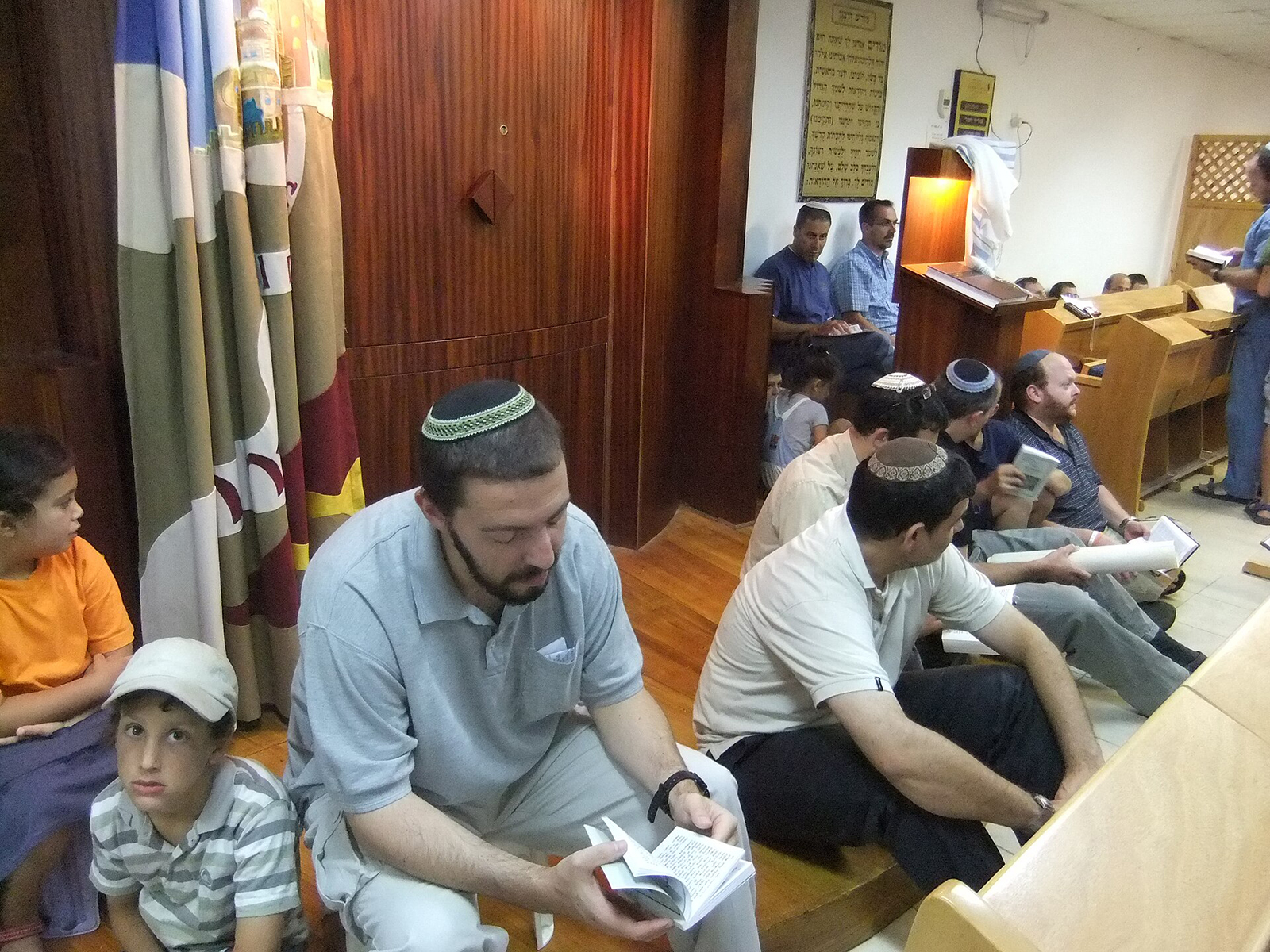
Unlike many Jewish holidays that emphasize celebration, family gatherings or festive meals, Tisha B’Av calls for an embrace of grief for 25 hours. Throughout that time, mourners fast, avoid physical comforts — like foregoing regular chairs for low stools — and gather in synagogues to read the biblical Book of Lamentations, alongside the kinot.

Fersko said the tradition of adding new kinot to respond to times of crises demonstrates that Jewish mourning has never been frozen in time.


After Oct. 7, new liturgical works appeared almost immediately. “Kinat Be’eri,” written by Israeli poet Yagel Haroush to mourn the massacre at the Be’eri kibbutz in southern Israel, quickly became popular. The poem notably starts each stanza with “Eicha” — the Hebrew word for the question “how?” — alluding to the Book of Lamentations and wrestling with God amid mass deaths.

Yaacov Osadon is a “paytan,” or Jewish liturgical singer, from Dimona, Israel, who has spent a decade studying traditional Moroccan Jewish hymns and “piyyutim,” Jewish liturgical poems and hymns chanted during religious services, in his Sephardic tradition. He said diverse Jewish communities across the diaspora and Israel have always sought to grieve as a people after defining moments of loss.

“The purpose is not only to preserve their memory, but also to examine circumstances that led to these tragedies, learn from them and pray that such suffering will never happen again,” said Osadon, whose day job is operations manager at Yatir Winery, a kosher fine wine producer near Dimona.

Rabbi Or Rose, director of the Betty Ann Greenbaum Miller Center for Interreligious Learning and Leadership at Hebrew College in Newton, Massachusetts, said this sense of evolving memory reflects the enduring purpose of the holiday itself.

“Tisha B’Av is about how we carry loss now, and how memory can become a stimulus for moral and spiritual introspection and renewal,” Rose said.

This year, he said, the holiday arrives as many Jews continue to process multiple crises in what Rose described as “a world that feels especially fragile and unsettled.”

Rose continued, “The liturgy of Tisha B’Av is intentionally spare and somber. The traditional physical practices of the day — fasting, sitting low, refraining from comfort, and observing a kind of communal austerity — help make the mourning feel embodied, and not just intellectual.”

New liturgical poems do not replace ancient laments, Fersko said, but rather place more recent suffering — and prayers for restoration — within the longer arc of Jewish history.

“October 7 will definitely be in my mind, but Tisha B’Av also gives you the long view of Jewish history,” Fersko said. “As long as it’s done with thought, care and sincerity, it makes sense to bring modern pain points into this very sad day.”

For Osadon, the lessons of Tisha B’Av extend beyond remembrance. Jewish tradition, he pointed out, teaches that the Second Temple was destroyed because of “sinat chinam,” or baseless hatred, and destructive internal division among Jews. In today’s sharply polarized Israeli society, he believes that message carries particular urgency.

“History should not only be remembered — it should also be learned from,” he said. “We should make every possible effort to strengthen mutual respect, preserve our unity despite our differences and ensure that disagreement never turns into hostility.”

Rose echoed that teaching, pointing to the late Rabbi Abraham Isaac Kook’s call for “ahavat chinam,” or baseless love, as an antidote to repair a broken world. 


The Jewish tradition, Rose said, “does not let us only point outward at the world’s cruelty; it also asks us to examine our own moral failings, our communal divisions and the ways hatred can corrode our life together,” he said.

One teaching predicts the coming Messiah will be born on Tisha B’Av, suggesting that redemption will emerge only after catastrophe.

“Tisha B’Av teaches us that Jewish hope is not naive optimism,” Rose said. “It is hope forged in the presence of loss. The day holds grief and longing together, and in that sense it points toward a future in which what has been broken may yet be mended.”
As Jews mark Tisha B’Av, ancient mourning rituals make room for modern grief

(RNS) — As Jews across the world observe Tisha B’Av, the annual fast mourning the destruction of the First and Second Temples in Jerusalem, many will also grieve modern-day tragedies.

The holiday, which begins at sundown Wednesday (July 22) and ends Thursday at sunset, is observed as Judaism’s central day of communal mourning. Centuries-long tradition contributes to an evolving memory of the fast day through “kinot,” the liturgical poems recited in synagogues that mourn the destruction of Jerusalem while also commemorating later tragedies.

Over centuries, rabbis and poets have composed new kinot in response to catastrophes and persecutions, from the Crusades and Inquisition to the Holocaust.

Since the Oct. 7, 2023, Hamas attacks on Israel and the devastating war in Gaza, new lamentations have continued that tradition as modern authors started penning liturgical poems.

“In 2026, Tisha B’Av looks a lot like it’s always looked,” Rabbi Diana Fersko, chief Jewish life officer at the Marlene Meyerson JCC Manhattan, told RNS. “It’s this day of sadness where you’re letting yourself sit in that emotion and reflect on some of the darkest moments in Jewish history. You’re doing it with your community, learning, reflecting, praying and contemplating the cosmic journey that we’ve been on.”

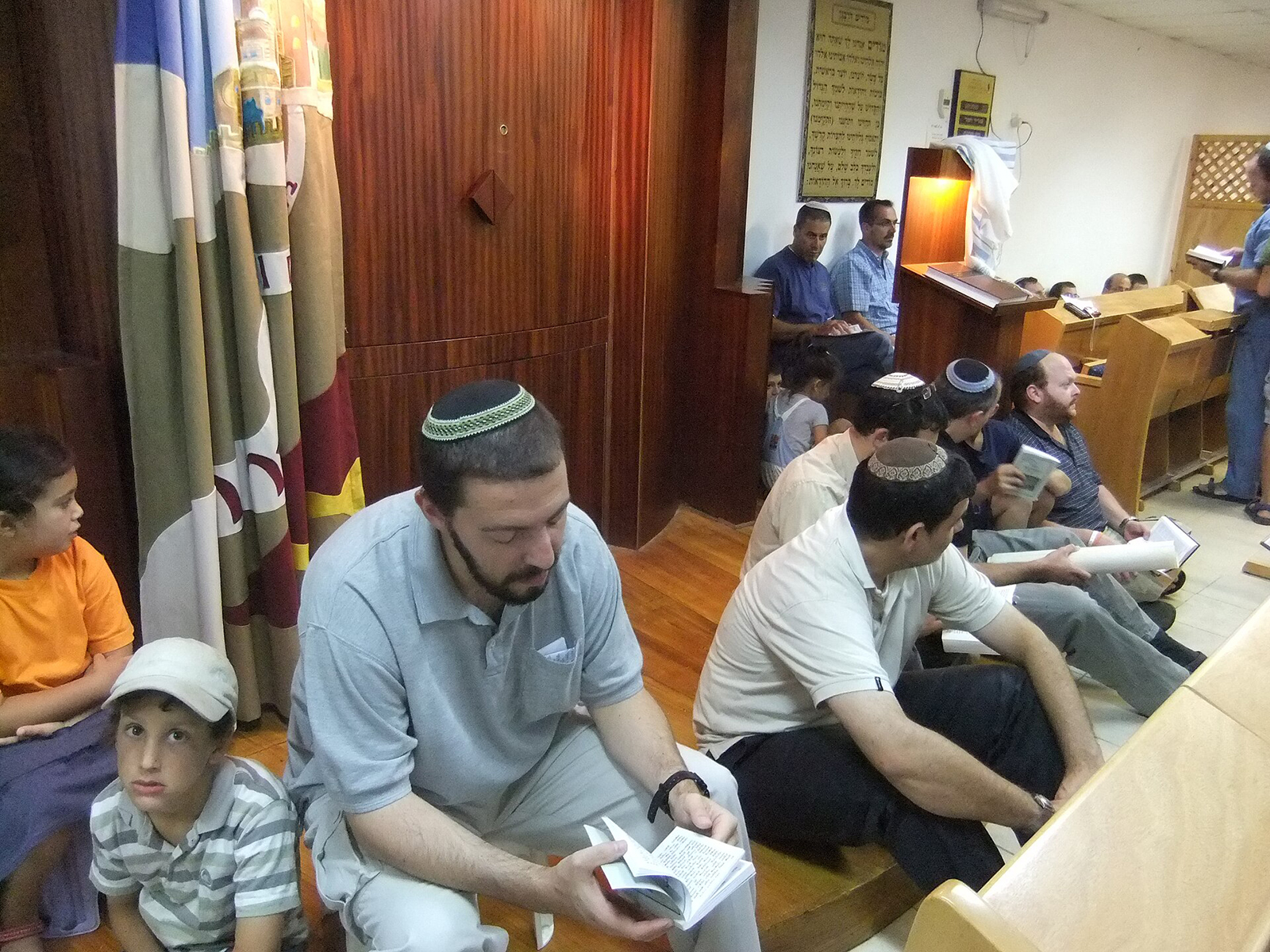
Unlike many Jewish holidays that emphasize celebration, family gatherings or festive meals, Tisha B’Av calls for an embrace of grief for 25 hours. Throughout that time, mourners fast, avoid physical comforts — like foregoing regular chairs for low stools — and gather in synagogues to read the biblical Book of Lamentations, alongside the kinot.

Fersko said the tradition of adding new kinot to respond to times of crises demonstrates that Jewish mourning has never been frozen in time.


After Oct. 7, new liturgical works appeared almost immediately. “Kinat Be’eri,” written by Israeli poet Yagel Haroush to mourn the massacre at the Be’eri kibbutz in southern Israel, quickly became popular. The poem notably starts each stanza with “Eicha” — the Hebrew word for the question “how?” — alluding to the Book of Lamentations and wrestling with God amid mass deaths.

Yaacov Osadon is a “paytan,” or Jewish liturgical singer, from Dimona, Israel, who has spent a decade studying traditional Moroccan Jewish hymns and “piyyutim,” Jewish liturgical poems and hymns chanted during religious services, in his Sephardic tradition. He said diverse Jewish communities across the diaspora and Israel have always sought to grieve as a people after defining moments of loss.

“The purpose is not only to preserve their memory, but also to examine circumstances that led to these tragedies, learn from them and pray that such suffering will never happen again,” said Osadon, whose day job is operations manager at Yatir Winery, a kosher fine wine producer near Dimona.

Rabbi Or Rose, director of the Betty Ann Greenbaum Miller Center for Interreligious Learning and Leadership at Hebrew College in Newton, Massachusetts, said this sense of evolving memory reflects the enduring purpose of the holiday itself.

“Tisha B’Av is about how we carry loss now, and how memory can become a stimulus for moral and spiritual introspection and renewal,” Rose said.

This year, he said, the holiday arrives as many Jews continue to process multiple crises in what Rose described as “a world that feels especially fragile and unsettled.”

Rose continued, “The liturgy of Tisha B’Av is intentionally spare and somber. The traditional physical practices of the day — fasting, sitting low, refraining from comfort, and observing a kind of communal austerity — help make the mourning feel embodied, and not just intellectual.”

New liturgical poems do not replace ancient laments, Fersko said, but rather place more recent suffering — and prayers for restoration — within the longer arc of Jewish history.

“October 7 will definitely be in my mind, but Tisha B’Av also gives you the long view of Jewish history,” Fersko said. “As long as it’s done with thought, care and sincerity, it makes sense to bring modern pain points into this very sad day.”

For Osadon, the lessons of Tisha B’Av extend beyond remembrance. Jewish tradition, he pointed out, teaches that the Second Temple was destroyed because of “sinat chinam,” or baseless hatred, and destructive internal division among Jews. In today’s sharply polarized Israeli society, he believes that message carries particular urgency.

“History should not only be remembered — it should also be learned from,” he said. “We should make every possible effort to strengthen mutual respect, preserve our unity despite our differences and ensure that disagreement never turns into hostility.”

Rose echoed that teaching, pointing to the late Rabbi Abraham Isaac Kook’s call for “ahavat chinam,” or baseless love, as an antidote to repair a broken world. 


The Jewish tradition, Rose said, “does not let us only point outward at the world’s cruelty; it also asks us to examine our own moral failings, our communal divisions and the ways hatred can corrode our life together,” he said.

One teaching predicts the coming Messiah will be born on Tisha B’Av, suggesting that redemption will emerge only after catastrophe.

“Tisha B’Av teaches us that Jewish hope is not naive optimism,” Rose said. “It is hope forged in the presence of loss. The day holds grief and longing together, and in that sense it points toward a future in which what has been broken may yet be mended.”

Related Posts

As 9/11 anniversary falls on Rosh Hashanah, Jews are asked to remember — and move forward

Source: YouTube Summary NEW YORK (RNS) — When American Airlines Flight 11 crashed into the North Tower of the World Trade Center on Sept. 11, 2001, Gadi Capela recalled running…

25 years after 9/11, war is still not the answer

(RNS) — I was 27 years old, living in New York City and early in my career as a Quaker peace advocate, when the attacks of Sept. 11, 2001, shook…

Leave a Reply

Your email address will not be published. Required fields are marked *

You Missed

The GOP midterm convention is a political experiment. Will it really work?

The GOP midterm convention is a political experiment. Will it really work?

Hawaii's western islands hit by fierce winds from Hurricane Lowell, leaving major damage

Hawaii's western islands hit by fierce winds from Hurricane Lowell, leaving major damage

Reigning Miss Austria dead at 22

Reigning Miss Austria dead at 22

Charges dropped against singer, actor Tyrese Gibson in animal cruelty case

Charges dropped against singer, actor Tyrese Gibson in animal cruelty case

City of Atlanta accepts Fulton County's offer to purchase Atlanta City Detention Center – 11Alive.com

City of Atlanta accepts Fulton County's offer to purchase Atlanta City Detention Center – 11Alive.com

Atlanta parking gets new transparency rules after unanimous city council vote – 11Alive.com

Atlanta parking gets new transparency rules after unanimous city council vote – 11Alive.com