One Place News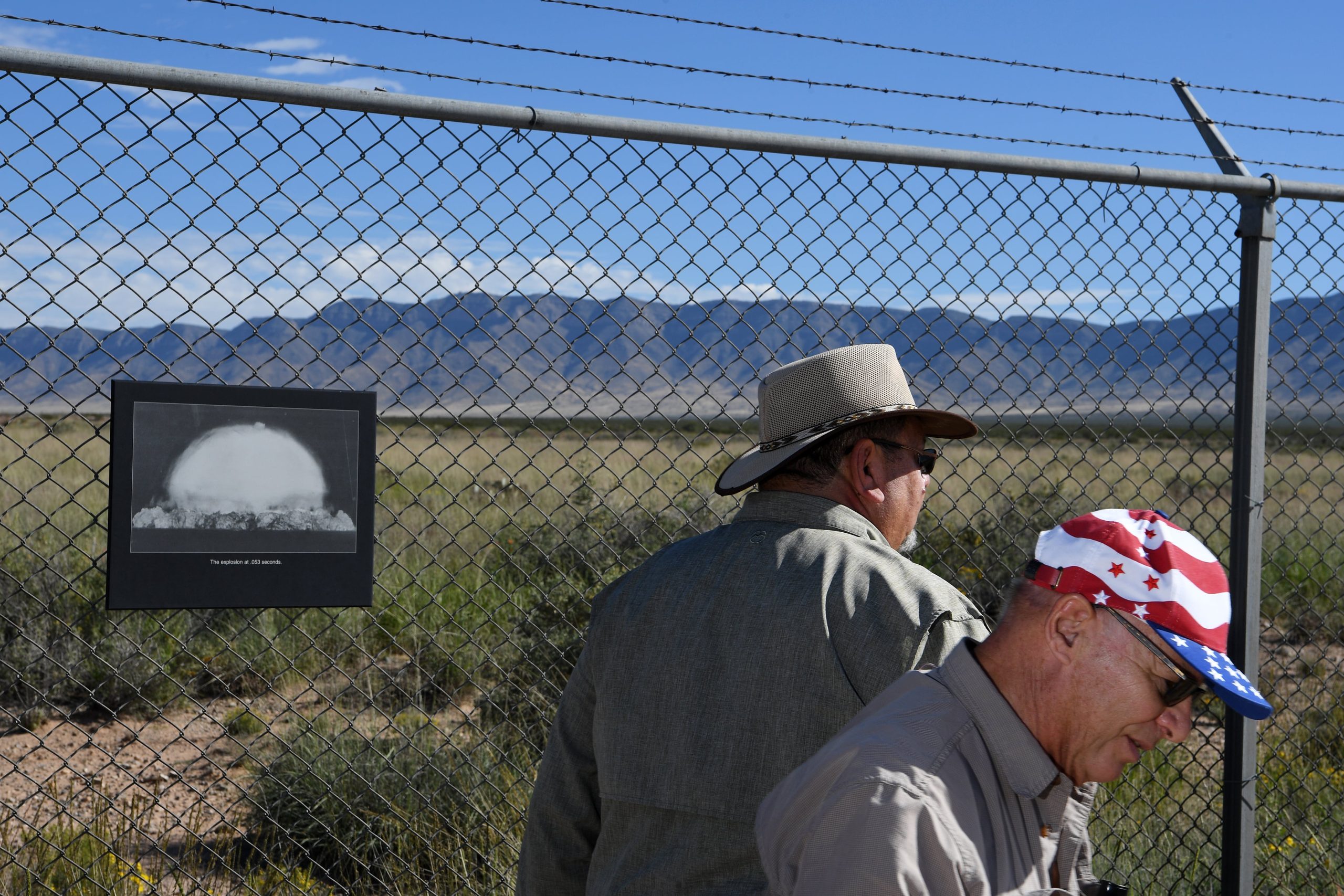
Scam artists have been targeting the $100,000 now available to eligible New Mexico victims of radiation exposure dating back to the world’s first atomic bomb explosion code-named “Trinity” in New Mexico’s Jornada del Muerto desert on July 16, 1945, according to New Mexico Attorney General Raul Torrez.
“New Mexicans who have been affected by these exposures deserve compensation and they deserve to get that compensation free from bad actors attempting to take advantage of them,” Lopez said in a release shortly after a major expansion and extension of the Radiation Exposure Compensation Act (RECA) was signed into law on July 4, 2025.
The measure finally included the New Mexico “Downwinders” from the Trinity blast and their surviving families who were excluded from coverage when RECA initially passed in 1990. Previously, it covered only specific counties in Nevada, Arizona and Utah, which had been exposed to fallout from the more than 900 atomic tests, including 100 above ground, at the Nevada test range between January 1951 and September 1992.
The government at the time claimed there was insufficient data on the impacts of the fallout from the Trinity test to include New Mexico in the coverage.
When the new RECA bill passed last year as part of President Donald Trump’s “one big beautiful” tax-cutting bill, it was the first time in 80 years since the Trinity blast that the government acknowledged New Mexicans were entitled to federal assistance.
At a virtual news conference Tuesday, two days before the 81st anniversary of the Trinity blast, advocates for expanding and extending the current RECA Act, which is set to sunset in 2028, also warned again of the continuing attempts by scam artists to steal compensation from the victims.
Rep. Gabe Vasquez, D-N.M., said the long-awaited compensation for the Downwinders had also “opened the door to rampant fraud,” and he urged those eligible for the $100,000 to guard against “bad actors in our community.”
Vasquez also called for the current RECA act to be extended for another 15 years past the 2028 deadline to ensure all victims are compensated.
He urged that the compensation be increased from $100,000 to $150,000.
Even before claims under the new RECA Act could be filed, scammers allegedly were at work last July at a booth at the Eastern Navajo Fair in Crown Point, New Mexico. The booth boasted of assistance in filing claims, according to Maggie Billman, a member of the Sawmill Warriors group advocating for radiation survivors of the Navajo nation.
Billman told Native News Online that she was alarmed by the supposedly official claims forms attendants at the booth were handing out. The forms asked for Social Security Numbers, phone numbers and the hospital where treatment was given.
“I looked at the woman and I said, ‘This is not RECA. Why don’t you give me your business card, and I’ll be in touch? I know a lot about this bill.’ That’s when they stopped talking to me, and I walked away,” Billman said.
Tina Cordova, a co-founder of the Tularosa Basin Downwinders Consortium advocacy group and a cancer survivor herself, was not surprised at Billman’s experience with the scammers. She added that she would continue to advocate for New Mexicans with illnesses that do not qualify for compensation under RECA.
“I think that it’s high time our government realizes that we are not going to stand for justice for some,” Cordova said. “We are in favor of justice for not just a few, but justice for the many, and we will continue to fight until we receive justice for all.”
Since RECA was enacted in 1990, the program has approved over 41,000 claims, totaling more than $2.6 billion to Downwinders, according to the Justice Department, which administers the program.
The virtual news conference came two days before the 81st anniversary of the Trinity blast. In 1945, an eclectic group of scientists enrolled by physicist Robert Oppenheilmer to develop and detonate an atomic bomb gathered in the New Mexico desert to watch whether the thing they called “the gadget” would actually work and usher the world into the atomic age.
Hegseth mulls benefits fix for veterans exposed to radiation at A-bomb test site
The plutonium bomb of about 19-21 kilotons went off at what was then called 5:59 a.m. Mountain War Time with a blinding light visible over a 160-mile radius. It sent up a fiery mushroom cloud hotter than the core of the sun, according to numerous accounts of that morning by the participants and others.
New Mexicans were told nothing. They were not warned before nor after the blast. The public was not told of the Trinity blast until the nuclear bombings of Hiroshima and Nagasaki ended the war with Japan.
In the interim, the U.S. Army put out a not-to-worry release attributing the colossal blast and fallout to an ammo dump explosion: “Explosion of an ammunition magazine on the Alamogordo Air Base reservation this morning, heard and seen for many miles, was reported today by William O. Eareckson, commanding officer of the air base. There was no loss of life or injuries of persons, Earekson said.”
The Trinity site is now part of the Army’s White Sands Missile Range, which planned no ceremonies nor open house events to mark the anniversary.
The site is opened to the public only once a year in October, and visitors are warned against picking up any of the strange so-called “Trinitite” green and red rocks that were formed when desert sand was sucked up into the mushroom cloud and heated to a glass-like substance before falling back to earth.
The Trinitite still contains tiny traces of radiation. It’s against the law for visitors to try to take the rocks home as souvenirs.