One Place News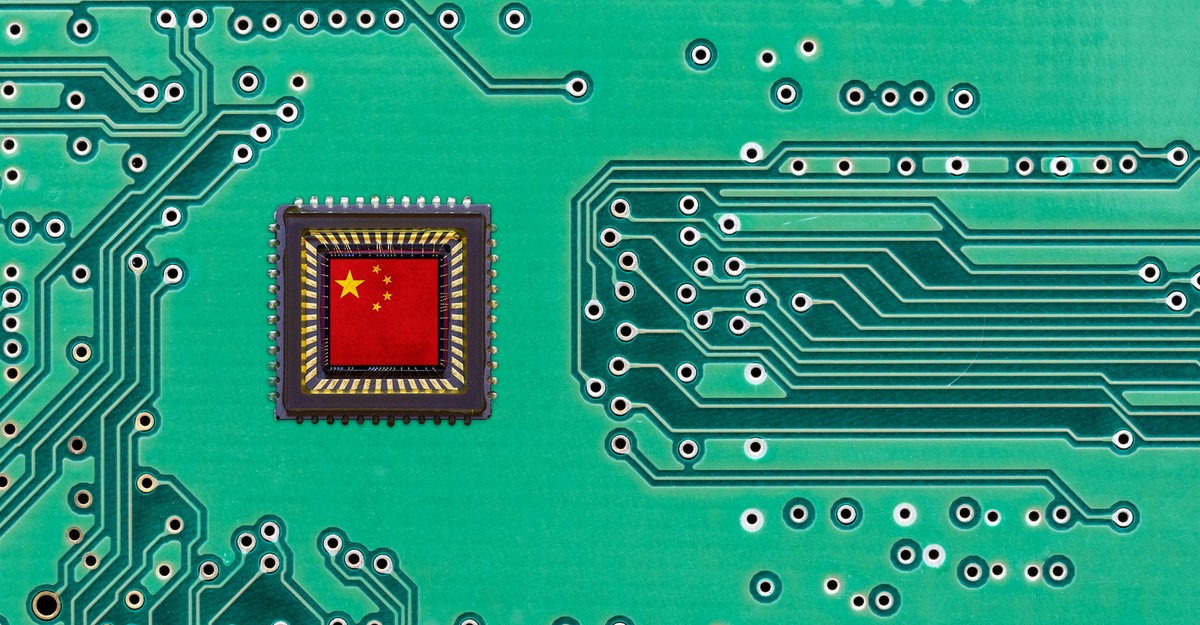
Late last year, President Trump announced that Washington would loosen controls on chip exports to China, permitting Nvidia to sell its H200 AI chip to approved Chinese firms. The president’s decision raised the alarm among lawmakers that he was sacrificing American security and the country’s edge in AI for a trade deal with China’s leader, Xi Jinping. But any concern that Chinese companies would be gobbling up precious Nvidia chips was soon squelched by Beijing’s own ban on orders of the H200. Officials have recently allowed some companies to use these chips, but have taken pains to limit their supply. Beijing would prefer for Chinese firms to use local chips, even if they aren’t as good.
To expand the country’s global power and protect its economy from foreign threats, China’s leaders have worked to disconnect its tech sector from the rest of the world. They want Chinese companies to market Chinese technology created in Chinese labs and built from Chinese supply chains. The strategy appears to be working, given the many Chinese electric vehicles humming down European streets and the AI models from Chinese firms such as DeepSeek and Z.ai alarming Silicon Valley. Yet China’s growing isolation threatens to slow innovation within the country by keeping out the world’s best tech. In truly global technological industries, such as AI, China’s defensive insularity may well hold the country back.
China’s rise and leadership in various sectors can actually be attributed to its previous openness to foreign ingenuity. In the 1980s, when the country began modernizing its economy by engaging in global trade, China’s outdated industries voraciously absorbed foreign technology. Beijing’s strategic planners then introduced a slew of supportive policies to nurture and protect new industries, which helped China become a leader in sectors such as telecommunications and high-speed rail.
The rise of digital media compromised the value of openness, moving Beijing to erect the Great Firewall to shield citizens from the flow of undesirable ideas and information. Global internet platforms and services such as Facebook, Google, and X got shut out, and Chinese alternatives rose in their place. Companies that adhered to Beijing’s strict censorship rules, such as the search-engine provider Baidu and the WeChat operator Tencent, became titans; they had 1.1 billion customers largely to themselves. But as relative latecomers to the internet revolution, domestically focused and dogged by Beijing’s information controls, these firms never truly rivaled Meta and Alphabet in global appeal. The standout exception, TikTok, founded by the Chinese tech firm ByteDance, can’t operate in China.
[Eric Schmidt and Selina Xu: China is building the future]
Anyone traveling to China will soon discover the day-to-day oddities of this digital landscape. Chinese people message one another on WeChat, not WhatsApp or Signal. Instead of scrolling Instagram or TikTok, locals post on Weibo, RedNote, and Douyin.
Xi sharpened China’s inward turn in tech about a decade ago, as geopolitical tensions flared between the United States and China. Sensing that China’s dependence on foreign technology was a national-security liability, and that developing this technology was necessary for the country’s economic ascent, he moved swiftly to expand domestic research and manufacturing and to encourage more self-sufficiency in semiconductor production and supply chains. Xi’s government has spent hundreds of billions of dollars to support domestic chips, electric vehicles, AI, and other emerging areas to rival the most advanced Western industries.
In some sectors, Xi’s program is succeeding. China has built an almost entirely Chinese EV supply chain, including the batteries that propel them and the software that runs them. But no single country, not even China, can create the best of everything. China’s efforts to build a fully Chinese supply chain for computer chips, for example—partly spurred by President Biden’s 2022 export controls on advanced American AI chips and chipmaking equipment to China—has proved uniquely hard. The process of making semiconductors is immensely complex and dauntingly global, involving supply chains that span numerous countries. Re-creating that chain in one place is “essentially impossible,” Scott Kennedy, a senior adviser at the Center for Strategic and International Studies who has studied the Chinese tech industry, told me. Even attempting it is “cost-prohibitive and self-defeating.”
China will continue to pursue its own chip industry anyway. Yet this emphasis on self-sufficiency has surely come at a cost. China is expending massive resources creating its own versions of what the rest of the world already has. And though the Chinese chip industry is making progress, it’s still playing catch-up with the West. China’s AI firms have had to operate without the best chips, and this disadvantage will likely last if Beijing insists that they use Chinese alternatives. Sharing technology across borders “is the way a lot of innovation happens,” particularly in the semiconductor industry, Paul Triolo, a specialist in Chinese technology at the consulting firm Albright Stonebridge Group, told me. Now that there are “two bifurcated stacks”—in China and the U.S.—“some of the innovation won’t happen,” he added.
Like their internet-platform predecessors, China’s AI firms are emerging in a heavily censored and protected domestic market. The mandate that Chinese companies and consumers use AI models developed by DeepSeek, Alibaba, Moonshot, and other Chinese firms, not OpenAI’s ChatGPT or Anthropic’s Claude, means that local users are being deprived of the world’s top AI at a time when the technology is influencing economies and societies across the globe. In April, Beijing’s regulators took the unusual step of ordering Meta to reverse its $2 billion acquisition of the Singapore-based AI firm Manus, founded in China and known for creating deeply researched reports, on national-security grounds. The message to Chinese tech entrepreneurs was clear: Cooperating with foreigners is unacceptable.
[Michael Schuman: China is abusing AI]
Beijing is threatening to hold back Chinese tech in other ways too. China’s AI models are growing in popularity around the world, in part because they are mostly open-source, which means users anywhere can adopt and adapt them at no cost. Yet Chinese regulators, wary of foreign competitors exploiting Chinese expertise, are reportedly discussing new restrictions on foreign access to the most advanced Chinese AI models, which promises to curb their rise and appeal.
In a sign that Chinese companies recognize that they are still trailing the advances of their American rivals, American AI firms are accusing their Chinese competitors of “distilling,” or harvesting superior U.S. models to train their own. In a letter sent to two U.S. senators last month and reviewed by The Atlantic, Anthropic alleged that the Chinese e-commerce company Alibaba, which operates a model called Qwen, “executed the largest known distillation attack” on Claude, using about 25,000 fraudulent accounts to illicitly extract some of its “most valuable capabilities.” (An Alibaba spokesperson declined to comment.) Anthropic has responded to these assaults by strengthening Claude’s defenses and hunting down the Chinese accounts that improperly access the model, thereby reinforcing China’s technological isolation and potentially compromising Chinese efforts to keep pace with resource-rich American rivals.
Perhaps China’s technology sector will further spin off in its own direction, creating products that are somehow separate from but equal to those in the United States. Triolo reckons that the AI universe could split in two, with China and the U.S. at the center of dueling worlds and little connectivity between them.
What appears just as likely is that China, in creating an impenetrable fortress around its own tech sector and limiting the country’s access to the best tech from elsewhere, is dooming itself to a distant second place.