One Place News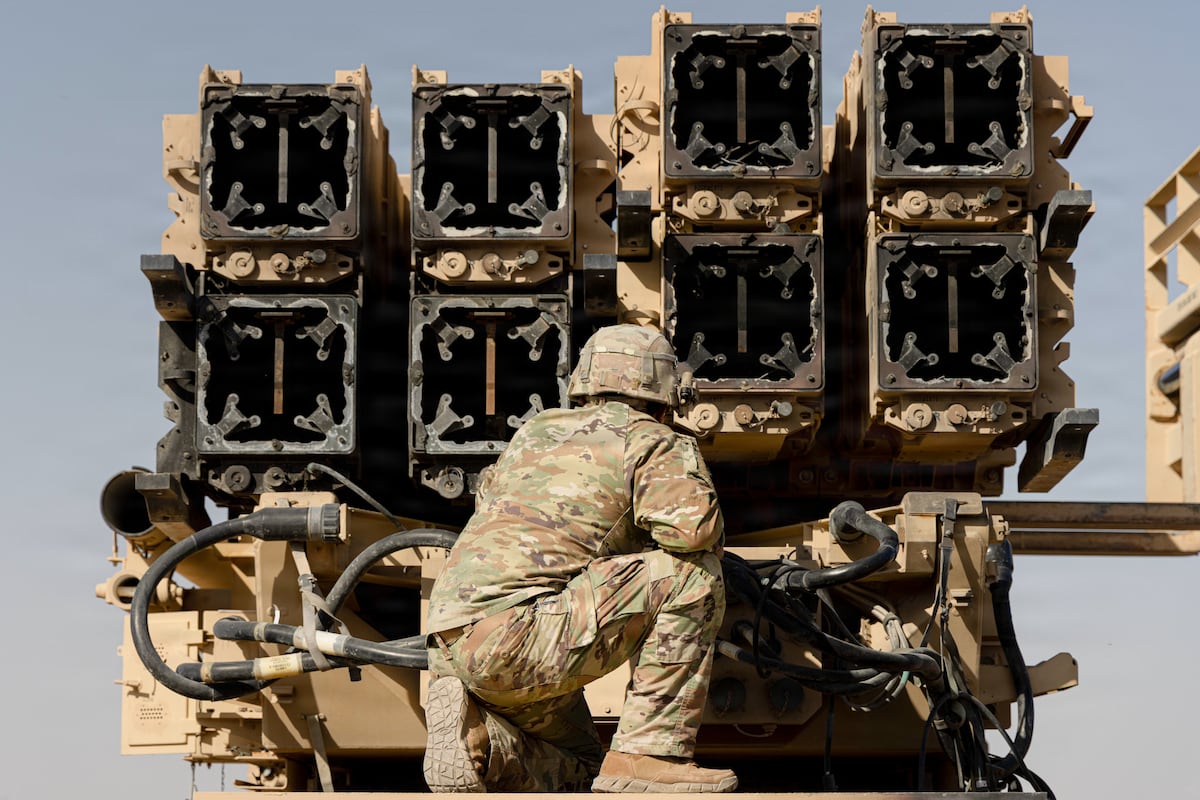
For decades, the assumption held: supplies would arrive. Fuel, ammunition and reinforcements moved through ports, sea lanes and rail corridors that were largely secure. American forces fought at range, with time to build infrastructure and accumulate supplies, against adversaries who could not seriously threaten the lines that fed the fight. Logistics was complicated. It was not contested.
That calculus has changed. Adversaries have invested in the capabilities needed to interdict supply lines — long-range fires, drones, electronic warfare, anti-ship weapons, proxy networks that can reach ports, rail corridors, and staging areas far from any front. The vulnerability of the logistics infrastructure that sustains combat power is no longer an abstract concern, it is the operational problem of this moment, and it is not unique to the Middle East. The supply chain as battlespace is the defining characteristic of modern conflict.
These same adversary investments are driving sustained, high-tempo combat operations that can burn through critical munitions inventories — precision strike missiles, air defense interceptors, long-range fires — at rates that take years to replenish. What once looked like an abstract readiness concern is now headline news. In this environment, knowing precisely where every asset is, protecting it with optimized precision, and integrating that picture into combat planning isn’t a modernization initiative, it’s a necessity. We have the technology for that comprehensive, near real-time common operating picture (COP), we just need to link it.
The technology is here
Episodic tracking — the military’s primary in-transit visibility approach for 30 years — was built for a different operational environment. It tells you when cargo passes a fixed reader but, in a contested environment that’s not visibility, it’s a guess.
Mesh networking changes the equation entirely. Battery-powered tags form ad hoc networks, relaying location and condition data through mobile gateways to satellite uplinks, delivering near real-time asset visibility across any mode of transportation without fixed infrastructure. The architecture is hardened for contested environments: tags can suppress their own emissions when the threat environment demands it and come back online automatically based on location; communications are encrypted; the network uses frequency hopping to resist targeting. It works in the field, across truck, rail, and sea, at scale.
Once materiel is deployed, AI-enabled platforms can now fuse asset locations, threat data, terrain, unit capabilities, and route status into a single real-time operating picture — and model the consequences of protection decisions before forces are committed. Optimization engines evaluate and analyze the full picture to recommend courses of action. Auto-tasking allocates units as conditions change. What once required significant, manual staff effort across disconnected systems can now be accomplished in a unified interface, fast enough to match the pace of combat. This capability, too, is proven and operational.
A COP across the lifecycle
Taken separately, each capability is valuable. Taken together, they represent something the joint force has never had: a COP that ties where a resource is to what the force can do with it. A COP that follows every resource — equipment, ammunition, fuel, sustainment — from depot to forward position, continuously informing protection requirements and enabling smarter combat decisions as the picture evolves.
Consider what that means in practice. A commander knows not just that a critical shipment departed a depot — but precisely where it is, in near real time, as it moves through rail yards, ports, and contested sea lanes. When the threat picture shifts, the protection platform immediately recalculates coverage, recommends reallocation and flags gaps. When assets reach a forward position, the same data that tracked them in transit feeds directly into combat planning. Inventory is not an estimate, it is a fact, integrated into every decision downstream.
That integration matters most when inventories are under pressure. Modern conflicts are consuming critical munitions inventories faster than they can be replenished, eliminating the margin for waste — misrouted shipments, unprotected convoys, planning based on stale inventory data — disappears. A COP does more than improve efficiency. It prevents the compounding losses that turn a supply shortfall into a capability gap.
This is a different theory of how logistics and operations relate to each other. The traditional model treats supply chain management and combat planning as sequential — logistics delivers, operations consume. The integrated model treats them as continuous and interdependent. The COP does not end at the depot gate or the port of embarkation. It persists through the entire lifecycle of a resource, from production to employment, updating in real time and driving decisions at every echelon.
Commanders who can continuously see their assets can redirect them before disruptions become crises. Protection cells who can see the full logistics picture — not just unit positions but the routes, schedules, and vulnerabilities of the supply chain itself — can defend it proactively rather than reactively. And planners who can query actual inventory rather than projected inventory can design operations around ground truth, not assumptions that dissolve on contact.
We get to choose
The threat environment that made this architecture necessary is no longer theoretical. From the Strait of Hormuz to the U.S. Pacific Command, adversaries are investing in the precise capabilities designed to disrupt sustainment, fracture visibility, and exploit delay between detection and decision.
The technology to close those gaps already exists, and the operational need is visible. What remains is the decision to connect these systems deliberately, under a unified architecture with the processes and authorities to move at the speed the threat demands.
Robert Yon is LMI’s SVP, Sensor Mesh. Yon leverages his experience as a former USMC officer to identify technology solutions for the military’s greatest challenges, with an emphasis on addressing logistics. As SVP, Sensor Mesh, he leads the implementation of LMI’s SPECTR asset visibility tool, and oversaw its recent successful deployment during USTRANSCOM’s Turbo Fusion exercise.