
Merz's political crisis threatens Germany's obsession with stability
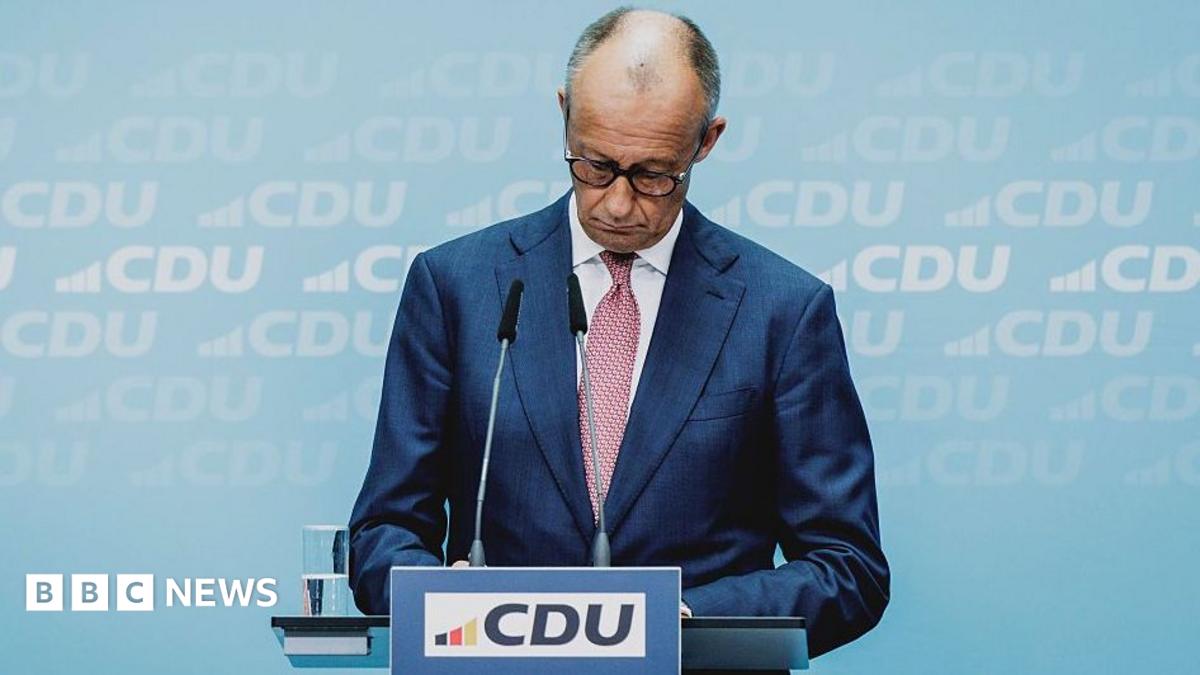
Political shifts in Germany are being watched closely in Europe and beyond, Katya Adler writes. The German chancellor's political future hangs in the balance after bruising election defeats The problem for him is these records are overwhelmingly negative and he is at risk of losing his job over them. The problem for the EU and for Europe more broadly is this has a destabilising effect far further afield. At a paltry 13%, Merz's popularity rating is the lowest for any German chancellor since polling began. German voters' ardour for him started lower and fell faster than any of his predecessors. The former corporate lawyer is perceived by many to be arrogant and out of touch with their problems.
He has only been in government for 16 months but under his chairmanship, Merz's conservative Christian Democratic Unionist (CDU) party has suffered three very poor showings in regional elections over the last couple of weeks. The state of Mecklenburg-Vorpommern broke another record on Sunday according to preliminary results: Merz's conservative CDU party did not even reach the 5% threshold to enter the regional parliament. Conversely, the anti-immigration, nationalist right Alternative for Germany (AfD) – a political party Merz had promised to slash support for when he was running for CDU leadership – has performed spectacularly well. It became the biggest political faction
Source & Attribution
This One Place News story was acquired from bbc.co.uk. OPN retains the source link and provenance for newsroom review.
Filed Under
World News