One Place News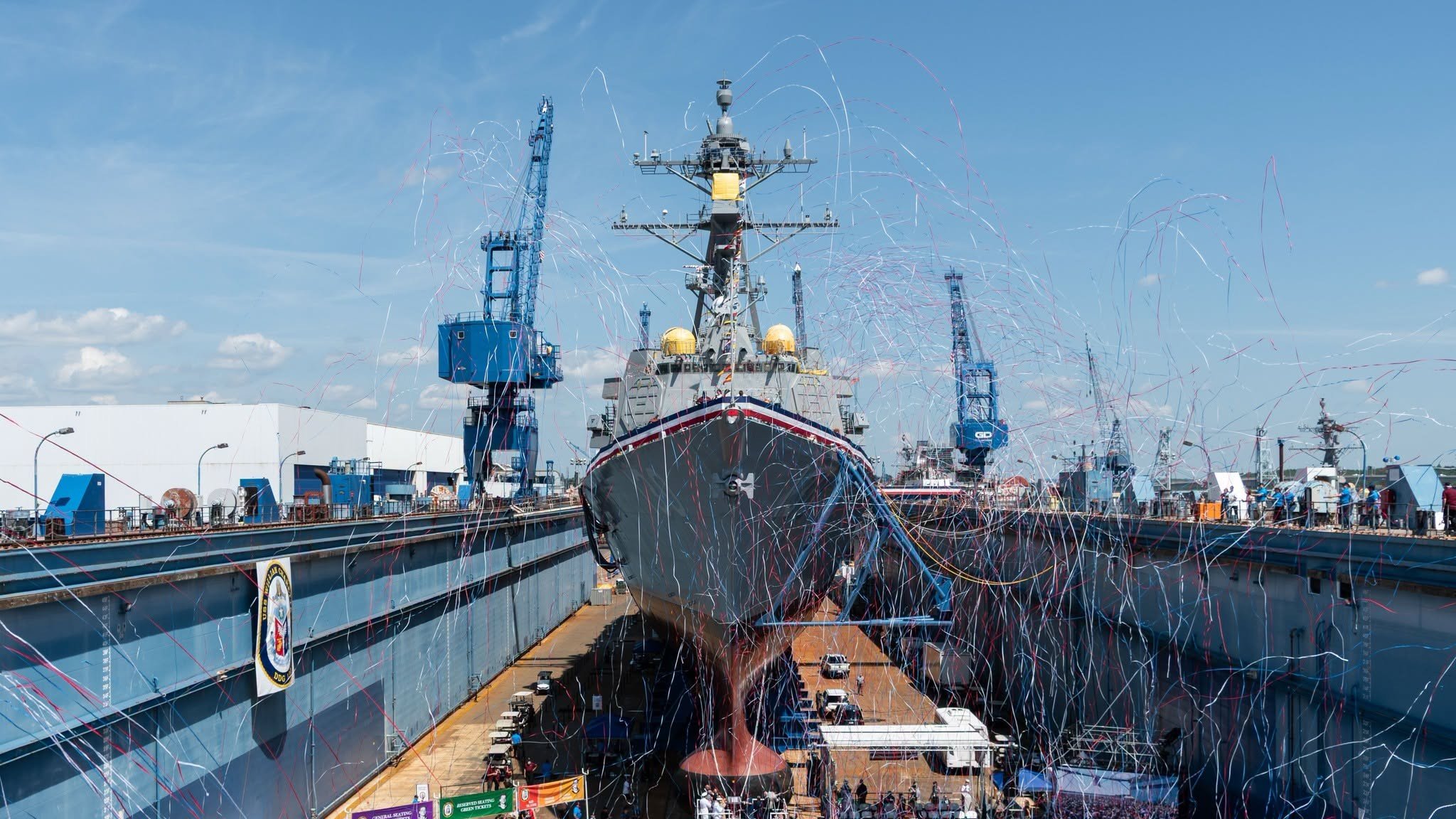
In 1953, in the final months of fighting in the Korean War, Hospital Corpsman 3rd Class William Charette found himself in a Marine Corps outpost as Chinese forces bore down on him and other American troops. Wounded and exposed to enemy fire, he moved through the lines, rendering aid to wounded Marines. More than seven decades later, a future Navy destroyer bears his name.
On Saturday, the Navy christened the USS William Charette, a new Arleigh Burke-class guided-missile destroyer, in Maine at the Bath Iron Works dry dock. Named for a Navy corpsman, the ship will be one of the Navy’s fleet of capable warships.
The warship’s namesake, Charette, enlisted in the Navy in January 1951, training as a hospital corpsman. Two years later, he was on the Korean Peninsula, taking part in operations during the final months of fighting.
Top Stories This Week
On March 26, 1953, Chinese People’s Volunteer Army forces attacked a series of outposts manned by Marines. At Outpost Vegas, Charette was with 2nd Battalion, 7th Marine Regiment, 1st Marine Division. He and other corpsmen found themselves dealing with a surge in casualties and enemy troops pushing in. He risked his own safety to attend to wounded Marines. During the fighting, a grenade was thrown near his position, and he covered a wounded Marine with his own body. Charette was wounded, including to the face, and the blast destroyed his medical kit. He regained consciousness and kept treating the wounded, using scraps from his torn uniform as bandages. He stripped off his own gear to shield another Marine. Fierce fighting continued, and Charette did not stop trying to help save the wounded. After five days of fighting, the Marines emerged victorious, having repelled the attacks. Charette, wounded in the course of providing immediate medical care, had helped save several lives.
He was initially recommended for the Navy Cross, but that was upgraded to a Medal of Honor. In 1954, President Dwight Eisenhower presented it to him, for “conspicuous gallantry and intrepidity at the risk of his life above and beyond the call of duty in action against enemy aggressor forces.”
“Charette stood upright in the trench line and exposed himself to a deadly hail of enemy fire in order to lend more effective aid to the victim and to alleviate his anguish while being removed to a position of safety,” his Medal of Honor citation says. “By his indomitable courage and inspiring efforts in behalf of his wounded comrades, [Hospital Corpsman 3rd Class] Charette was directly responsible for saving many lives.”
Charette was one of five Navy hospital corpsmen who were awarded the Medal of Honor during the Korean War; he was the only one to not receive it posthumously. He stayed in the Navy after the war, serving on one of the service’s new nuclear submarines, among other postings. He finally retired from service in 1977 at the rank of master chief hospital corpsman. Charette died in 2012.
The ceremony this weekend was attended by local Maine officials, including Gov. Janet Mills and the state’s two senators, along with the acting Secretary of the Navy. Retired Marine Col. Harvey C. Barnum Jr., another Medal of Honor recipient who also has a destroyer named for him, was in attendance as well.
“The enemy knows the capabilities of that warship that is probably the greatest deterrent of war that we have in our arsenal,” Barnum said. “But if the bad guys are dumb enough to take us on, then they’re going to find out the capabilities of this warship and her sister ships.”
Like other Arleigh Burke-class destroyers, she is a more than 500-foot-long ship armed with machine guns, surface-to-air missiles, torpedoes and more. The destroyers have become the workhorse of the Navy in recent years, amid conflicts in the Red Sea, Persian Gulf and other combat areas.
The post Navy christens new destroyer named for corpsman who earned Medal of Honor appeared first on Task & Purpose.