
No need to be grebe – federal agencies share water between birds and other obligations
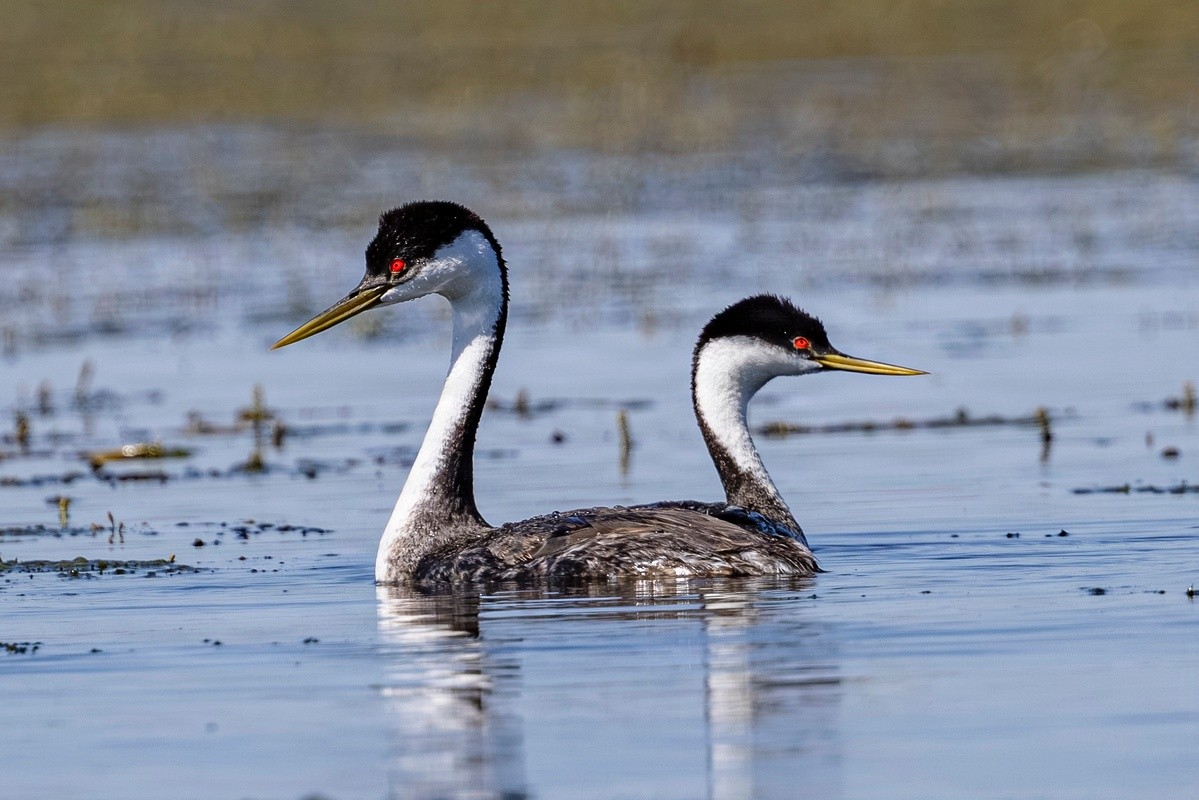
Western and Clark’s grebes (pronounced “greeb,” so forgive the attempted wordplay) have specific needs for nesting and the pool behind McNary Lock and D… Western and Clark’s grebes (pronounced “greeb,” so forgive the attempted wordplay) have specific needs for nesting and the pool behind McNary Lock and Dam near the Tri-Cities in Washington state can be a good spot. If water levels don’t fluctuate too much, mats of vegetation can grow, which entice the birds to nest on them. However, the pool has a narrow elevation range to support nesting – high water levels can dislodge the floating vegetation mats and wash the nests away. The U.S. Army Corps of Engineers (USACE) doesn’t monitor grebe activities at McNary Dam, as that isn’t part of its normal operations, but the U.S.
Fish and Wildlife Service (USFWS) does at McNary National Wildlife Refuge, just downstream. USACE and USFWS are close partners and have been working together to implement operations to support the birds. The agencies tried a similar operation last year but local conditions disrupted the grebes’ nesting plans. The agencies made another attempt this year. “The McNary National Wildlife Refuge asked us to lower the reservoir elevation and minimize water level fluctuations in the McNary pool for about a month to help support grebe nesting,” said Aaron Marshall, Northwestern Division Reservoir
Source & Attribution
This One Place News story was acquired from army.mil. OPN retains the source link and provenance for newsroom review.
Filed Under
Military News