One Place News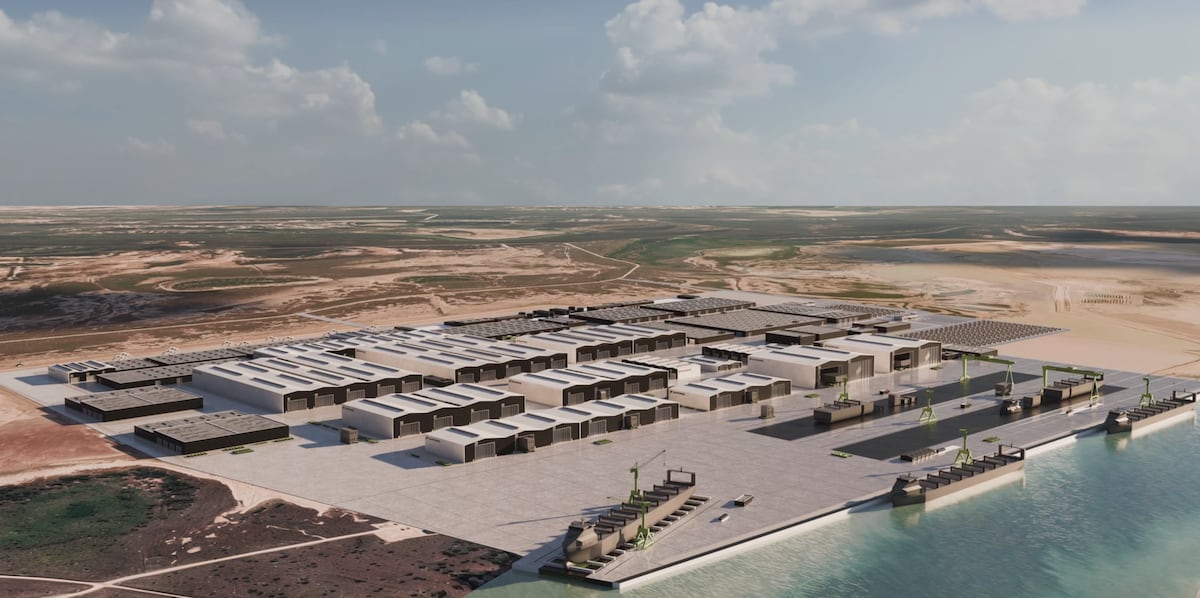
Autonomous vessel maker Saronic is set to build Port Alpha, a shipyard the company describes as the most advanced in the world, at the Port of Brownsville, Texas.
The announcement builds on an eventful few weeks for the company’s Corsair drone boats.
On July 12, three Corsairs struck Iran’s Bandar Abbas naval base in what U.S. Central Command called the first combat use of unmanned surface vessels by American forces.
Weeks earlier, a Navy-operated Corsair helped rescue two soldiers after their Army AH-64 Apache went down near the Strait of Hormuz, a mission Central Command called another first of its kind by an unmanned surface vessel.
Founded in 2022, Saronic first unveiled plans for Port Alpha in February 2025 but stopped short of naming a site or a cost. Plans now include an initial 835-acre site in Cameron County, with room to grow to nearly 4,400 acres. It’s an investment the company puts at more than $3 billion. The site was chosen over competing sites in California and Virginia, among others.
Construction is set to break ground this year, with the yard expected to open in 2028. Initially, the facility will be capable of building vessels up to 850 feet, about the length of a U.S. Navy Wasp-class amphibious assault ship, though future expansion could support vessels longer than 1,200 feet, the company said.
Saronic estimates Port Alpha could create up to 10,000 direct jobs over the next decade, from welding and machining to robotics, software engineering and naval architecture. The company also projects $264.5 billion in economic impact for Texas and $160 billion for Cameron County.
Texas Gov. Greg Abbott, who announced the project from Saronic’s Austin headquarters, said a fully built-out yard would deliver about $750 million a year in wages, a sum he called “game-changing for the population of Texas.”
To help land the project, the state extended an $80 million grant from the Texas Enterprise Fund, according to the governor’s office.
Last month, Cameron County commissioners approved a 95% tax abatement for the project over roughly two decades, according to USNI News. The agreement is contingent on Saronic filling 35% of the yard’s jobs with local residents, and the tax break shrinks if the company misses its local hiring targets, the Texas Tribune reported.
The deal was not without local opposition. According to the Border Chronicle, at least 40 people testified or submitted written statements against the abatement, some questioning why a company valued at $9.25 billion needed a tax break. The June 16 vote passed only after two earlier delays and hours of testimony.
Port Alpha would become Saronic’s third site. It runs a plant in central Texas that turns out the 24-foot Corsair, for which the Navy awarded a $392 million production contract in December, and last year it bought a former Gulf Craft yard in Franklin, Louisiana, where it is spending $300 million to build the larger, 180-foot Marauder.
Dino Mavrookas, Saronic’s co-founder and chief executive, did not specify which ships Port Alpha would build but told reporters the company envisions autonomy playing a role in larger hulls over time, according to USNI News.
“Those ships might not be fully autonomous or fully unmanned on day one,” he said. “But over time, as we look at building out the tech and building out the industry as a whole, there’s no reason that you can’t unman those ships completely.”
Port Alpha arrives amid a federal push to rebuild a U.S. shipbuilding base that has fallen far behind China’s. Saronic tied the project to an executive order on maritime dominance that President Donald Trump issued in April 2025, along with the SHIPS for America Act and a federal Maritime Action Plan, all aimed at reversing decades of decline in commercial and naval ship production.
“America’s maritime future depends on our ability to build again,” said Mavrookas, adding that the yard was built “to deliver ships at a speed and scale not seen since World War II.”
Saronic is one of seven companies competing for the Navy’s medium unmanned surface vessel contract, with at-sea testing set to run through October.
The company said it will work with Texas, Cameron County and local schools to build training and apprenticeship programs for the yard, but did not say when it expects to name customers or specific ship classes for Port Alpha.