One Place News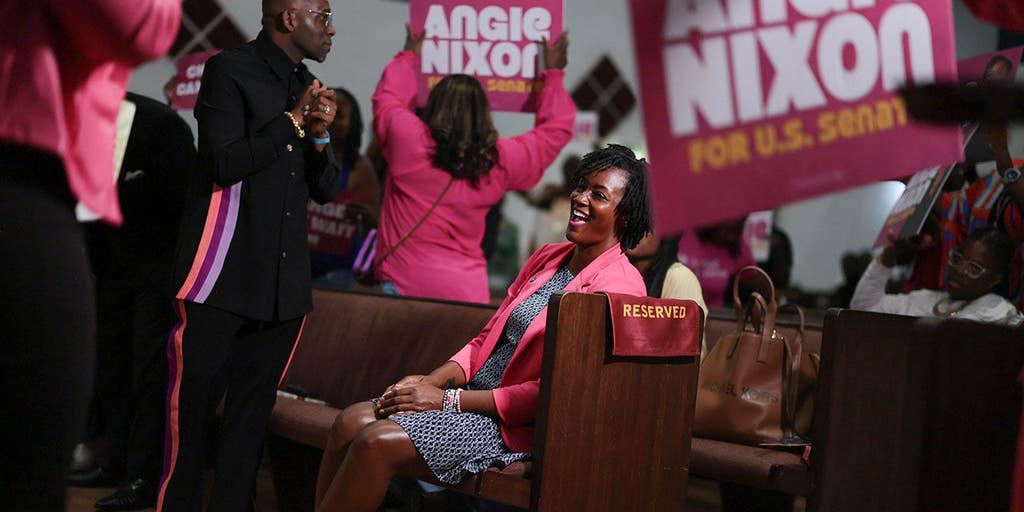
Tuesday night’s primary elections featured closely watched federal races from sunny South Florida to the frigid Alaskan tundra and two states in between, all of which will help decide whether Republicans maintain control of Congress, or whether Democrats overtake them.
Three states also featured critical gubernatorial primary elections.
Observers are already using the race results as bellwethers to gauge Trump’s grip over the GOP and the power of the emergent socialist movement.
Here’s what stood out:
Sunshine State socialist scores shocking Senate upset despite being heavily outspent
A socialist will have a chance to unseat a sitting Republican senator after upsetting a heavily favored opponent who outspent her nine-to-one.
Democratic Socialists of America (DSA) member and Democratic state Rep. Angie Nixon scored a massive upset in the state’s Democratic primary for U.S. Senate. Nixon ran against retired Air Force Lt. Col. Alexander Vindman, a prominent critic of Trump who played a central role in the left’s failed 2019 impeachment attempt, who was expected to emerge victorious.
She defeated Vindman by almost 12 points, despite his $16.3 million war chest, compared to hers of only about $1 million. As of July, Vindman had spent about $9 million on the race, while Nixon had spent just over $700,000.
TRUMP’S HANDPICKED DESANTIS SUCCESSOR WINS CROWDED GOP PRIMARY FOR FLORIDA GOVERNOR
Nixon will square off in a statewide race against Sen. Ashley Moody, R-Fla.
Trump has a hit-or-miss endorsement night
Across the country, some of Trump’s endorsed candidates won their respective races, while others struggled.
Trump-endorsed Rep. Byron Donalds, R-Fla., won the Sunshine State’s Republican gubernatorial primary against a field that included Lt. Gov. Jay Collins and outsider James Fishback. Donalds won 47%, compared with 25% for Collins and 10.5% for Fishback.
Donalds will face former Florida Republican congressman-turned-Democrat David Jolly, who won the nod for the job on the Democratic side.
TRUMP FLEXES GOP MUSCLE IN ARIZONA PRIMARIES AS DEMS DODGE FAR-LEFT UPSET
Likewise, Republican Sen. Ashley Moody, herself a Trump endorsee, took home a victory in a special Senate primary election to finish the remainder of Secretary of State Marco Rubio’s U.S. Senate term, which ends in 2028. Moody was appointed to the seat last year after Rubio joined the Trump administration.
Republican Rep. Randy Fine of Florida’s 6th Congressional District, also endorsed by Trump, easily won his reelection bid.
However, it wasn’t all smiles for Team Trump.
Scandal-plagued incumbent Rep. Cory Mills, R-Fla., who represents the state’s 7th Congressional District, lost his race to challenger and former TV anchor Ryan Elijah.
Trump endorsed Mills in February, but the congressman is facing a wide-ranging House Ethics Committee investigation into possible campaign finance violations, allegations of assault against a romantic partner and allegations of improperly received or solicited gifts. Mills has denied wrongdoing.
The 7th District leans red, meaning Elijah should have an edge come November.
Meanwhile, Catalina Lauf, who scored an 11th-hour endorsement from Trump last week, lost her bid to fill Donalds’ seat in Florida’s 19th Congressional District in a race that featured several unusual political twists.
Media executive Jim Schwartzel won the five-way race with 29.1% of the vote, while Lauf earned 22%. Businessman Jim Oberweis placed third with 15.7% of the vote.
Lauf and Oberweis are familiar rivals, having squared off in a crowded midwestern Republican primary years ago. Both ran in Illinois’ 14th Congressional District back in 2020. Oberweis won that round, but lost to a Democrat in the general election.
Two years later, Lauf ran unsuccessfully in Illinois’ 11th Congressional District, though that race did not feature Oberweis.
The fourth-place finisher in Tuesday night’s 19th Congressional District race in Florida was former Rep. Madison Cawthorn of North Carolina, who was defeated in 2022 amid scandal and after attempting to change districts.
Schwartzel is all but certain to win his November general election in the deep red district.
AMERICA’S REDDEST STATE CROWNS GOP GOVERNOR NOMINEE
A similar story played out in the western U.S.
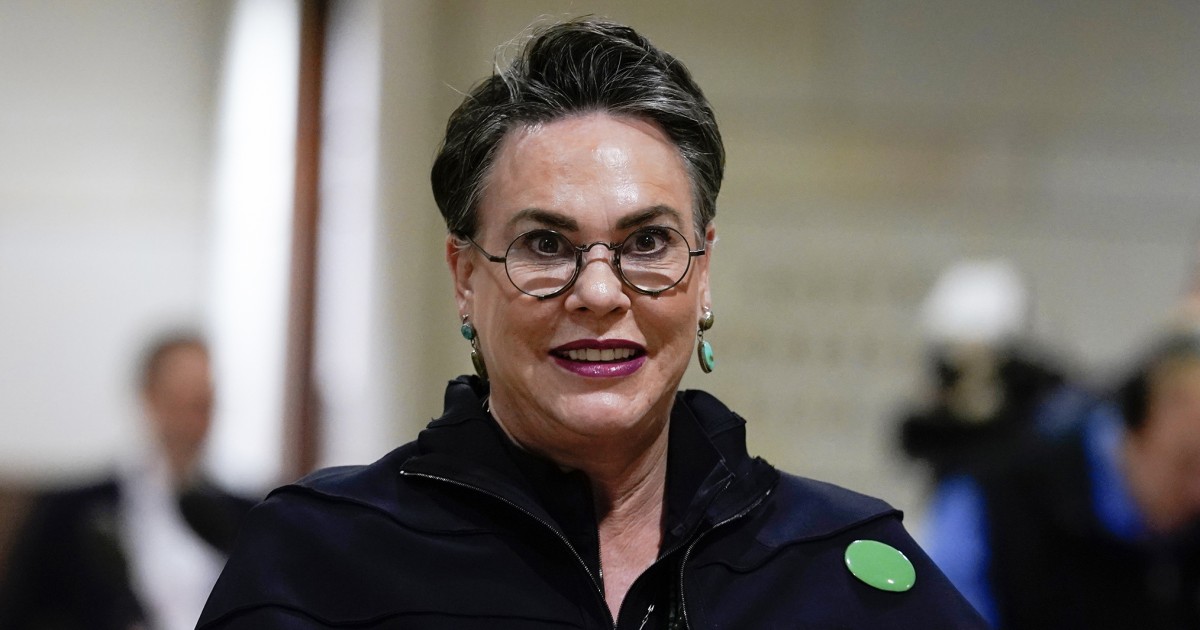
In Wyoming’s U.S. Senate primary, Trump-endorsed Rep. Harriet Hageman, who serves as the state’s at-large congresswoman, won in a landslide. She defeated cattle rancher Sam Mead. With 80% of the votes counted, Hageman held a 62% to 28% lead over Mead, with three others lagging well behind.
However, in Wyoming’s gubernatorial primary, Republican voters spurned Trump’s choice, electing state Sen. Eric Barlow over Megan Degenfelder, the state’s superintendent of public instruction. Barlow, too, won decidedly, holding a lead of 50% to Degenfelder’s 29.7% with three quarters of the votes counted.
Both races were called shortly after polls closed.
Wyoming’s Secretary of State Chuck Gray won a competitive five-way primary, garnering 25% of the vote. Businessman Steve Freiss earned 20.7% of the vote. Army veteran Kevin Christensen won 17.8% of the vote.
The state hasn’t elected a Democrat in a statewide race since 2006, and that trend is likely to continue in November.
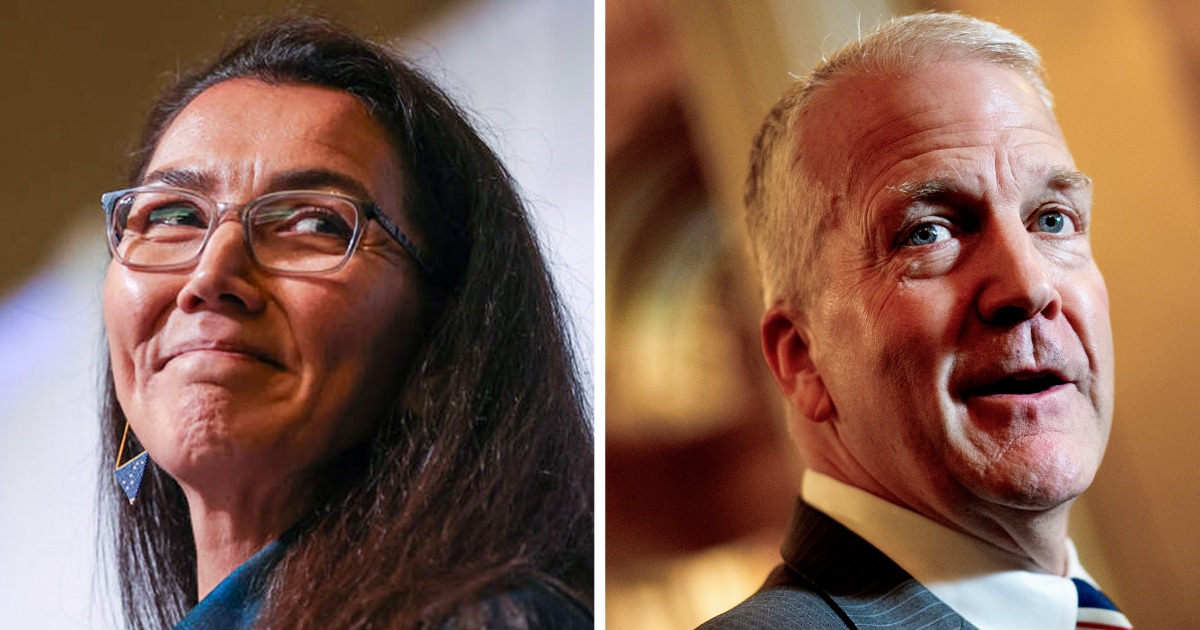
Incumbent Republican Sen. Dan Sullivan finished second in the state’s non-partisan primaries, and will move on to the general election where he will face three other candidates, including former Democratic congresswoman Mary Peltola, the top vote-getter, in November.
Trump buried the losses in a post on TRUTH Social.
“A lot of great WINS tonight!!!” he said.
VETERAN DEM DEFEATS SCANDAL-PLAGUED FORMER LAWMAKER, PROGRESSIVE CHALLENGER IN TRUMP’S BACKYARD
On the House side, a familiar face won in the newly redrawn 20th Congressional District in Florida. Rep. Debbie Wasserman Schultz, D-Fla., was drawn out of the 25th District, which she currently represents.
Wasserman Schultz defeated four other candidates, including self-proclaimed socialist activist Elijah Manley, a serious contender who raised nearly $1 million in his bid. Despite the fundraising haul, Manley placed third behind former mayor of Broward County Dale Holness.
Manley argued on Monday night in an appearance on NBC News that it was inappropriate for Wasserman Schultz to run in the 20th District when she lives in what is now the 22nd District, and said Democrats “need fresh leaders” in Washington. He also argued that it was inappropriate for a White person to occupy the seat.
Race became a major issue in the contest, with Wasserman Schultz’s detractors criticizing her decision to run in a district described as “historically Black.”
“One of the last remaining opportunity districts that we have in the South being held by a white Democrat, that’s unacceptable,” Manley said in his Monday interview.
Former Democratic Rep. Sheri Cherfilus-McCormick placed fourth in the race. She represented the district until April when she resigned after facing federal criminal charges involving alleged misuse of disaster-relief funds. She has pleaded not guilty to those charges.
Wasserman Schultz should have a significant advantage in November in a district that heavily favors Democrats.
Elsewhere in the state, Rep. Jared Moskowitz crushed a surging socialist challenger in Florida’s 25th Congressional District, defeating Oliver Larkin by a 64%-36% margin.
Moskowitz ran as a centrist Democrat, while Larkin proudly touted his membership in the DSA on the campaign trail.
Larkin said on the campaign trail that he wanted to abolish and prosecute members of U.S. Immigration and Customs Enforcement (ICE), taking his party’s stance on ending the agency one step further. The former Bernie Sanders campaign field director also championed packing the Supreme Court, a $25 minimum wage, ending the Cuba embargo and D.C. statehood, along with statehood for Puerto Rico, Guam, the U.S. Virgin Islands, American Samoa and the Northern Mariana Islands.
Moskowitz issued a fiery statement denouncing the DSA.
“Tonight, Democratic voters sent a clear message. I faced a challenge from the DSA. They threw everything at me and I didn’t change who I am or what I believe, and the voters overwhelmingly chose the independent-minded approach I’ve brought to Congress,” he said. “I led the effort to have Kristi Noem fired, I’ve taken on this Administration, and I’ve taken on extremes in the DSA and won. Now we’re running in a tough district hand-drawn by Republicans to defeat me, but I plan to win that too.”
Moskowitz’s district, once reliably blue, leans Republican after redistricting. He will face Republican former Boca Raton Mayor Scott Singer.
One of the most closely watched Senate races in the country is ongoing in Alaska, as Republicans cling to a narrow majority in the upper chamber.
Alaska has non-partisan “top-four” primary elections, meaning that candidates from all parties compete in an open race, and the top four vote-getters advance to the general election. In the general election, the state uses ranked-choice voting.
Trump-endorsed Republican Sen. Dan Sullivan faced 15 primary challengers, including former Democratic Rep. Mary Peltola and a retired teacher.
The incumbent Sullivan was second in voting at the time the race was called, and will move on to the general election. Peltola, who lost her seat to Republican Rep. Nick Begich III in 2024, was in first and held a razor-thin lead of less than 1%.
Alaska’s only member of the House, Begich, will be on the ballot in November as he battles to keep his seat. He will be joined by independent fisherman Bill Hill, while two additional spots in the four-candidate field remained uncalled early Wednesday.
The top two contenders in the gubernatorial race were separated by only two percentage points at the time AP called the race.
Politics runs in the Begich family, as Nick’s uncle, Tom Begich, a Democrat and former state senator, secured a spot in the November general election alongside Democrat Jonathan Kreiss-Tomkins.
As of early Wednesday morning, AP had not yet called the final two candidates advancing in each of Alaska’s Senate, House and gubernatorial races, all of which send four candidates to the November general election.