
The Backlash to Corruption Is Going Global
Nicole Irvin voted for Donald Trump three times because she thought he had business savvy and appreciated that he was politically incorrect. “I like his roughness,” she told me. I met her in the parking lot of a Walmart Supercenter in Levittown, Pennsylvania, a planned suburban community in the state’s First Congressional District, a midterm battleground. She used to get her news from the right-wing commentator Candace Owens, and she cried when Charlie Kirk was killed last year. Lately, though, she has tuned out the GOP’s messaging because it is so discordant with her own experience.
She had just paid $10 for a phone charger—her son had broken her old one—and recalled when she paid half that much. “I asked the lady, ‘Is there any clearance section?’” The cost was significant because Irvin, who works at a tire-repair company, lives paycheck to paycheck. Meanwhile she sees politicians protecting their own wealth, and she can’t remember the greed ever being so blatant as under Trump. “They all make deals with each other,” she said.
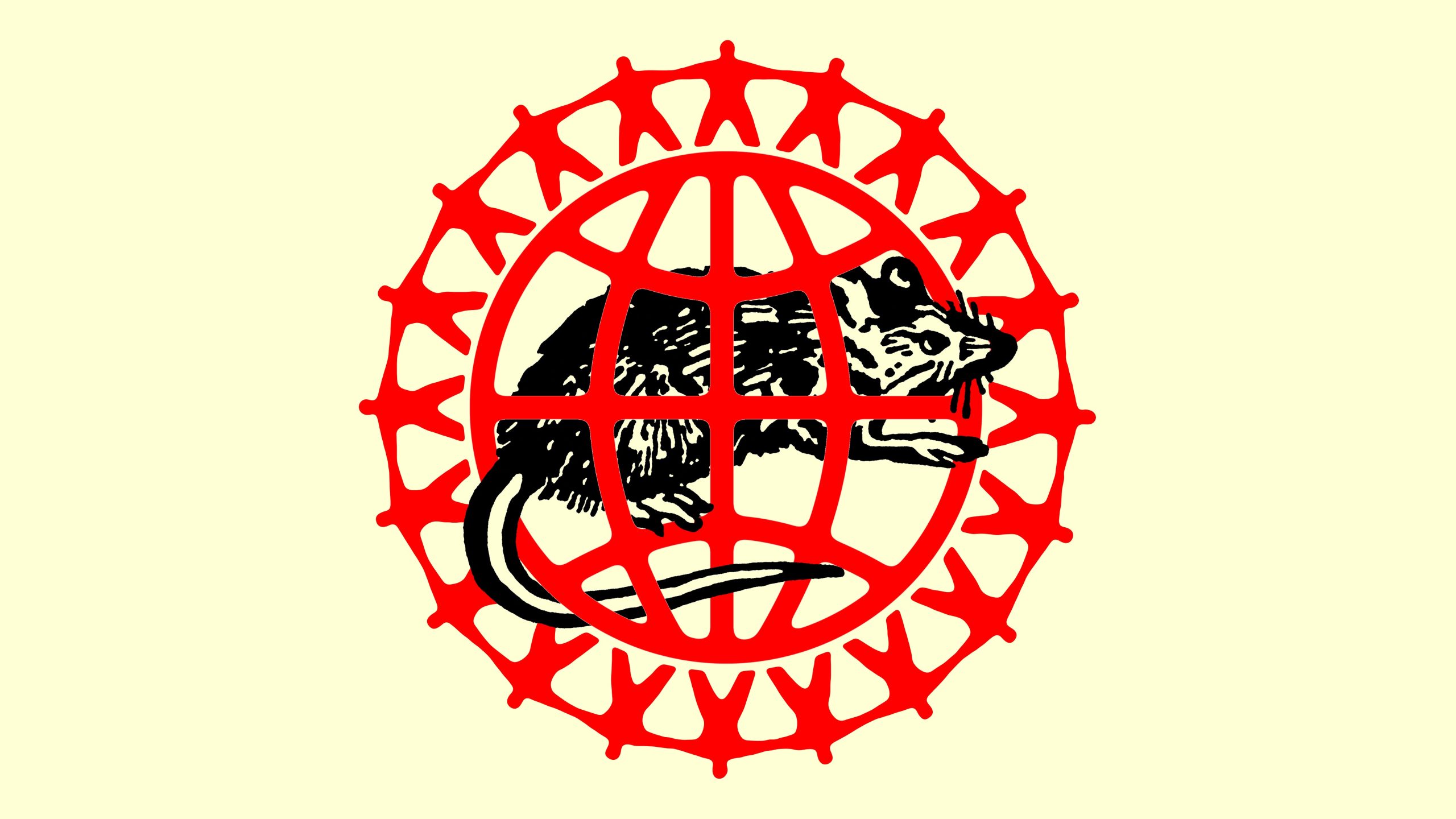
Corruption is topping voter concerns in recent polls, dominating Democratic messaging, and forcing Republicans to play defense in red states. If that marks a sharp shift from recent American elections, in which such allegations have played a relatively minor role, it mirrors a growing global trend. Around the world, a backlash against corruption has roused voters and undercut populist, right-wing politicians. Now it may play a decisive role in the midterm elections.
I first noticed this in Hungary earlier this year. Viktor Orbán, an ally of President Trump and a model for his MAGA movement, was ousted in April after 16 years in power. I asked his former political director, Balázs Orbán—who is not related to the former prime minister—whether he saw parallels between the campaign that cost his boss his job and the contest that could end Republican control of Congress. Like Trump, the long-serving prime minister had confronted corruption accusations in previous elections, but won anyway. “Why is that?” Orbán asked me. “It’s because of the economy. If people feel the economy is going in a good direction, they say, ‘Okay, there are some rich people, but we are also doing well.’” As Orbán sees it, these were the terms of a basic social contract. “The problem right now is that since people don’t feel that they are doing well, they want politicians to keep the social agreement: that if we suffer, we should suffer together.”
The effects of this backlash could be equally dramatic in the United States, where perceptions of government corruption hit a record high this year, according to Gallup. On this metric, the U.S. now outpaces most other advanced economies. If MAGA meets the same fate in the midterms as other entrenched right-wing parties have around the world, it would suggest that history is moving in a new, and unpredictable, direction. The end of the Cold War brought the spread of Western-style liberal democracy. Then, in the 2010s, nationalism, authoritarian populism, and crony capitalism—features of Vladimir Putin’s Russia—surged in popularity, as the historian Timothy Snyder has argued. In Hungary and Serbia, countries that lie at the seam of East and West, the balance has now tipped back toward liberal democracy. The same could happen this autumn in America.
As global wealth disparities widen, a common dynamic keeps playing out in nation after nation. Nearly two years of student-led anti-corruption protests in Serbia helped dislodge the country’s strongman leader, Aleksandar Vučić, in elections last weekend. In Brazil, voter discontent with seedy politics may have worked in the incumbent’s favor. Luiz Inácio Lula da Silva beat back a challenge from Flávio Bolsonaro, who is being investigated for alleged money laundering and tax evasion. In Israel, Prime Minister Benjamin Netanyahu might hold on to power after messy coalition talks, but he was weakened by long-standing accusations of bribery and fraud. Anti-corruption demonstrations in India have rattled that country’s nationalist strongman leader, Narendra Modi, after more than 12 years in power.
It’s not hard to understand why the ostentatious behavior of political elites would be more galling during a cost-of-living crisis. The three most important issues to voters in Hungary, according to opinion research, were cost of living and inflation; public services, including health care and education; and corruption and governance. “The government is there to benefit the authoritarian leader’s friends,” a retired butcher I met outside Budapest told me, “and we all pay the price.” By the end of Orbán’s tenure, his son-in-law and childhood best friend had become among the richest men in the country. The opposition party, which won a supermajority in Parliament and put its leader, Péter Magyar, in the prime minister’s office, framed corruption as a form of theft. “The money that is stolen,” Magyar argued, should be funding pensions and child-welfare services.
Candidates in the United States are trying to make a similar connection. “We have an affordability crisis because we have a corruption crisis,” James Talarico, the Democratic Senate candidate in Texas, has said. Jon Ossoff, the Democratic incumbent in Georgia, has put it this way: “Prices soar while the president rakes in billions.” The people around Trump have also done well. Look no further than his youngest son, the 20-year-old Barron, a college student whose estimated net worth stands at about $150 million, mostly derived from the family’s cryptocurrency company. The president’s own net worth is estimated to have grown by about $2.7 billion since the start of his second term, and is up to approximately $7 billion.
[Read: The watchdogs are barking themselves hoarse]
As in Hungary, corruption has moved to the top of the agenda for Americans. A recent Fox News poll found that government corruption drew the most concern among voters, above inflation and gas prices. And it’s changing voters’ minds. Irvin, the Pennsylvania voter, isn’t planning to cast a ballot at all on Tuesday. Her abstention, given her past voting habits, is a loss for the Republican incumbent, Representative Brian Fitzpatrick, a former FBI agent.
Perhaps sensing the potency of the corruption issue, Fitzpatrick has tried to use it against his Democratic challenger, Bob Harvie, a county commissioner. Campaign signs just beyond the Walmart parking lot allege that Harvie voted to give himself a pay raise. (In 2022, the bipartisan county board approved small cost-of-living adjustments for county officials, set to take effect after the next election.) Fitzpatrick’s campaign didn’t respond to a request for comment.
Harvie, a former social-studies teacher, recently held his ninth town hall. Consistently, the two main issues raised by voters have been costs and corruption, he told me. “People are finally lashing out against a government that isn’t working for them,” he said. The pain is especially acute now because residents have just gotten their first shipment of heating oil. The pattern at campaign events is for voters to ask him about their “astronomical” heating bill, and then the very next question will be: How are we going to change Washington and stop this corruption?
[From the October 2026 issue: MAGA is making the world safe for corruption]
I asked Orbán, who badly wants the Republicans to win, what the party could do to tamp down voter concerns. Perhaps, I suggested, the president could try to minimize grift or the appearance of it. After all, he’s building a gilded ballroom while average diesel prices exceed $6 a gallon. Orbán laughed. “My advice would be to attack the Democrats,” he said. “They are trying to portray themselves as moderates, but they are not honest.”
That’s the approach that many Republicans are taking. The problem is that a similar strategy already failed in Hungary.
Gabby Deutch and Madison Hahamy contributed reporting.
Source & Attribution
This One Place News story was acquired from theatlantic.com. OPN retains the source link and provenance for newsroom review.
Filed Under
Culture & Society • Economy & Finance • Politics & Law