One Place News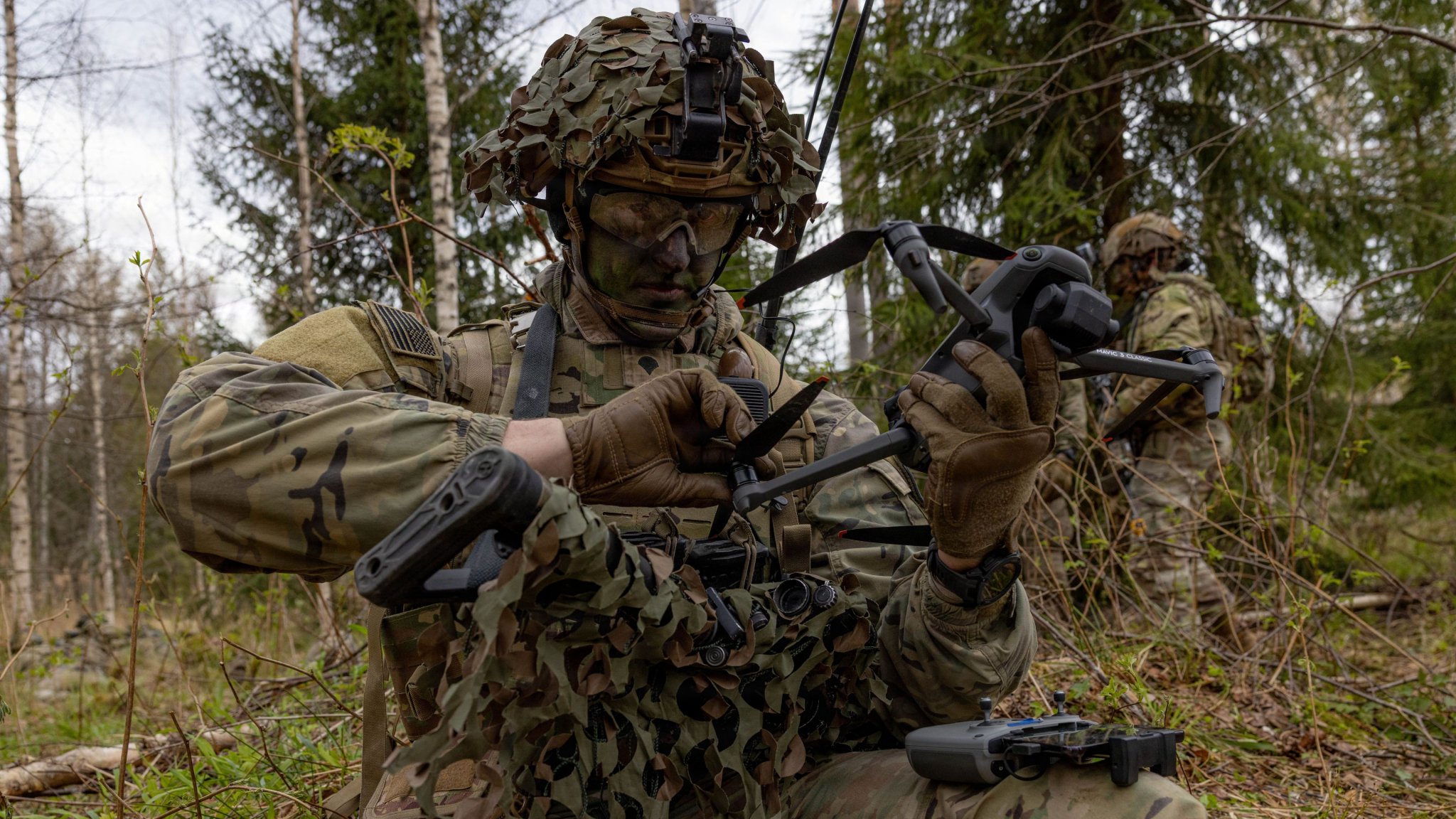
Unmanned aerial systems or drones have become the driving force behind military strategy. They’ve offered cheap alternatives to costly weapons systems, drained interceptor stockpiles and proven to be a powerful force multiplier on the battlefield. But the Department of Defense’s lead task force on drones says they aren’t a “silver bullet” when it comes to war. And now it put out what it called a “practical handbook” on how drones are used in warfare and how they can be deterred.
Last week, Joint Interagency Task Force 401, the Department of Defense’s lead body for the drone threat, released “Small Drones, Big Problems: A First Principles Approach to Countering-UAS,” its largest publication since it was set up last summer. The guide draws from both major operations used by other countries such as Ukraine and the experiences of American troops who are fielding counter-drone systems.
The new 90-page guide is, according to the task force, meant for industry and academia but also troops to read in the field.
Top Stories This Week
“It is crucial to build a common foundation for counter-drone efforts as we work with the entire government and interagency partners to respond to this growing threat,” Army Maj. Joe Amoroso, deputy chief of strategic initiatives for JIATF-401, said in the military’s announcement of the guide.
Rather than technical breakdowns or doctrinal talk, the handbook sticks to simple concepts, such as “The Four Ps of Drone Threats,” which are the person, the platform, the process and the payload. It also sticks to a casual and direct tone, mixing in sketch art of drones and troops fighting them.
“Not a magic weapon”
The document takes a measured approach to military drone warfare, not by downplaying the threat but by trying to contextualize UAS as a new technology that better practices and tactics have been developed to handle. JIATF-401 repeatedly compares the rise of drones in combat to the Nazi U-boats of World War II. Those were both an effective hunter of Allied ships and a terror weapon, scaring sailors from taking to sea. But the Allies grew wise to their tactics and developed their own ways to counter them, including the convoy system and ships better equipped to fight the U-boats.
Like the U-boats, the guide says, drones are having their “happy time.” Drones have proven effective on the battlefield — the task force notes the effectiveness of Iran’s Shahed-136 specifically — but they are not the ultimate weapon. The task force writes that drone warfare can cause people to overthink or jump to extremes, rather than consider the basics for protecting yourself and others. As such, they put out the guide, which is meant to offer clear and applicable methods for identifying and dealing with drones before they become a real danger.
“[D]rones are not a magic weapon. They have resulted from incremental improvements on older ideas to see further, extend operational reach while reducing battlefield risks, and exploit adversaries’ vulnerabilities,” the handbook says.
“A wake-up call”
The third chapter opens with a striking moment. It’s December 2023 and a retired Air Force pilot saw unfamiliar lights making their way over to an Air Force base on the eastern seaboard. It was one of the first sightings of what would be several drone incursions in the area. In the following 17 days, drones were spotted flying over Joint Base Langley-Eustis, part of a wider spate of drone sightings over bases. The Army notes that it took more than two weeks to identify the drones and figure out what to do, which included moving F-22 fighter jets to a new location out of precaution. The handbook calls those days a “wake-up call,” which forces a “return to the basics.”
“[…]once a drone is overhead, the most important decisions about protection and countermeasures have already been made or, as it were, missed,” JIATF-401 writes.
That was one of many relatively recent events the military draws from in the handbook, looking at major attacks or incursions as case studies for how UAS are being deployed. One chapter opens with a discussion of Operation Spider’s Web, the June 2025 Ukrainian drone attack deep inside Russia, where drones were smuggled to their target on trucks.
The military had been testing and expanding its drone capabilities, looking at lessons from the ongoing war in Ukraine, but much of that got accelerated last year. A directive on the transformation of the Army called for rapidly integrating drones into maneuver units.. The Pentagon set up JIATF-401 soon after to coordinate efforts from the services. And the military has tried a lot of options to deal with drones. It has proposed, tested or fielded specialized bullets meant to spread out and better hit FPV drones or swarms, protective coverings, laser weapons and cheaper interceptors. The armed forces cast a wide net for a solution, but JIATF-401 says the threat from UAS won’t be resolved “with a single breakthrough technology, but through accumulated adaptation and innovation.”
The final chapter draws from very recent combat experience: the war with Iran, which has continued in some form since Feb. 28. Iranian drones and missiles have targeted American bases, and killed several troops. But American forces have also intercepted and shot down dozens of drones, learning how to apply training in real combat and better detect enemies. One Army National Guard soldier told the task force that “If the drone never gets a clear picture, we’ve already won.”
The military noted that drones are an ongoing threat and not easily stopped. But the handbook says that, much as with Nazi U-boats, those uncertainties can be understood and countered.
“What was once novel became familiar; what was once feared became manageable.”
The post The Pentagon says drones are not a ‘silver bullet’ in its new handbook on fighting them appeared first on Task & Purpose.