One Place News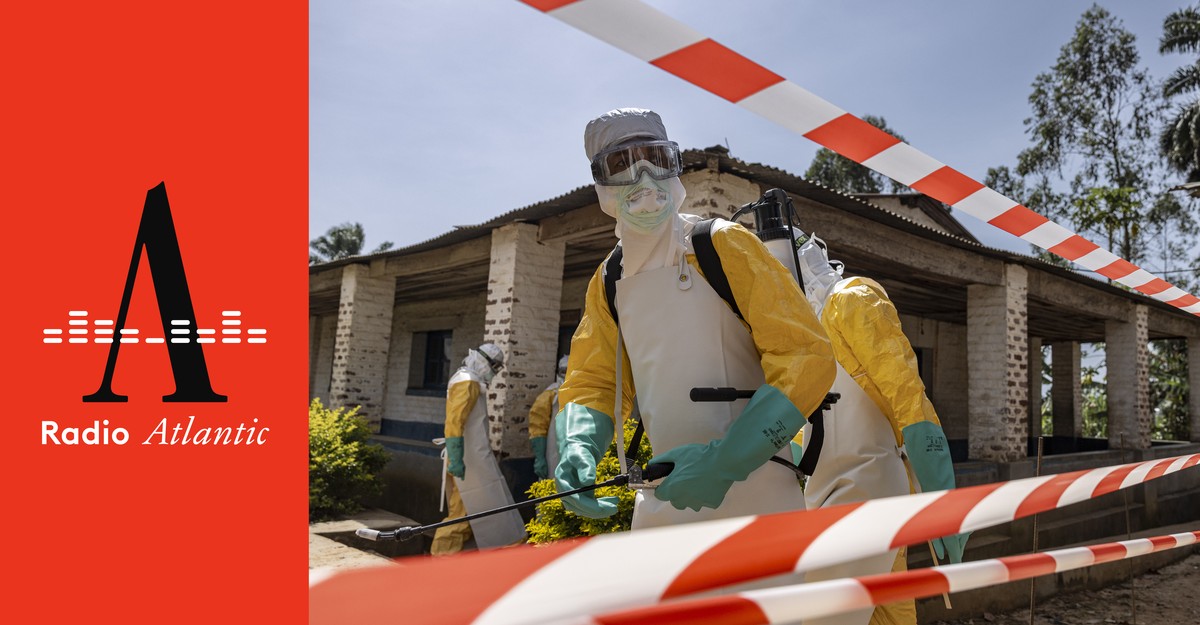
Subscribe here: Apple Podcasts | Spotify | YouTube | Overcast | Pocket Casts
The Ebola outbreak raging in the Democratic Republic of Congo is now the largest in the nation’s history, according to the World Health Organization. The strain of Ebola driving this outbreak is called Bundibugyo and has no vaccine or treatments. It’s devastating: More than 3,600 cases have been identified, which have led to more than 1,500 deaths—a 44 percent fatality rate. The tragedy has been compounded by the ongoing conflict in the nation. Millions have been forced from their homes and even more are facing crisis levels of hunger.
Could this all have been prevented? Hasn’t the world figured out how to handle Ebola? This week, I spoke with my colleague Hana Kiros, who has been covering the outbreak and how the Trump administration has gutted foreign aid that it says saves lives, about why this outbreak is different and what it tells us about the state of global health today.
The following is a transcript of the episode:
Adam Harris: This is Radio Atlantic. I’m Adam Harris, and this week we need to think about Ebola and the crumbling global-health infrastructure.
The Democratic Republic of the Congo is in the throes of one of the largest Ebola outbreaks in the history of the African continent. Nearly half of those who have contracted the virus have died.
Since the outbreak began, in May, the international community has been playing a game of catch-up. But perhaps it should have seen this coming.
On the day President Trump returned to office in 2025, the administration issued a 90-day freeze on foreign aid. In February of that year, they eliminated 90 percent of the USAID foreign-aid contracts before they finished dismantling USAID a few months later.
The shuttering sent shockwaves through the international-aid community: The resources the U.S. was withdrawing weren’t just good PR; they were critical to the public health of poorer nations. And now, as Ebola ravages the Congo, advocates say that this is exactly the sort of outbreak that money and coordination was intended to contain.
How will this outbreak end? And could this level of catastrophe have been avoided?
With me to discuss is my colleague Hana Kiros, who has been covering the decimation of the U.S.’s global-health aid and the current Ebola outbreak.
Let’s get to questions.
Hana, thanks so much for joining me today.
Hana Kiros: Thanks for having me.
Harris: When we spoke at the office maybe about a month ago, there’d been roughly 500 deaths from Ebola on the African continent to that point. Now there are roughly 1,500. Why has this breakout been so difficult to contain?
Kiros: I think there are a couple of factors, but the biggest one is probably just that it was caught so late in its spread. There was a lot of disease transmission that occurred before an international response was mounted. Ebola was sort of this runaway train that was spreading through the DRC. And then, it’s in an active war zone, which complicates things. There’s not really any testing in refugee camps. And it’s also a gold-mining town where the epicenter of the outbreak’s where people just sort of come in and out.
So, it’s a place where people—Ebola was spreading and spreading to a lot of different places before we started trying to contain it, and now it’s just the response hasn’t moved as fast as Ebola has through the country.
Harris: Yeah, and so you’re talking about the DRC, the Democratic Republic of the Congo; where else in the region is it? I know there were cases in Uganda. Has it spread beyond the DRC, or is it still primarily located in the DRC?
Kiros: So, it’s primarily located in the DRC and specifically in the eastern DRC. There’s a health zone that’s near South Sudan that has had its first cases of Ebola. Uganda has had a few cases, but the outbreak there has been declared over. They have a really robust health-care system. South Sudan much less so. So, there’s fear of that happening, but right now it’s still within the DRC.
Harris: The West African Ebola outbreak in the 2010s, where something like 30,000 people were infected, over 11,000 people were killed—what is different about this strain of Ebola?
Kiros: The one that’s tearing through the DRC right now is a different virus entirely. So, it’s the Bundibugyo Ebola virus. And because of that, this virus has evaded detection and that’s a really big part of why it was caught so late. Because the machines that were being used to test for Ebola were giving back negative results because they were looking for one Ebola, not all five of them.
So that’s one way that this outbreak is different. We don’t have the regular arsenal of vaccines, treatments, diagnostic capacity, that we know works.
And then in terms of the actual scale, so now the outbreak is over 3,000 cases and it’s very nearly the second-largest Ebola outbreak in recorded history.
And the big difference is that this is the fastest-moving Ebola outbreak that we’ve seen. So, there’s an explosion of cases that’s happened within a very short period of time. Again, we’re not really sure what the period of time is. We don’t know who patient zero is in this outbreak. So, I think that’s the main differentiator.
Harris: When you mentioned patient zero, it’s almost a reminder that these are individuals, right, that make up these larger numbers? Can you sort of humanize this for us? What has that experience been like, traditionally or historically, during these outbreaks?
Kiros: You know, I was speaking to a woman at Doctors Without Borders who’s coordinating their response to the outbreak in the DRC and she was saying that the current case-fatality rate is like 40 percent. She talked about a mother that showed up to an Ebola-treatment facility with symptoms and with two kids, and because of delays in testing it can be 48 hours, 72 hours before you get a positive or negative result. So, there’s a question of like, where do the kids go while you’re waiting? If you’re at home with a fever, you might be hesitant to go to this place where half, almost half, of people don’t come back from. So I think that, there’s this perception that the Ebola treatment wards are like places where you go to die, and health-care workers have said that that’s really something they want to fight against, because if people—you have a much better chance of surviving if you’re treated earlier in the disease progression. So, there’s a lot of fear. I think 90 percent of people are dying before they ever reach a hospital, according to the World Health Organization.
And also just like cultural practices. In the DRC, funerals are a multiday affair where you celebrate the life of the person, you touch the body, and that’s a major way that Ebola spreads. So, this very basic cultural practice—like, imagine your mother died and you think about, there’s this way that you honor her before you put her in the ground and you can’t do that anymore because of a virus. It reminds me of COVID in a lot of ways, in the way that there’s disruption, there’s a lot of suspicion; some people think it’s a hoax. But yeah, it’s just caused a lot of disruption in the DRC.
Harris: Yeah, to that point of people thinking that that it’s a hoax—there is the hoax that leads people to a hesitancy to go to a doctor or to go and be seen, but there’s also this sort of mistrust that leads to almost anger, right? This idea that Maybe they’re withholding something from us that could help people. How are folks in the Congo dealing with that in their response to the international community’s sort of attempts to help contain the spread? Is there a sort of violent response to those efforts?
Kiros: So, there has been, in some cases. I think most people in the Congo don’t think that Ebola is a hoax. There was a survey recently that I think 30 percent of people thought that it wasn’t a real disease, which is significant, but it’s not the majority of people. But Ebola-treatment centers have been burned. There are teams that are called “safe and dignified burial teams,” and they go out in basically hazmat suits and then they will, if someone’s tested positive, they’ll go to their home and try and disinfect everything so that bodily fluids that can transmit Ebola don’t infect other people. And then they sort of wrap people up in a special tarp, and they try to bury them in a way that ensures the disease doesn’t spread. Those people have been attacked because they’re highly visible.
And I think from the perspective of someone in the DRC, you’re much more likely to die from the conflict that’s happening there, or from malaria or from malnutrition, issues related to displacement, than you are from Ebola. But when an Ebola outbreak spreads, there is this parachuting in of international aid, which is apt to make sure that the spread doesn’t continue, but if you look at even the worst-case scenario, there are—in the minds of some people, there are bigger fish to fry. And so, I think that there is a lot of gratitude, people that are cooperating. There’s a lot of really great radio programs that have positive public-health messaging, but there’s also a lot of distrust and just wariness of how much people’s daily lives have changed.
Harris: Bio threats happen all the time. It’s something that governments are sort of always thinking about, and scientists have estimated or believed that there’s about a 50–50 chance of another COVID-level pandemic materializing in the next 25 years. And that probability jumps significantly when you’re talking about these sort of smaller-scale outbreaks and epidemics, right? They’re things that are going to happen.
There was a playbook that developed out of some of these previous outbreaks to deal with things like this. Is that playbook still a thing? Does the international community still know how to manage these sorts of outbreaks?
Kiros: I hope so. The Trump admin published its America First Global Health Strategy and it promotes this à la carte model of funding global-health responses. So, it takes the control of global health away from the CDC and puts it in the hands of the State Department.
Marco Rubio: We care about Ebola. We don’t want anyone dying or being affected by Ebola. But our No. 1 priority will always be making sure it doesn’t come to the United States. That’s our No. 1 obligation.
Kiros: And there was a really great Substack post that I read, I think it was headlined, like, “Would You Want Henry Kissinger Running the COVID Response?,” where, like, if you don’t have public-health experts, epidemiologists, people that are specialized in running global-health responses and whose primary purpose is not statecraft but in preventing disease spread, like, how that impacts our global-health security, how it affects all of us that are alive. Like, I don’t know.
And also, the à la carte model asks countries to decide basically like, Do you want bed nets? It leads me to worry about how comprehensive future responses will be, and how prepared we’ll be.
Harris: Yeah, it’s almost like when you move it to the State Department, it becomes more of a play for diplomacy as opposed to a care, a sort of compassionate aid, right?
Kiros: Yeah, I think there’s always been this dual justification for providing foreign aid and health aid specifically. We should nip it in the bud before it comes to our borders, but also we don’t want innocent people and babies to die of things that are very preventable.
Harris: The World Food Program was talking about, they just put out a report recently that talks about the compound factors that make the sort of public-health crisis in the DRC worse. And they’re requesting over $100 million over the next six months for Ebola response in the region, $76 million for the Congo alone.
You’ve reported on the sort of deep cuts for international aid out of the United States. And I wonder if the U.S. will ever get back to funding international-health aid in the same way that it did before this Trump administration.
Are there any indications that they will get that $100 million and then have some for the future to prevent Outbreak 17, Outbreak 18, Outbreak 19?
Kiros: So, the World Food Program is really broke currently. They’ve had to pull back from a lot of really critical places where they were providing food aid, cut rations. But I will say I think that Trump really cares about Ebola. In 2014, he was a prolific Ebola poster. I think he made 100 tweets about Ebola within a span of a few months. It’s at the intersection of hypochondriac Trump and border-control Trump. He really was adamant that no one that had the virus should enter the country, even if they’re Americans that caught the virus while abroad. And you see that he’s implemented that this time around. So, if an American doctor goes to the DRC, gets Ebola, instead of sending them back to the U.S., we’re sending them to Europe. So I mean Trump is engaged on Ebola.
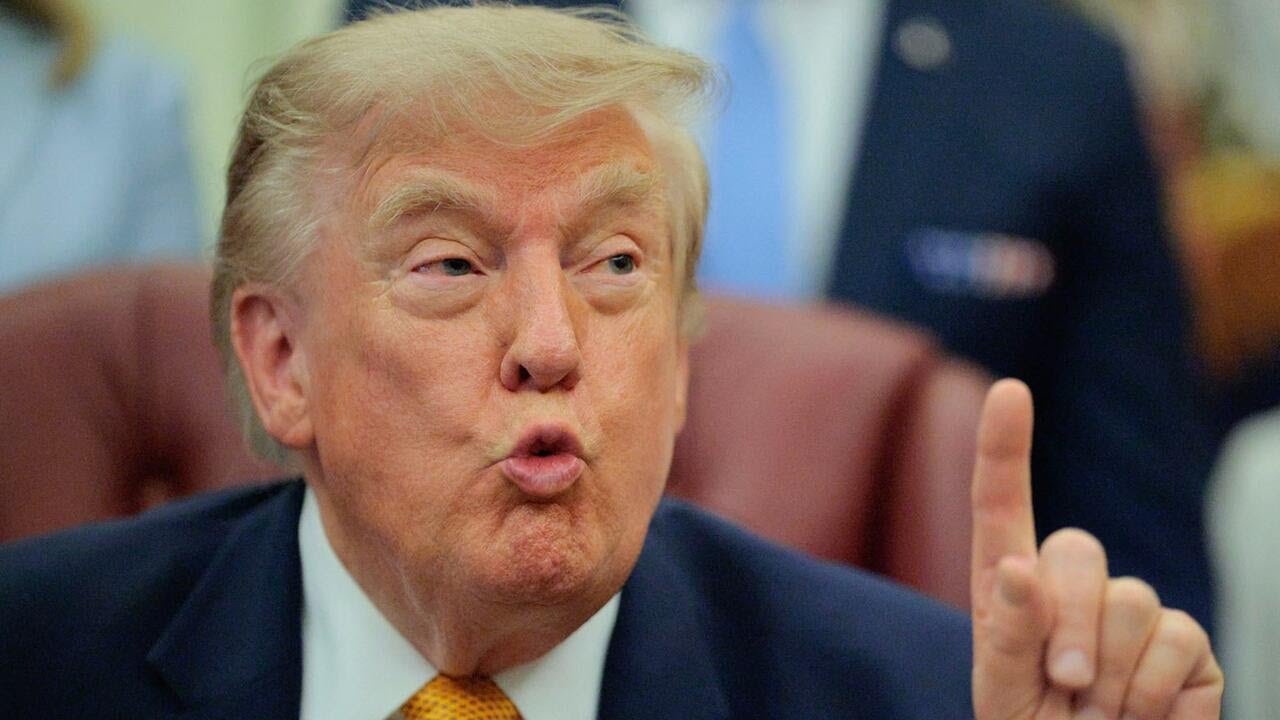
Donald Trump: Go ahead, Ebola. Ebola.
Reporter: Should Americans be concerned about Ebola?
Trump: I’m concerned about everything. But certainly am. I think that, you know, it’s been confined right now to Africa. But it’s something that’s had a breakout.
Kiros: Ebola is sort of like, even when Elon Musk was discussing the USAID cuts, he was like, We cut Ebola, whoops! Everyone knows we should keep doing that. So I actually, I do think that when there’s an Ebola outbreak, out of a desire to protect national security, there is typically a surge in response. And we’ve seen that even this time, that the research and development money that’s gone into developing a vaccine for this species of Ebola, developing treatments—the U.S. has provided that.
I think what I’m skeptical about ever coming back is really there were some things that were just dropped from the global-health-aid agenda that the U.S. no longer funds. So, neglected tropical diseases—they’re this sort of package of diseases like river blindness or different types of parasitic diseases that are disabling but typically aren’t deadly, but they can make someone blind permanently or make it so that they’re unable to work, unable to go to school. And the U.S. had really successful programs that were eliminating these diseases in many countries. And most of the drugs were donated from pharmaceutical companies and the U.S. was just helping with distribution, and we’ve stopped doing that, and those companies have stopped donating the drugs because a lot of the infrastructure is gone. And that’s one of those things where I think there are a lot of examples like that, where progress was being made on a major global-health problem, and we, the U.S., just lost interest and then that’s without really an explanation things were dropped from the agenda.
I don’t know if we ever get back. I think it’s harder to argue for the reinstitution of something than the continuation of it. And then I also think that aid has been politicized in a way that makes it difficult. The U.S. provides virtually no aid to Somalia anymore, even though they’re on the brink of famine. Certain countries have been blacklisted for lack of political interest. So, I think that we’re seeing a narrowing of ambition. And then also, some countries have just been dropped from the aid agenda by the Trump admin. So those are the major changes I see and the things that I think might not come back.
Harris: If those things don’t come back, what risk does that pose to the global-health picture?
Kiros: Zooming in on Ebola specifically, there’s just a lot less health care in the DRC because humanitarian funding not just from the U.S. but from most other wealthy countries is down pretty significantly, because the U.S. has always been a leader in global health. So I think a lot of people took our lead and brought it down.
The International Rescue Committee, for example, in this region of the DRC, they closed I think more than half of their health-care facilities. And there’s a relationship between these NGOs and the World Health Organization, the U.S. government, sort of tipping off the right authorities when they see something that is suspect and could be a pathogen that’s a real threat to biosecurity. So, I think that there are just sort of all of these holes in our picture of disease spread, and diseases will come. So I think that’s something to worry about. But I also think that the main impact will be just, if there’s a famine in Somalia and the U.S. doesn’t respond, a lot of people in Somalia are gonna die—more than would have otherwise.
The U.S. has been successful in the past of saving millions of people from famine in Somalia.
Harris: If you were to open your reporter’s notebook, think about the questions that you still have about the outbreak, about the spread, about the global, international response to it, what are those questions that you still have about the outbreak that you would like answered or that you want to pursue?
Kiros: When I’ve talked with people that are in the DRC, in Bunya, which is the current epicenter of the outbreak, I have asked where are the Americans? Do you see Americans? Is the U.S. playing a clear leadership role? And a lot of the people I’ve talked to have been like, It’s not really the U.S. leading anymore. And part of that, I think, is because after the Obama administration really took the lead on the 2014 Ebola outbreak, and the World Health Organization—it floundered and was not as useful as the U.S. was. So, there was effort put into training up the World Health Organization and building capacity so that they were more capable of leading an international-outbreak response.
And so I think that part of the story is that the World Health Organization is capable of taking the lead. But also, the leadership gap, if there is one, is interesting to me. And then I also think that this is a massive, massive human effort. So there are doctors, there are nurses, there are health-care workers that are donning hazmat suits basically, and are in 80 percent humidity in the summer heat. Doctors, they have to, they can only work for an hour because otherwise they’ll pass out due to the heat, and they’re not being paid. So there’s strikes that are happening amid the outbreak, which are, I mean, really disrupting care for people in really critical condition. But there are also these health-care workers that are working in extremely dangerous situations. People call Ebola a disease of compassion because the people that are the caretakers often are the ones that get infected and die from it.
Harris: Yeah, absolutely. As you mentioned that human element—global health is really, at the end of the day, really a human endeavor, right? A moral endeavor. It’s about preventing unnecessary human suffering, right? I think that human element of folks putting themselves in harm’s way to help other people is such a fundamental part of being human.
Hana, thank you so much for your time today and in sharing all of this with us. And we’ll be following your reporting as the effort to contain the outbreak continues.
Kiros: Thanks so much.