One Place News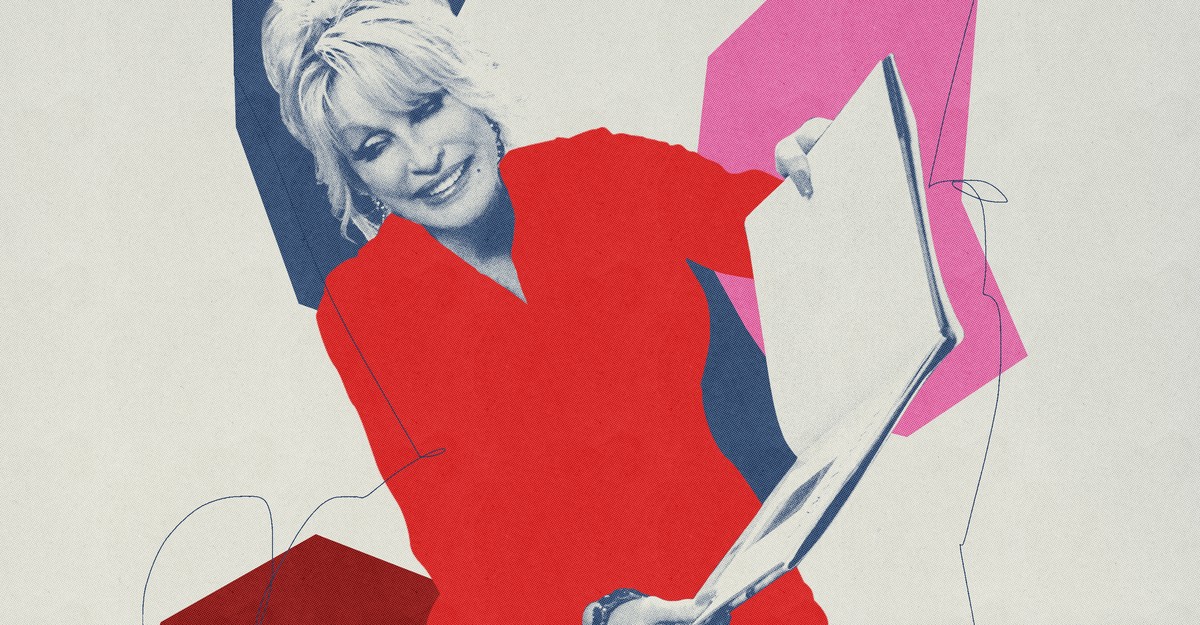
This is an edition of the Books Briefing, our editors’ weekly guide to the best in books. Sign up for it here.
My best friend’s baby got mail from Dolly Parton on the day the singer died. This wasn’t unexpected: He’s been receiving books from Dolly Parton’s Imagination Library for all 10 months of his life. (This month’s selection was Bedtime, Here I Come, by D. J. Steinberg.) And he wasn’t alone—the Imagination Library sends free books to children every month from birth to age 5; the program has passed out more than 300 million books in five countries. My colleague Annie Joy Williams wrote earlier this week about the legacy of Parton—and her books program—in Tennessee, the home state that all three of us share. But the Imagination Library has expanded far beyond that territory. When I lived in an apartment building in Washington, D.C., I would see books bearing the library’s distinctive seal on a table in the lobby—volumes too big for my neighbor’s mailbox, quietly awaiting little hands.
First, here are three new stories from The Atlantic’s Books section:
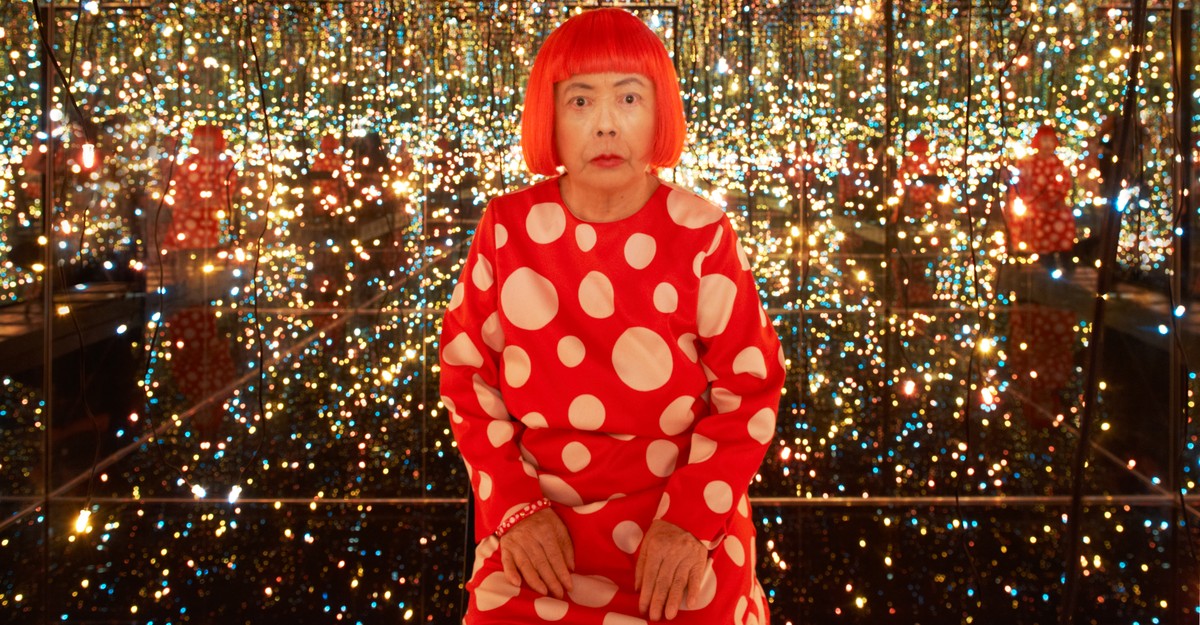
- Portrait of the artist as a movie star
- “Tallying,” a poem by Joanna Klink
- “Wilderness Years,” a poem by Dave Lucas
- The progress that can’t be erased
Stories about Parton’s generosity are spreading widely: She helped fund a COVID-19 vaccine and filmed herself getting the shot when many Americans were hesitant. She opened a sanctuary for bald eagles! She did so many things for so many kinds of Americans, and especially Tennesseans, that I find it hard to keep track. But she said, many times, that she’d be happy to be remembered not as a generational talent or a dolled-up diva but as “the book lady.” Parton grew up in poverty in East Tennessee, and she frequently cited her illiterate father as the inspiration for her books program, which she founded in 1995. I don’t know whether all of Parton’s fans knew how high she ranked literacy on her list of important causes, but when I watched tributes to Parton roll in this week, I noted that people I’d grown up with in Tennessee (mostly young women like me) kept posting the same tableaus on Instagram: photos of babies and kids sitting with their parents, reading a book they’d gotten from the Imagination Library.
The photos are cute—but they also reflect something deeply important. A few years ago, I edited an essay by the children’s-book author Katherine Marsh that identified one reason young kids were less motivated to read: Schools often push them toward a “hyperfocus on analysis” and give precedence to individual paragraphs and sentences rather than entire narratives. But, Marsh argues, “the best way to present an abstract idea to kids is by hooking them on a story.” And a great way to get a kid interested in a story is by reading it aloud to them. In another article, published a year ago, Ilana Kurshan wrote about this declining but important practice, and about doing it with her son: “The delight of reading to him lay not in the pages we turned,” she wrote, “but in the wheels that seemed to turn in his mind as we read together.”
Thanks to my friends’ beloved babies and the perks of my job—which have included putting together a list of essential children’s books—I’ve been thinking a lot about the importance of reading with children. They still encounter books in schools and libraries, but Parton’s program emphasized building a bookshelf at home, where caregivers and kids can share stories as part of a daily routine. Reading aloud offers a child more than the chance to develop literacy skills. It gave Kurshan, for example, “a way to guide them as they started to understand the world, and as I started to understand them.” So, like Parton, I’ll be happy if kids see me as a “book lady.” Last week, I bought a picture book about berries for a different toddler. And although my friend’s 10-month-old already has plenty at home, I couldn’t resist mailing him a few more books.
What Parents Lose When They Don’t Read to Their Kids
By Ilana Kurshan
Sharing books with my children was about a lot more than literacy.
What to Read
Hippos Go Berserk!, by Sandra Boynton
Hippos Go Berserk!, a sterling example of Boynton’s comedic genius, has the subtitle “A wild counting story.” “One hippo, all alone, calls two hippos on the phone,” it begins, and each page introduces another attendee to a gathering being planned in real time, until 45 of them crowd an all-night cocktail party. Then come the visual gags: There’s a hippo’s version of Whistler’s Mother, a hippo upside-down, and one guest, a classic spiky-furred grinning Boynton beastie, who consistently eludes the count. As the hippos gradually leave, little creature in tow, Berserk shows that even basic arithmetic can be an act of imagination, rather than rote repetition—and it cleverly reminds adult readers that the most familiar exercise can invite unexpected images into the mind. — Walt Hunter
From our list: 65 essential children’s books
Out Next Week
📚 The Castle: Adventures in a World of Unraveling Men, by Jon Ronson
📚 I Liked Rex, by Diane Williams
📚 All the Hidden Places, by Cadwell Turnbull
Your Weekend Read
The Painter Who Shaped Rothko
By Sebastian Smee
Beginning in the early 1930s, three Americans—Milton Avery, Mark Rothko, and Adolph Gottlieb—began spending summers together on Cape Ann, along the coast of northeast Massachusetts. They loved the gritty authenticity of Gloucester, the nation’s oldest fishing port. Cape Ann’s distinctive, undulant geography combined pungent industry and village intensity with Atlantic immensity of sea and sky. The story of the relationships among these artists, in particular between the older Avery and the now–stratospherically famous Rothko, shows us American modernism in its moment of greatest transition.
When you buy a book using a link in this newsletter, we receive a commission. Thank you for supporting The Atlantic.
Sign up for The Wonder Reader, a Saturday newsletter in which our editors recommend stories to spark your curiosity and fill you with delight.
Explore all of our newsletters.