One Place News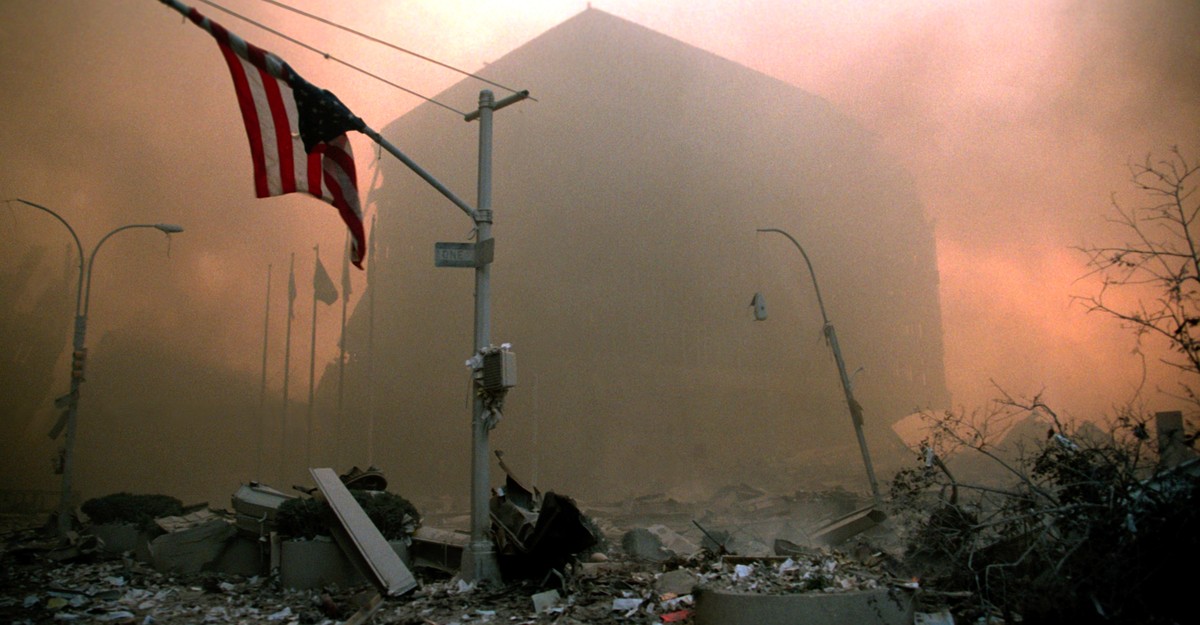
Prosecutors trying to finally convict Khalid Sheikh Mohammed, the alleged mastermind of the September 11 attacks, got some good news and some bad news last month. The good news is that a judge set a date for Mohammed’s trial in a military court. The bad news is that the trial won’t begin until June 2028—oh, and the judge also threw out a confession Mohammed made in 2007.
The problem is how the U.S. government obtained the confession. Mohammed was captured on March 1, 2003, in Pakistan. He was then held in a series of secret CIA “black sites,” allegedly including spots in Afghanistan, Jordan, Poland, and Romania, before being brought to the U.S. prison at Guantánamo Bay in 2006. Throughout his imprisonment, he was subject to what U.S. officials called “enhanced interrogation techniques”—or, in plain English, torture. Lieutenant Colonel Michael Schrama, the judge, reportedly concluded that “the prosecution has failed to prove by a preponderance of the evidence that Mr. Mohammad’s statements to the F.B.I. were voluntarily given.”
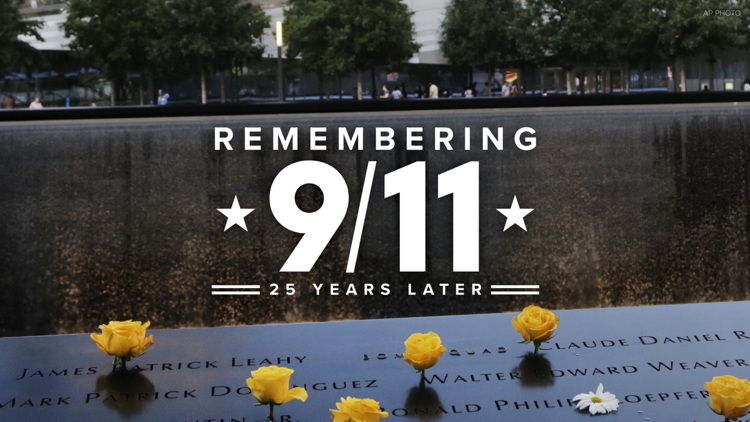
A quarter century has passed since the attacks, long enough that Americans born after 9/11 are themselves adults—some have even died in conflicts that are part of the war on terror. The failure to convict Mohammed by now is an open wound and an embarrassment, one that shows how the government cutting corners and breaking rules can actually end up making the pursuit of justice harder and slower. It’s also a reminder that the consequences of those decisions may not be apparent for years. Both of these are valuable lessons for the Donald Trump era.
Few serious doubts have been raised that Mohammed was a central planner of the attacks. The 9/11 Commission, which had access to material from some of his interrogations but did not directly question him (and preceded his 2007 confession), nevertheless was able to confidently label him “the principal architect of the 9/11 attacks.” Proving this beyond a reasonable doubt in court is a different matter. (Mohammed and other defendants previously agreed to plead guilty in exchange for the government declining to seek the death penalty, but the plea deal was revoked in 2024 by then–Defense Secretary Lloyd Austin under political pressure.) Some of the slowness to get the case to trial is a result of the adversarial structure of American law, which rightly sacrifices speed to protect the rights of the accused. But much of it is a result of choices the George W. Bush administration made.
After 9/11, Bush and his aides justified circumventing normal procedures of law, including secret military tribunals and prohibitions on torture, because of the gravity of the attacks, questions about how existing law applied to a “War on Terror” against nonstate actors, and the urgency of preventing future attacks. Even at the time, cooler heads warned that protections existed for a good reason. Now, more than two decades later, Schrama’s ruling-out of Mohammed’s confession proves their wisdom. Prosecutors say that they will not appeal the decision, which would draw the process out even more, and they might be able to convict without the confession, but the decision to use torture at the time has made it harder to achieve justice today.
A good lesson for the present is that moving too fast can backfire. Like the Bush administration, the current White House has emphasized speed over rules in what my colleague Janay Kingsberry has described as “the rush-job presidency.” The plainest demonstration of this in the Trump administration is also relatively low-stakes: An attempt to quickly get the Reflecting Pool fixed resulted in a botched job and a waste of taxpayer money. Although the Supreme Court effectively rubber-stamped the White House ballroom, lower courts have made the administration pay for moving too fast in other matters—for example, they have demanded that people who were improperly deported be returned to the United States. Given the White House’s sloppiness and its disregard for rules, the Trump era will likely offer many such cases.
A second lesson is that years may pass before we are able to see all of the damage inflicted by shortcutting and carelessness. In the case of the Trump administration, the impact of destroying American scientific research, hollowing out the civil service, and wrecking the global order will be felt for decades. By then, Trump will be long gone, and some other president will have to clean things up. (Joe Biden’s administration ended up with the unenviable task of concluding a war that Bush had fumbled and that Barack Obama and Trump had both determined should end; Biden’s popularity never recovered from the U.S. withdrawal from Afghanistan.)
Even though the full effects of decisions made today are not immediately clear, many of the offenses are, which leads to a third lesson: the importance of accountability. When Obama entered office, his administration decided to focus mostly forward rather than on investigating and potentially punishing misconduct during the Bush years. The administration had its reasons, just as the Biden White House did in its hesitation to pursue Trump for election subversion and absconding with documents, but each case created an atmosphere of impunity and allowed those involved to retain influence. Jay Bybee, whose office oversaw memos justifying torture, is a federal judge with lifetime tenure; John Yoo, who wrote those memos, is a prominent law professor; Gina Haspel, who commanded a black site and was implicated in evidence destruction, led the CIA during Trump’s first term.
When a nation or an administration feels besieged and defensive, the temptation to bend or break the rules for one’s own side, to change procedure for the sake of getting something that feels very important, is strong. But as the painfully long process of trying to convict Mohammed shows, undermining justice right now has a pernicious tendency to undermine justice later.