One Place News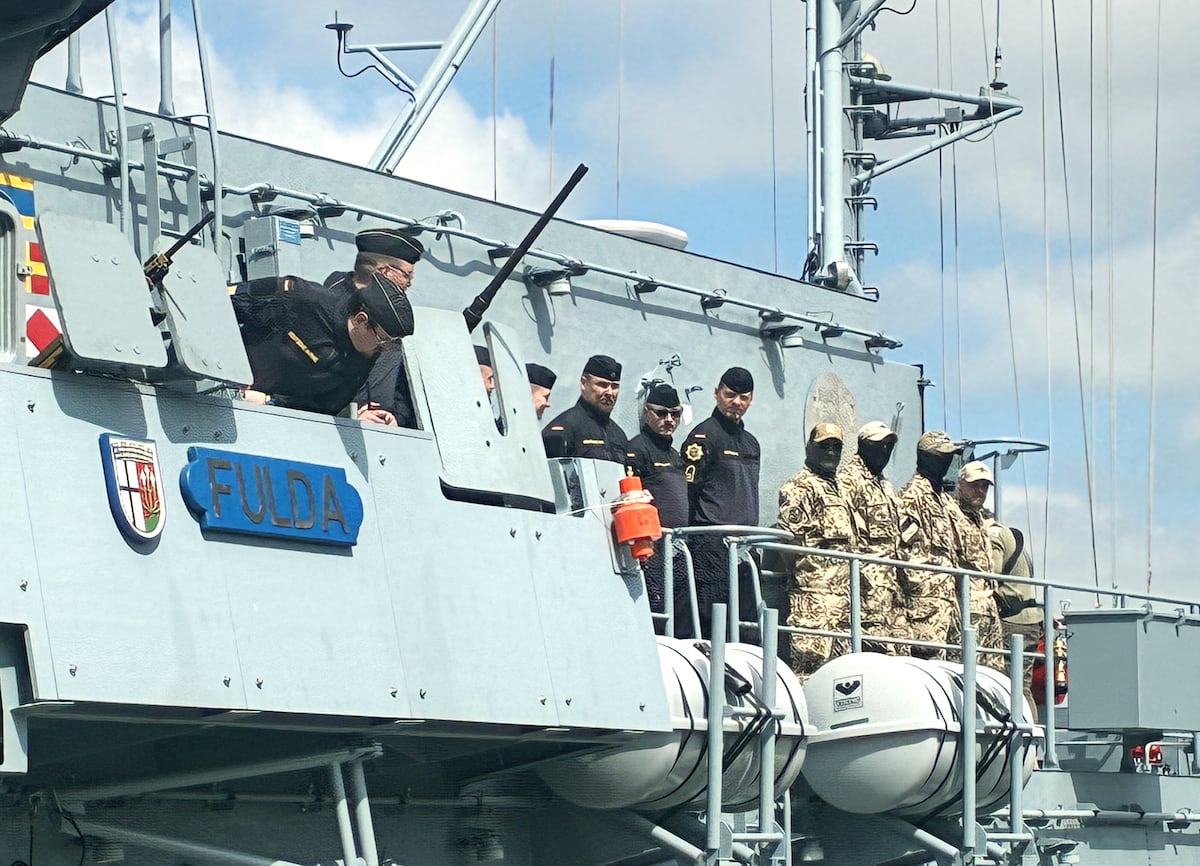
COLOGNE, Germany — The German government is pulling back two navy ships from the Gulf of Aden sent there weeks ago on stand-by to support an eventual post-war Strait of Hormuz security mission, as hope is fading in Berlin that the conflict in Iran will end anytime soon.
Defense leaders ordered the mine hunter Fulda and the support vessel Mosel to redeploy from Djibouti, a European and international naval hub at the southern mouth of the Red Sea, to the eastern Mediterranean, the Ministry of Defense announced on Thursday. The ships and crew will hold there and await further instructions about whether an international Hormuz mission will come to pass at all.
After the U.S-Israeli war against Iran began in late February, European nations pledged to assign naval vessels to a multinational mission for securing shipping in the economically vital Strait of Hormuz, over which Iran claims control. A precondition for such a deployment, governments here said, was that the conflict would ebb to such a degree that none of their ships would come under fire in a war many here consider pointless.
The prospect of a “permissive environment” is now deemed slim by Berlin, the Ministry of Defense announcement reads, as open hostilities have broken out again between Iran and the United States following a period of calm.
Aside from the geopolitical aspect of the redeployment, there is also a more mundane rationale, Navy officials acknowledge: The two vessels’ cooling systems, which rely on sea water, were not built for the high temperatures of the Gulf of Aden environs. The eastern Mediterranean will be a more suitable parking spot for the ships, constructed decades ago with operations in the North Atlantic and Germany-adjacent waters, the hope goes.
The redeployment of the Fulda and the Mosel has been “coordinated with international partners,” the ministry statement reads, as the vessels await an opportunity to tag along with a beefy air-defense escort to make the journey to the Mediterranean. On the way to Djibouti in June, the British air-defense destroyer Dragon provided protection through the Red Sea leg of the voyage.
“I can imagine Trump will criticize the move as a lack of staying power in the region,” said Sebastian Bruns, a fellow at the Royal Swedish Society for Naval Sciences (KÖMS), about the German naval redeployment plans.
But fellow European nations will understand it, as they all are puzzled by the dizzying pace of U.S. President’s Donald Trump’s proclamations variously trumpeting military strikes and prospects of some kind of peace deal, sometimes at the same time, he said.
Bruns criticized the German government for jumping on a bandwagon of “Symbolpolitik” in the first place — taking action only for the envisioned signal of aiding the Americans in some form even though the security context was unclear.
“For such highly specialized units as mine hunters, that role must feel like a waste for the crew,” he said.
The German Ministry of Defense said it will continue to keep the Fulda and the Mosel deployable for a future Strait of Hormuz operation, with officials eying “durable indications for a near-term start” of such a mission.