One Place News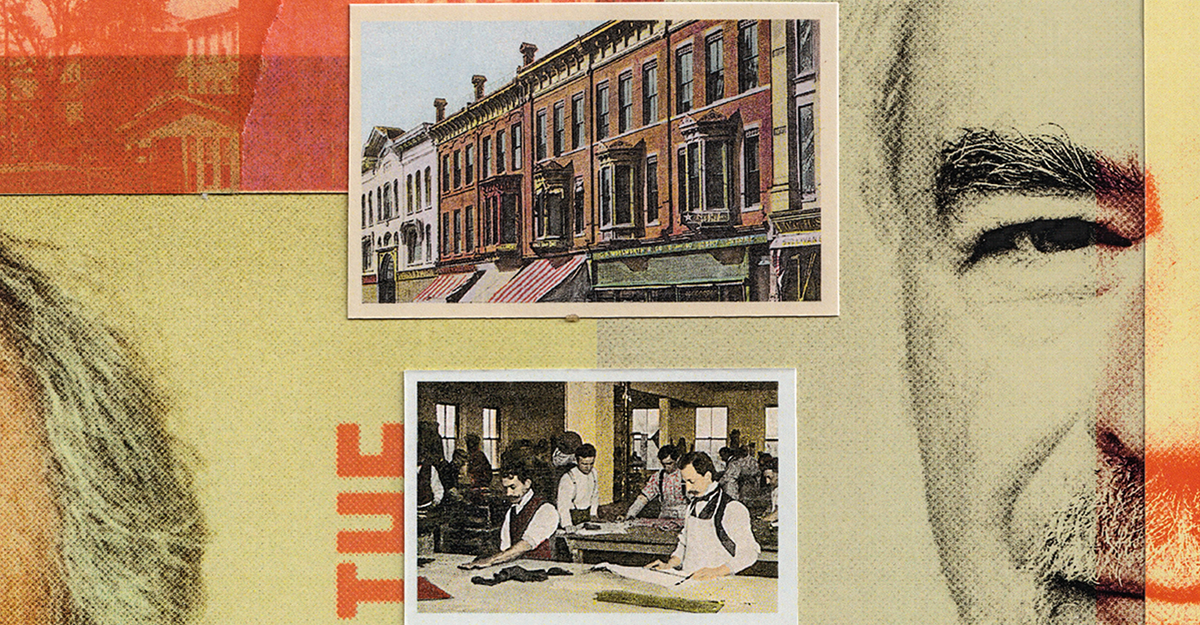
“I’m the first writer in the family,” the novelist Richard Russo once said, “but I’m not the first bullshitter in the family.” That honor belonged to his divorced father, Jim, a highway worker with no interest in books and an only intermittent interest in his son. Jim’s strongest connections were with his buddies at the bar. On summer breaks from college, Russo returned to Gloversville, in upstate New York, and his dad would get him on the road crew. When work ended, they would head home, hitting pubs along the way. At each stop, Jim would regale the regulars with a story about something that had happened on the job that day.
“He would pay attention to what worked in Roadhouse A,” Russo said in 2025, “so that when he got to Roadhouse B, he would remember what got a laugh and what didn’t, and so he would change the story.” Jim would tell the same story over many days, cutting and shaping, finding the beats. “There’s a word for that,” Russo said. “It’s called revision.”
[From the April 2022 issue: Richard Russo on his father, the fool]
Revision, a refined term that Jim would never have used, is a staple of M.F.A. programs, such as the one his son attended at the University of Arizona. When Russo graduated in 1980, the experimental fiction of William Gass and Kurt Vonnegut was in vogue, but he much preferred the shambling shaggy-dog novels of Twain and Dickens, whose humor arose not from formal innovation but from the foibles of flawed characters (like his dad), many of them poor and unlettered (ditto). Early on, Russo threw in his lot with Tom and Huck and Jim, with David Copperfield and Oliver Twist—characters whose humble beginnings offer a vantage from which to see the absurdity of an unjust world.
Beginning with the 1986 publication of his first novel, Mohawk, Russo has filled 10 novels, plus many essays and short stories, with portraits of men born with few gifts save their wits, making their way in an economy not set up to reward their kind. The bulk of his fiction is set in New York, in towns like Gloversville, where the good jobs have vanished (the glove-making trade there—once responsible for 90 percent of gloves sold in America—was by the 1950s already being replaced by imports). In these places, it’s unclear who is slinging more bull, the semi-employed men in bars or the educated civic “leaders,” such as mayors and bankers, promising that good times will return.
In Russo’s best work, especially his classic trilogy, set in fictional North Bath—Nobody’s Fool (1993), Everybody’s Fool (2016), and Somebody’s Fool (2023)—his characters’ banter, crude and self-knowing, reminds us that the worst effects of the modern economy are present not in the landscape but in the soulscape, the fractured lives and identities of obsolete workers. Their barroom bravado is a front, masking inner hurt, or just bewilderment. In the novelist’s business of exploring what’s inside people’s heads—the way we all think more than we can say—Russo is the peer of Jonathan Franzen and Meg Wolitzer, even if his characters think in fewer syllables.
At 77, Russo has published a new novel, Under the Falls, that at first seems to be a break with his past work. The characters are young, mostly in their mid‑30s, and the protagonist, Tyler Sinclair, is honest-to-goodness rich. After high school, he left Stone Mountain, another of Russo’s fictional upstate hamlets, riding his guitar to stardom. When he blew out of town, he left behind a toxic love triangle and a paralyzed buddy, the victim of a near drowning that many blamed Tyler for. In the years since, he has milked the town, and a Mellencamp-like image as a boy from the sticks, for songwriting material. Now Tyler has come back to a place he never wanted to see again. Stone Mountain’s denizens feel the same way about him. At his much-ballyhooed return show, he and his band are pelted with eggs. On the way out of town, the band’s limousine is mysteriously driven off the road, and during his convalescence in Stone Mountain, Tyler gets caught up in local intrigue involving dope dealing, manslaughter, and police corruption.
Under the Falls is a short potboiling book, lacking the finer-grained mind reading and social texture that Russo excels at (the acknowledgments note that it began as a TV-pilot script). Yet in the Russo tradition, it’s about a boy whose hometown has mired him in grief but also given him the stories that will lift him out of it. And tucked into its harebrained (if thoroughly enjoyable) plotting is a line that could well be Russo’s artistic credo. Tyler is relieved, and a bit amazed, to see how Doc, his paralyzed friend, has made a decent life for himself, with his own trailer, wheelchair, and car (a hearse tricked out with hand controls), funded by his “vast criminal enterprise.” “As an artist,” Russo writes, “Tyler has more than once wondered whether, under the right circumstances, or maybe the wrong ones, simply living life might qualify as art, and it occurs to him that his duty here is simple: to surrender his reservations and simply admire the man.”
Among all the hard-luck men in these hardscrabble towns, the ones who compound their bad luck with bad choices interest Russo the most. His emblematic figure is Donald “Sully” Sullivan, the star of the North Bath trilogy, a saga about one man surfing the arc of the 20th century that invites comparison to Richard Ford’s Frank Bascombe books and John Updike’s Rabbit quartet, also anchored by troubled male protagonists. But Sully, whom we first meet in late middle age as a handyman with a bum knee—flashbacks fill in his tortured boyhood, his high-school-football career, his World War II service, his failed marriage—is on the opposite side of the class divide from those men. Bascombe is a writer, then a real-estate agent, and Harry “Rabbit” Angstrom dies rich, fat on sales from the car dealership he inherited from his father-in-law. Sully never has a penny extra until his old age, when he has some luck with the ponies and then inherits his landlady’s decaying house—and discovers how disconcerted he is by the taste of middle-class life. “He’d always suspected that life’s deck was stacked in favor of those with means,” Russo writes. Now what? For Rabbit and Bascombe, the American dream is real, or real enough. For Sully, the idea that he was “now and forevermore insulated against adversity” just doesn’t compute; it feels like a cruel joke.
And for Russo, the place that Sully inhabits is at least as interesting as the man himself—a signature of his fiction, which specializes in ensemble novels. “One of the good things about small towns,” Russo writes in his Pulitzer Prize winner, Empire Falls (2001), set in a postindustrial Maine hamlet, “was that they accommodated just about everyone; the lame and disfigured were all your neighbors, and seeing them every day meant that after a while you stopped noticing what made them different.”
The important thing is how they’re alike on the inside. In his sad-sack locales, characters face their predicaments with a mix of resilience, disappointment, and humor. They want love or connection, but they need money. Equipped with mostly meager educations and varying degrees of sophistication, they bounce off one another like bumper cars, everyone’s actions affecting everyone else’s. Gainful employment is in short supply; vices take hold, whether ugly addictions or minor gambling habits; and in Under the Falls, the criminality moves beyond small-time hustles. Russo’s townsfolk do one another the courtesy, when necessary, of pretending not to see what’s in front of them; they also fight, make up, make love, and, above all, tolerate one another.
We tend to think that, in hollowed-out towns such as the ones Russo writes about, those left behind are left behind in the apocalyptic sense: The chosen ones got raptured out, to better places with more work, more Starbucks, more Subarus. But Russo shows how anyplace is good enough if you’ve chosen it, or can tell yourself that you have. Class and cultural divides are sources of tension, but also of local cohesion, as Tyler discovers in Stone Mountain—and as Sully has known all his life. Just because Sully never went to college doesn’t mean he couldn’t have hacked it. North Bath is always suffering intruders, from downstate and especially from nearby Schuyler Springs—an obvious stand-in for Saratoga Springs, which has the college (Skidmore), the racetrack, the tourist season, and hence the money that Gloversville lacks.
Sometimes these interlopers want to buy and rehab a house, and that’s where Sully is indispensable. He and a partner do the fixing up on fixer-uppers. They just want to be paid, with money and perhaps a modicum of respect. After Miles Anderson, a university professor from downstate, keeps him waiting for an hour to talk about some repairs on his new property, Sully gets huffy, leading Anderson to ask, pissily, if Sully wants the work or not.
“ ‘Look, Mr. Anderson,’ Sully said, ‘I need the work. I’m just too old to jump up and down, okay? Inside, I’m all aflutter. Trust me.’ ” (The “aflutter” is a nice touch, hinting at the elevated vocabulary Sully can deploy when he wants to.) “ ‘Hmmm,’ Miles Anderson mused. ‘Well, I was also told you were insolent, though I suppose that’s to be expected. The gruff, frontier independence of the American blue-collar worker and all that.’ ”
[From the 2006 Fiction Issue: Richard Russo’s short story “Horseman”]
The only thing worse than new wealth threatening to intrude is old wealth that has fled, leaving desolation. In Empire Falls, there are perennial rumors about what might become of the old mill—is it true that investors from Boston have plans for it? The prologue to Under the Falls features a moving paean to the long-shuttered Stone Mountain Amusement Park. “Remember what amusement parks were like before they became corporate,” Russo writes, “before there were special lines for people who have more money than you do.”
For Russo, amusement parks, with their rides and buffets and dining-room windows “left open to capture the breeze off the lake,” were once the great levelers, places where, for a day, “you’re not poor; you’re rich.” Stone Mountain Amusement Park offers an echo of the Ultimate Escape Fun Park, planned by Texas moneymen, that the town banker in Nobody’s Fool hopes to lure to North Bath. But the Texans, after flirting with North Bath, ultimately choose a more prosperous site, near Portland, Maine. It seems they were full of it all along.
Russo never intimates that his bullshitters in the roadhouse are better men than the ones in the C-suite, or the ones with tenure, or the rock stars. (He is especially withering, though, about the tenured bullshitters, the professoriat. His most beloved book may well be Straight Man, a campus satire in the tradition of Kingsley Amis and David Lodge.) There’s good and bad everywhere, and Russo is alert to self-serving delusions wherever they surface. “I made a man’s mistakes,” Sully’s absentee father, “Big Jim” (obviously named for Russo’s own father), says at the end of his life.
That has the ring of nobility, until we remember that his manly mistakes included beating his family, cheating on his wife, and drinking away his pay. Nor is it lost on the reader that he got away with his malign hijinks because, as a big man in a small town, he knew everyone, was enabled by everyone: cops, neighbors, co-workers. In Under the Falls, the town sheriff knows about, and indirectly profits from, Doc’s drug running. He doesn’t approve, but in a small town, complicity is hard to avoid.
Here’s what characters like Sully come to understand about hometowns, at least in their wiser moments, and what Tyler has to learn: Achieving escape velocity is one of those aspirations, like being “now and forevermore insulated against adversity,” that is forever out of reach. “It kind of feels like you’re on the clock,” Tyler reflects about his unexpected wealth and success. “Like any day now somebody’s going to notice there’s been a mistake, after which you’ll go back to being poor.”
Which doesn’t mean you should simply stay put. Russo found Gloversville claustrophobic, as did his eccentric mother, whose mental illness—the subject of his 2012 memoir, the aptly titled Elsewhere—was surely exacerbated by being a dreamy, literate soul in a town of Babbitts. The two of them had to get out (Russo’s overattached mom followed him to college in Arizona), only to realize that the fight was never with the town but with themselves. After years of attempting to make a life elsewhere, she returned to Gloversville. So did her son, of course. He never really left.
* Illustration source images: Knopf / Ulf Andersen / Getty; David Troncoso / Getty; Chronicle / Alamy; Bettmann / Getty.
This article appears in the September 2026 print edition with the headline “Bad Luck, Bad Choices.”